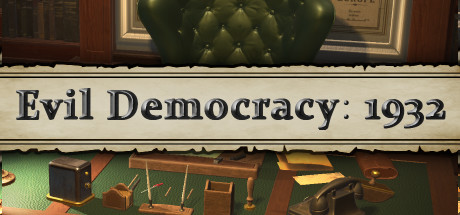
In the unique world of this political simulator, you travel to Europe, 1932-1935, to become the party leader in one of the following countries: Germany, France, or England. You have a real chance to become the winner of WWII even before it begins...
Modeled estimate, not a reported figure. How we estimate →
Media

About


Genres
Stats
All-time low is the lowest price we've recorded for this game since we started tracking it.
Languages: English, Russian, German, Spanish - Spain, Portuguese - Brazil, Simplified Chinese, Polish, Turkish, Japanese, French
Engagement
Hours played at review time, across 40 reviews with recorded playtime.
Reviews
Got 84/97 achievements in my first game. 10/10, would turn Britain fascist and reintroduce slavery of the other again.
Is it even possible to 100% this game? The achievement send agitators 9 is still broken for me.
Keyifli, yeterli ve hoş bir oyun. Bir süre sonra kendini tekrar edeceğinden pek çok kişi için oyunun ömrü on saat kadar olacaktır diye tahmin ediyorum, bence en fazla beş altı dolar ödenebilir.
Игра прекрасна своей простотой, наложенной на свободу действий и эстетику. Очень жду новых игр от этой студии с действием в других исторических эпохах или странах.
Evil Democracy: 1932 is an ambitious indie political strategy and simulation game developed and published by Hamsters Gaming that places the player at the heart of a fragile democratic system on the brink of collapse. Set in the tense years between 1932 and 1935, the game allows players to step into the role of a political party leader in Germany, France, or England, each facing social unrest, economic instability, and ideological polarization. Rather than focusing on military conflict, the game zeroes in on the mechanics of power before war begins, challenging players to win elections, consolidate influence, and reshape the political future of their chosen nation through both legitimate and morally questionable means. The core experience revolves around managing influence across dozens of regions, balancing resources, and competing against rival parties in a constantly shifting political landscape. Players must decide how to spend limited funds and political capital, choosing between traditional democratic tools such as campaigning, newspapers, and rallies, or more manipulative actions like bribery, propaganda, and election interference. This tension between ethical governance and ruthless efficiency defines much of the game’s identity, as success often requires embracing tactics that undermine the very democratic ideals the system claims to uphold. The game does not shy away from portraying democracy as vulnerable, instead presenting it as a system that can be bent or broken through calculated pressure. A major strength of Evil Democracy: 1932 lies in its breadth of political options. With dozens of playable parties and a wide array of doctrines that shape ideology and strategy, the game encourages experimentation and replayability. Each doctrine modifies how a party operates, influencing public opinion, resource flow, and regional control in subtle but meaningful ways. Choosing a party and doctrine combination can dramatically change the feel of a campaign, pushing players toward populism, authoritarianism, or more conventional democratic approaches. This flexibility allows for a wide range of alternate-history scenarios, where familiar nations can take radically different paths depending on player choices. Strategic depth emerges from the interconnected systems governing media influence, voter sentiment, and regional control. Printing newspapers, organizing demonstrations, hiring deputies, and securing sponsors all interact in complex ways, forcing players to think several steps ahead. Influence gained in one region can ripple outward, affecting neighboring areas and altering the balance of power nationwide. At its best, the game rewards careful planning and long-term thinking, as small advantages accumulate into decisive electoral victories. However, this complexity can sometimes feel uneven, as certain strategies — particularly those centered on financial backing and sponsors — tend to overshadow more nuanced ideological play, leading to optimal paths that can feel repetitive over extended campaigns. Presentation and interface design are functional but clearly constrained by indie production values. The user interface delivers large amounts of data, but not always in the most intuitive way, requiring players to spend time deciphering tooltips and statistics before fully understanding the consequences of their actions. While this learning curve adds to the sense of depth for dedicated strategy fans, it can also be a barrier for newcomers, especially given the historical and political complexity of the setting. Visuals are utilitarian rather than immersive, serving primarily as a framework for the underlying systems rather than as a source of atmosphere or narrative storytelling. Despite its rough edges, the game succeeds in carving out a distinct niche. Its focus on pre-war political maneuvering, elections, and ideological struggle sets it apart from more traditional grand strategy titles that emphasize warfare and empire-building. The moral ambiguity embedded in its mechanics invites players to reflect on how democracies can be exploited, raising uncomfortable but compelling questions about power, influence, and legitimacy. This thematic focus gives the game a weight that lingers beyond individual playthroughs, especially for players interested in political history or alternate historical outcomes. Overall, Evil Democracy: 1932 is a thought-provoking and content-rich strategy game that rewards patience, experimentation, and a tolerance for complexity. While it may lack the polish and balance of larger studio productions, its ambition and unique subject matter make it a standout for players who enjoy political simulations and systemic strategy. It is a game that challenges players not only to win elections, but to consider the cost of victory in a system where democracy itself can become a weapon, offering a compelling and often unsettling strategic experience for those willing to engage deeply with its ideas. Rating: 7/10
Интересная задумка
Очень хорошо проработанный политический симулятор.
I love the concept of the game but the execution of it is just bland, boring and confusing. No real character is given to the parties beyond party names and logos as well as board ideological dogmas which provide nothing but stat modifiers after some turns. The turtorial is confusing and incomplete, not explaining "Meetings" or "Activists" at all which seem to be very important aspects of the game. Its a very bland game that you'd expect to download off of the Google Play Store for free. I would advise you spend your money and time elsewhere.
Oyundan öğrendiğim bir şey varsa propagandanızı umut üzerine değil, karalama ve rakibinizi küçük düşürme üzerine yaparsanız çok rahat şekilde seçim kazanabilirsiniz.
Очень крутая игра с низким порогом вхождения и возможностью придумать разные стратегии, потому что механики есть разные и они все хороши. 9 фальсификаций из 10
Related
Related
Trends
Modeled estimate over time, reconstructed from Steam's monthly review histogram.
Momentum
Pace estimated from the game's recent review growth (our daily snapshots) at its own sales-per-review ratio — a momentum signal, not booked sales.
Audience
Estimated from the language of this game's reviews — a proxy for where players are, not official Steam demographics.
Related
| Unspottable | $156.5K | 763 | 89% | $9.99 |
| Zueirama | $156.5K | 1.5K | 94% | $6.99 |
| Ghost Janitors | $156.4K | 1K | 86% | $6.29 |
| Mundaun | $156.4K | 1.5K | 93% | $5.99 |
| 蛊婆 Lady in Tomb | $156.4K | 440 | 94% | $18.99 |
| The Artful Escape | $156.7K | 2K | 92% | $4.99 |