Discover and colonize the world, Allocate your labor force, Monopolize markets, Fight tactical battles, Survive the age of imperialism...
Modeled estimate, not a reported figure. How we estimate →
Media

About
Imperial Ambitions is a 4X strategy game where the players will take over one of the European superpowers that existed during the Age of Discovery and Renaissance and lead them to imperialism.
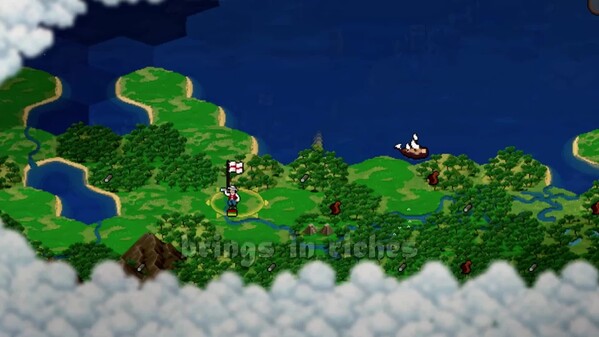
Discover and colonize the world,
Allocate your labor force,
Monopolize markets,
Fight tactical battles,
Maintain order,
Survive the age of imperialism.
link units together
Imperial Ambitions has a completely new strategy game design providing a unique 4X gameplay experience. Anyone who enjoys the Napoleonic wars will find the tactical thinking required for Imperial Ambitions to be much more rewarding. As you forge an empire, the battlefields will become more challenging. We've redesigned the way that armies move on a campaign map, so they act more like real-world military units. Large armies can move in column formation, making it harder to move and requires more tactical thinking to prepare for the battle. The regiments can be split from the main army for small tactical excursions, or sneak into enemy lines for crossfire. For the same reason, attention is required to avoid leaving gaps on your frontline.
units keep firing until end of turn
The society in the game is divided into classes, slaves, peasants, apprentices, artisans and masters. Besides slaves, the citizens will be allowed to progress through four tiers of classes, with each step providing increased capabilities, but also requiring different resources from you. The education is the key for most of your citizens to climb this social ladder. Higher classes will provide more labor, but will also require unique luxury resources. The citizens may stop working for several reasons, such as training, hunger, epidemic, criminal activities or rebellion. While higher classes are often preferable, they are also harder to maintain due to requirement of luxury. The units and agents are also required to be trained from respective classes. For that reason, the players need to find the optimal balance between these classes.
names are culture-dependent but skin tones are random, because it is!
Imperial Ambitions features a dynamic Trait System where people, soldiers, agents, and populations are shaped by their experiences, culture, religion, wealth, health, and living conditions. Traits can affect behavior, loyalty, action points, migration, combat performance, and even whether units obey orders. A starving army, a persecuted population, or a bloodlusted soldier may not behave the way you expect, making every empire feel unstable, human, and morally complicated. Traits can also influence one another, turning Imperial Ambitions into a social simulation where every empire feels unstable, human, and morally complicated.

A food shortage can create hunger; hunger lowers efficiency, increases unrest, and can escalate into starvation.
Starving people are less reliable as workers, soldiers, or loyal subjects.
Hungry soldiers will start the game with decreased action points


Malnutrition can make disease more dangerous, turning a supply problem into a health crisis.
Plague is not only a health problem; it can destroy labor, spread fear, create refugees, and destabilize towns


Trade can lift people out of poverty, stabilize towns, and turn struggling settlements into prosperous centers.
Too much inequality can create a different crisis: greed, crime, resentment, vandalism, and unrest.


Not meeting demands of your people can make them tense, a lot tense!.. like me without my coffee! so, thank you!
Rich citizens can tolerate shortages better resisting protests, but they can also become targets when society starts to break. Distributing gold can buy temporary stability, but the long-term social consequences still depend on the town.


Protests usually grow from accumulated pressure, not a single event.
Protests can escalate into riots; riots can damage order, reduce labor, and destroy property and even people!
Hungry, sick, discriminated, or traumatized people are more likely to resist authority.
Military control can calm riots, but harsh repression can leave trauma and hatred behind.


Depending on the location, units and agents can be affected by the elements if remain in that situation for long. For example, sailing long periods of time leads to seasickness.


Wealth gap can create bandits, who spread fear, increase poverty, and makes the town target of smugglings operations.
Generals can convict bandits, integrating them back to society.
Convicted criminals can be forced into labor by entrepreneurs, solving one problem while creating moral and social consequences.


Differences between people cause discrimination. More differences cause stronger response.
Discrimination can push people into poverty and even violence.
Fearful minorities can choose to migrate.
Discriminated folk are less likely to resist enemy invasion.
Linguists can reduce cultural friction and help diverse towns hold together.
Zealots can turn belief into social pressure, and social pressure into violence.


Religion can unify communities, but conversion and religious division can also harden resistance.
Refugees carry more than population: they can bring trauma, poverty, faith, culture, and memory into new towns.
In Imperial Ambitions, much of your power is exercised through agents: individuals who move across the map, intervene in towns, command armies, open trade routes, spread faith, suppress unrest, sabotage enemies, and reshape society. There are 7 agent types: Merchant, Builder, Explorer, Shadowmaster, General and Gentleman. They are tools of administration, commerce, faith, violence, diplomacy, science, and subversion. The same crisis can often be solved in several ways: with gold, religion, repression, negotiation, migration, trade, crime, or reform.
Explorers can reveal the world, discover resources, negotiate peace, and even soften cultural divisions.
Generals can rally armies, improve marching and siege operations, impose harsh or lenient rules in occupied towns, but most importantly can be used as tools for chaos through plundering, slave raids and even massacres.
Builders can open new infrastructure paths, construct roads, farms, mines, plantations, forts.
Merchants can start trade routes, stabilize towns with gold, hire indentured settlers for new settlements and use economic influence to rescue struggling settlements.
Priests can convert populations, investigate or suppress religious threats, heal the sick, spread seeds, create pilgrims, and perform inquisitions. (also Pastors, Presbyters and imams)
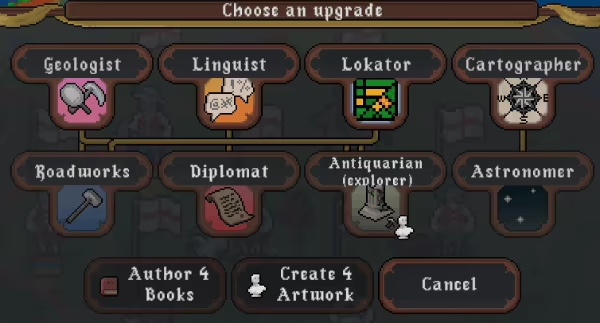
Gentlemen can become patrons, professors, diplomats, linguists, physicians, plague doctors, herbalists, or antiquarians, making them a strong leaders of their time.
Shadowmasters can build criminal networks, raid by land or sea, sabotage towns, provoke unrest, manipulate populations, spread disease, and turn social instability into a weapon.
Your Empire will grow beyond the mountains and the seas. As it grows you will have access to more and endemic resources. The more you invest into your roads and docks, the more resources that produced around the corners of your empire will be transported into your capital. With abundance in your capital, you can allocate your laborers to produce to higher quality goods. Imperial Ambitions has more than 40 different resources that can be extracted, produced or imported. Your population will demand products depending on their level of education. You must manage your resources and customize your production chains, while ensuring the wellbeing of your population. Some key resources may just not be accessible to you. You can resolve either by trading with superpowers, replantation endemic plants, military invasion, or exploiting the black market.

There is an auto-allocator if you don't want to micromanage!
For merchants and economic strategists, trade is a powerful way to enrich your empire. In Imperial Ambitions, every town except capitals has specific needs. Meeting those needs can earn you valuable gold.
Merchants must physically visit towns, make deals, and connect them through trade routes. A profitable route depends on choosing the right towns, arranging them in the right order, and maximizing revenue. Through these same routes, players can also purchase resources needed by their own empire.
However, trade is only possible if local rulers are not boycotting you. When diplomacy fails, smuggling offers another path. If a town has outlaws, it can become open to smugglers. Your Shadow Master can establish smuggling routes to buy resources for the right price, even from hostile territory. You do not need good relations with the owner of the town, and you do not need to pay taxes.
But smuggling has consequences. Corruption and criminal activity will spread along the route. To encourage corruption, players can send a Shadow Master to establish a crime syndicate. To fight smuggling, Inquisitors and Governors can convict outlaws and shut down illegal routes.

A merchant may begin as a simple trader, then grow into a banker, entrepreneur, or trade counselor who can reshape the economy of entire towns. A general can become better at command, occupation, discipline, or mass management, turning military force into a tool of order, fear, or recovery. Priests may specialize in conversion, healing, pilgrimage, or religious control, while diplomats and linguists can soften cultural divisions that would otherwise lead to unrest.
Upgrades are not just stronger versions of the same unit. They open new ways to solve problems. A struggling town might need a merchant to stimulate trade, a governor to capture criminals, a priest to calm religious tension, a linguist to reduce discrimination, or a general to restore order by force. The same crisis can be approached through wealth, faith, diplomacy, repression, migration, or social reform.
In Imperial Ambitions, the full technology tree is hidden from the player. You only see the technologies currently available to research, reflecting the uncertainty and unpredictability of historical innovation.
When agents are upgraded, they may author books or create artworks. These become intellectual resources that can be invested into unlocking new units, buildings, and production processes.
Somethings need a ledger
Diplomacy in Imperial Ambitions is driven by a grudge system. Aggressive actions by rival powers increase tension, while distance and time can reduce it. When a grudge becomes too great, war may be declared automatically.
Peace is harder to achieve. When tensions fall below a certain level, your Diplomat can negotiate peace near enemy units. Negotiations may take time, and gold can sometimes make the process easier. It takes years to build bridges, but only seconds to destroy them.
We chose a pixelated art style for the game since it’s a fun and approachable way to communicate controversial events of our recent history such as post-colonial subversion. We also wanted a retro aesthetic design to assist players in imagining this alternate universe, mixing pop culture with classic cartoon representations of imperialism.




Genres
Stats
All-time low is the lowest price we've recorded for this game since we started tracking it.
Languages: English*, French, Italian, German, Spanish - Spain, Czech, Danish, Hungarian, Polish, Portuguese - Brazil, Russian, Swedish +6 more
Engagement
Hours played at review time, across 59 reviews with recorded playtime.
Reviews
Themes across 59 recent reviews and how positive each mention is. A keyword signal, not full sentiment analysis.
positive critical· bar length = how often the theme comes up
Reviews
- Spiritual successor to Imperialism 2 but more complex. (make sure to play the tutorials) - Highly recommended if you've enjoyed Imperialism 1/2, Civilization or Sid Meier's Colonization! - Solo Developer which makes it even more impressive. - still needs some balancing though - 9/10
I seem to be in a beta test that I didn't sign up for. I really want to like this game because it gives me nostalgia for Sid Meier's Colonization and there are some cool innovative mechanics. But it's got too many bugs, some bad quality of life, and some broken mechanics. Like when I had to walk my explorer and spearman all the way across a continent because they'd accidentally picked up a slave and now they couldn't fit on their ships any more. There should be a way to reorganise outside of a town. I can't believe this wasn't picked up in playtesting. I seem to be at war at random without declaring it, then I don't get attacked. At all. And the AI doesn't even defend its cities. As Portugal, I've pretty much conquered Spain in the first 20 years, and that was without really meaning to. I only took Madrid because my border around Granada seemed to randomly change and I wanted that wheat farm. My cities seem to randomly be starving or rioting and there's no obvious reason. I'm producing enough food, I've cranked up the logistic level - which is quite opaque in terms of what that actually does, how many people it will feed. And yet, they're starving. But don't worry, there's no obvious penalty for starving, rioting, putting people of completely different religions together, or having 75% of Lisbon be Native American slaves. Maybe it's affecting one of the numbers in the giant speadsheet of production, I wouldn't know. Most immersion breaking of all, the AI just leaves its ships sitting on your shore and you can just go around collecting them. Ships should be something that feels like an achievement to build. Instead, you're given an exploit on a plate. I find it disappointing that nothing much seems like an achievement. When I reached the New World and set up my first colony, I thought that getting a source of spices was going to be a huge boon. I thought I'd stolen a march on the AI. Instead, it almost didn't register. I don't seem to be able to convert it into seasoning (and I've got loads of salt for that anyway) and no other civs seem to demand it as a trade good. So why am I exploring this new world in the first place? What's motivating my little guys? There's no streams of gold to reward me for the deadly risks. The natives are disappointing. I was hoping that there would be something at least as detailed as the interactions in Sid Meier's Colonization, perhaps with better QoL so you can keep track of what the natives want to trade and what they can teach you. Instead, it's more like the tribal villages from Civ 1, you just stumble into them and they either fight you or give you a bonus. They might as well not be there. They have no identity. And there's no trace of the moral dilemma in Colonization, the feeling that you've reluctantly found yourself in the shoes of someone awful. I was hoping they'd have some depth, even be playable civs. But they're basically loot boxes. Slavery is handled very poorly too. Just like how Colonization made you feel bad for wiping out the natives, this was an opportunity to make it inevitable that you would end up enslaving people, and making you feel like a c*** for doing so. I should be made to choose, I should feel like an awful human being if I choose to enslave my defeated enemies for my own economic advantage. Instead, like so many things in this game, I barely even notice it's happened - whoops, I've got some slaves, better ... ship them to Lisbon? Sunburn and seasickness are fun at first, then you find yourself just micro managing them all the time and it becomes a chore. Colonies don't feel special or that different from the big cities in Europe. You plonk down a settler and before long, New Lisbon is bigger than Old Lisbon. The terrain in the Western Hemisphere looks just like that in Europe. There aren't the endless stretches of dense forest like in Colonization, or the real pre-contact New World. It doesn't feel like landing in a New World. There are some great mechanics. I love the way a lot of things are done by specialists which appear as units on the map. I like hopping on and off boats. I like the way that upgrading specialists gives them new powers that make them almost like new units. I like the whole apprentice -> artisan -> specialist track. I like how you can group units into regiments. I like how there are different kinds of settlers. Overall, I could overlook all the negatives I've been talking about if there was some kind of sense of struggling towards a worthwhile goal and getting an exciting payoff when it's achieved. But nothing seems to have much meaning. You just kind of move your builders around improving beehives until you die of ennui. This needed to be playtested and improved for a lot longer before release. If it was marked as Early Access, it would all make sense. But I feel like I'm playing a late-stage tech demo, not a game. I know this is a small studio (even just one person) so I should probably be more forgiving, but I've paid money for something that looked cool and ended up on a beta testing program.
What I expected; a true sucessor to Sid Meier's Colonization. What I got; The best of Sid Meier's Colonization, 4X strategy, economic sims and grand strategy combined into one perfect package. This is GOTY material, I'd even go as far as saying it's one of the best 4X games in the past decade.
There's potential here, but it's really really messy at this point at if you get it, you're either hoping it gets turned into a good game (the dev is still working on it and active in the forums) AND that you can figure it out. The mechanics are not clearly explained, and the tutorial is very focused on the HOW of interacting with the mechanics and not the WHY of interacting with the mechanics, and you get pointed to a sparse wiki for questions and help. Exploring the mechanics and trying things out might be fun except 1) you are handed a kingdom that is starting a death spiral and if you don't fix it quickly everything will collapse and 2) the game gives you spreadsheets but not real feedback on what's going on or why. Add into this lots of little things that are just weird and unhappy ways to deal with a 4X. Information on what other nations are doing scrolls through a little box you can't rewind, so hope you read fast when someone declares war on you. All units are super expensive, so you can't actually expand and do interesting things until you've figured out your entire economy and fixed the death spiral. Your cities get five or six little icons to tell you about terrible things happening without any clear direction on how you can do anything about it. It's just overall messy and hard to understand and really disappointing because it's clearly a labor of love that takes inspiration from some great 4Xs that haven't been really built on. But I've thrown my head against it for four hours and still don't know how to have fun with it.
这个游戏很像是以前的一个老游戏帝国主义2(梦幻帝国2),玩法,界面,甚至是单位和生产系统都极为相似,当然,相比帝国主义2,可选国家更多,机制有所增加,有许多改进,也新增了一些要素和玩法,但是总体上来说,这游戏可以认为是帝国主义2的继承者,和帝国主义2一样,麻雀虽小,五脏俱全,内容颇为丰富。如果你曾经喜欢玩帝国主义2或者类似的游戏,可以试试这一作。 缺点:汉化差强人意,虽然可以正常玩,但是很多翻译错误,比如法语(应该是法国人),免费单位(应该是自由叛军),希望在后续版本里能够改进。 然后游戏里的画面帮助有点少,因为像素的关系,很多资源图标并不直观,你得把鼠标移上去,或者猜那是啥。有教程,但是教程有点死板,我按教程把施工者移到约克郡,不小心按到驻军(其实我不知道这是啥意思...)导致施工者加入了城市,然后教程就没反应了,我自己研究了一会儿,把施工者从城市里弄出来了,然后按照要求修建了2个矿场,教程还是没反应,我满足了教程要求,但是没有触发下一步教程,就这么卡在了那里。我不得不终止并退出了教程。然后自己开始摸索新游戏。 总体来说,这个游戏是新时代的帝国主义2继承者,玩法可圈可点,一些缺点瑕不掩瑜,所以值得推荐。 毕竟在2026年的今天,能够继承帝国主义2类型游戏衣钵的,只有这款游戏了。
Авансом ставлю лайк. Таких игр очень мало сейчас к сожалению. Но интерфейс, честно говоря, просто ужасен. Хочется верить, что разработчики допилят его. Также из недостатков: очень плохое обучение. Внутри самой игры помимо плохого интерфейса сама игра при наведении не объясняет, что зачем нужно и от чего зависит. Для такой игры это существенный минус. Большая просьба разработчикам добавить прямо в самой игре чтобы при наведении на игровые элементы высвечивалась подробная информация у них как в играх Paradox сделано, потому что сейчас много всего, но игра вообще не дает ответ, что и для чего нужно и как оно работает.
When I first came across Imperial Ambitions, I knew I had to try the demo. It didn't take long before I was hit with a wave of nostalgia. It immediately reminded me of Imperialism back in 1997. I spent countless hours playing that game, and together with Sid Meier's Colonization, it's still one of my all-time favorite strategy games. Now, after more than 13 hours of playtime on Easy difficulty as England, I can honestly say that Imperial Ambitions isn't just trying to copy those classics—it builds on their ideas and adds plenty of its own. You don't simply build a few mines or sawmills and recruit an army. The game revolves around production chains, resource management, and creating an economy that can actually support your growing empire. Research is another major part of the game, constantly unlocking new buildings, industries, and mechanics. It can feel overwhelming at first, and I won't lie—the learning curve is pretty steep. https://steamcommunity.com/sharedfiles/filedetails/?id=3766010016 But once everything starts to click, it's incredibly rewarding. Watching your production chains work efficiently and seeing your empire grow step by step gave me the same feeling I had years ago while playing Imperialism. The game is still a little rough around the edges. I experienced a few crashes when exiting the game, and once it completely froze. It's annoying, but the developers are actively working on improvements and release updates on a regular basis. That's something I always like to see in an Early Access title. If you grew up with games like Imperialism or Sid Meier's Colonization, I think Imperial Ambitions deserves your attention. It captures that classic economic strategy feeling while adding enough modern mechanics to stand on its own. I'm definitely looking forward to seeing where the developers take it next.
Looks very promising. But is somewhat involved, so would benefit from tool-tips explaining what everything does and a fuller wiki. Reminds me of Imperialism 2.
[h1] Альфа версия за огромную цену [/h1] Это если кратко. Игра показалась мне безумно интересной в первые часы (несмотря на ужасное обучение, которое ничему фактически не учит). Я много раз начинал новые кампании в надежде что теперь то я пойму почему игра не работает. Возможно я не до конца понял как в нее играть и вот сейчас она станет приятной и понятной, но нет. Далее - долгий список причин, почему она является невероятно сырой и плохо протестированной альфа версией. Нет уведомления что ваш строитель или любой другой агент умрет в следующем ходу из-за водной болезни/холода и т.п. Вы просто в какой-то момент можете заметить что вас агент помер от какой-то фигни пока вы были заняты налаживая производство. Торговля здесь работает "паровозиком". Если хотите убрать первый город и добавить ещё один в конце - нет проблем. Но если хотите наоборот добавить новый город в начале маршрута - так сделать нельзя [b] НЕВЕРОЯТНЫЙ [/b] микроконтроль. Почти каждый ход потребности ваших горожан будут расти, а вы будете разведывать новые ресурсы и все это будет требовать вашего прямого вмешательства в цепочки производства. Есть, конечно, способ это оптимизировать но выполнен он ужасно. Самый просто пример - в моей игре за Данию, когда через пару ходов после нажатия этой волшебной кнопки страна начала производить никому не нужные меховые шубы (которые потребляют лишь самый высокий уровень населения и который нужно открыть далеко в ветках технологий), из-за чего возник дефицит рабочих, из-за чего мы перестали производить выпивку для людей, из-за чего половина страны начала бунты, а войска получили дизмораль прямо во время войны. Если вы правильно настроили торговый путь (а это делается очень легко просто смотря что производится в городе А и отправляете товары в город Б и так далее), то будете получать с одного торговца примерно 15-20 монет. Этих денег хватит чтобы содержать армию из 10 юнитов. С таким войском можно захватить пол карты спокойно. По факту в этой игре монеты - абсолютно бесполезный ресурс. Вы не можете за него купить ресурсы - их нужно ввозить вручную торговцем, причем за это вы еще и деньги выручете. Вы не можете нанять наемников - их просто нет как явления. Вы не можете профинансировать вообще что-либо. Они нужны только лишь для того, чтобы содержать юнитов, однако стоимость их содержания настолько мала ( от 1 до 2 монет), а количество зарабатываемого золото настолько велико, что можно забить на его существование полностью. Да, новые здания требуют золота, но, поверьте, вы этого даже не почувствуете. Не совсем понятен смысл существования торговца как юнита. Как только вы проложили торговый путь он фактически становится бесполезным. Да, он может отправиться колонизировать новый свет, но тогда если изменятся спрос/предложение городов, путь станет убыточным и придется тащить его через пол света обратно иначе будете терять деньги [spoiler] хотя кого это волнует лол [/spoiler] Система метрополии - ваши неметропольные города будут приносить ограниченное количество ресурсов (то есть лишь часть из добытого будет идти вам, как и рабочая сила) и это приводит к забавным случаям когда какой-то город имеет огромное население (а все города постоянно растут), потребляет огромное количество ресурсов, однако сам почти ничего не приносит. И уже по сути не работает на метрополию, а метрополия работает на него ибо к нему нужно организовать поставки, добычу новых ресурсов и т.п. Это приводит к тому, что вы живёте в постоянном дефиците и играете в "финансовую пирамиду" где чтобы обеспечить текущие города вам нужны новые, а чтобы обеспечить новые вам нужны ещё города и так по кругу. Не говоря уже о том, что большая часть этого населения только и делает что потребляет ресурсы, а сама [b] НИЧЕГО [/b] не дает - ни рабочей силы, ни каких-либо бонусов. Даже на юниты их не потратить потому что почти все они доступны для создания лишь в столице Дипломатии нет вообще как явления. Все войны заскриптованы. Т.е. например, играя за Португалию уже через ходов 10 вы автоматически объявляете войну Испании. Единственный способ ее завершить - вкачать в ветке навыков торговца умение заключить мир, найти испанского агента, подойти к нему и... нажать кнопку заключить мир за смешные 50 монет (т.е. 2 хода доходов от одного торгового пути). Абсурд? Абсурд Спустя какое-то время стал замечать что во время некоторых моих партий становилось невозможно создавать строителей из-за "нехватки скота", которого причем было в избытке. Также порой встречались баги, когда вместо внятного текста вылезал код игры перекрывавший часть экрана, или когда текст отображался ниже экрана из-за чего был нечитабелен. ИИ в игре не то что слабый, а его просто нет. За все время игры боты НИЧЕГО не делали. Пару раз основывали колонии да и то лишь в тот момент, когда я уже почти пол Америки колонизировал. Они вроде и воюют, но ничего не захватывают, вроде колонизируют, но тоже как-то не ахти (Россия так и просидела всю игру с начальными городами не колонизировав юг). Всю карту можно завоевать просто добыв немного железа и построив 2 полных отряда пикинеров. С такими силами за Данию я сначала захватил Германию, потом Польшу, а затем.. мне стало скучно ибо единственным ограничением моей экспансии стала тупая система снабжения, из-за которой все вечно начинали голодать сразу после захвата. Исследования работают непонятно. Очки исследований получаются в двух случаях - при повышении агентов и при исследованиях с помощью священника. Вот только чтобы получить священника, как я понял, его нужно тоже исследовать, а для этого нужно улучшить миллион агентов. Почему? Потому что исследуя что-либо вы не понимаете ЧТО вы исследуете. Половина исследований не пишет какие бонусы они дают и что открывают в будущем, описывая лишь, например, что то или иное открытие стало важным толчком в развитии культуры Европы. Окей? Круто. А мушкетеров мне как открыть? Наугад тыкая во все варианты исследований коих больше 10? Подводя итог хочу сказать, что игра явно не стоит своих денег. Даже по скидкам. Она является крайне сырой альфа версией чего-то стоящего. Может, когда-нибудь ее допилят, но выставлять вот это, говоря что это законченный продукт, так еще и по такой цене - полный абсурд.
It's a mix of Imperialism 2 and Sid Meier's Colonisation. These games are really rare, so it's must buy. Needs better balancing though and AI. I just took over half of Spain as Portugal with 3 spearman units. It NEEDS NAVAL COMBAT.
Related
Related
Trends
Steam followers (game-group members) tracked daily from when we started recording.
Momentum
Pace estimated from the game's recent review growth (our daily snapshots) at its own sales-per-review ratio — a momentum signal, not booked sales.
Audience
Estimated from the language of this game's reviews — a proxy for where players are, not official Steam demographics.
Related
| Sid Meier’s Civilization® VI | $580.3M | 376.5K | 86% | $59.99 |
| Hearts of Iron IV | $478.1M | 372.5K | 90% | $49.99 |
| 7 Days to Die | $425.3M | 403.5K | 87% | $44.99 |
| Mount & Blade II: Bannerlord | $309.8M | 293.9K | 88% | $49.99 |
| Stellaris | $277.8M | 196.1K | 86% | $49.99 |
| Arma 3 | $237.7M | 294.2K | 90% | $29.99 |
Related
| Chernobyl: Simulator | $47.8K | 62 | 92% | $19.99 |
| DAMON and BABY | $47.8K | 93 | 89% | $19.99 |
| Don't Sink | $47.8K | 213 | 73% | $9.99 |
| Rocket Bot Royale | $47.8K | 781 | 86% | $2.99 |
| W.A.N.D. Project | $47.8K | 222 | 72% | $9.99 |
| Feed the Reactor | $47.8K | 565 | 82% | $2.44 |