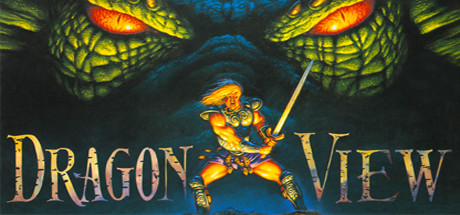
Warrior! Open your Eyes! This is the future of Gaming! Look. Before you leap. This isn't some corny collection of cardboard dungeons and dragons. It's a brilliant new vision of RPG Action Adventure. With Real-time 16 Meg 3D Scrolling like you've never seen.
Modeled estimate, not a reported figure. How we estimate →
Media

About
Genres
Stats
All-time low is the lowest price we've recorded for this game since we started tracking it.
Languages: English**languages with full audio support
Engagement
Hours played at review time, across 40 reviews with recorded playtime.
Reviews
Themes across 40 recent reviews and how positive each mention is. A keyword signal, not full sentiment analysis.
positive critical· bar length = how often the theme comes up
Reviews
Good game, but the overworld map in 3D is something that really bothers me.
DragonView is a quite interesting obscure RPG that was originally released on the SNES. Over the years it has amassed a bit of a cult following due to some of the aspects that make it unique, and while it's arguably just above average in quality, its uniqueness is what makes it worth playing. The story is probably the game's weakest point. It's a generic story about a hero in a fantasy setting having to save his girlfriend (and the world) from an evil wizard who wants to destroy the world. While not groundbreaking, it does a good job at keeping the player engaged, telling the story in a way reminiscent of dungeon masters in pen & paper roleplaying campaigns. NPC's dialogues will change depending on which part of the story the player's in, so there's always some incentive to go back to earlier areas to talk to everyone again. What sets DragonView apart from other action RPGs? The combat and the structure. While the game remains relatively linear from beginning to end in terms of the order in which you have to do things, the open world gives the player freedom to explore almost every area early on, with plenty of secrets to be found around the continent. The open world exploration has a first person perspective, whereas dungeons and random encounters are done as side-scrolling beat 'em ups, fusing the RPG and beat 'em up genre very well. That said, the game will etiher be too easy or too hard depending on how much you're willing to grind, thankfully, levelling up isn't too hard. The dungeon design is good, for the most part. It can be a bit confusing at times, and so can the overworld map. The directions NPCs give you are usually clear, but even then the first person perspective can make exploration a bit of a hassle. When it comes to the game's presentation, visually speaking it doesn't look too bad, but it definitely won't blow your mind, although I have to admit the sprite's animations are impressive for its time. Soundtrack could have been better, although it does have a few highlights here and there. Why do I recommend DragonView, considering its age and the fact that this is basically an emulator + ROM bundle? Honestly, despite its shortcomings it's a very interesting experience that I think is worth playing to this day due to its unique qualities. The emulator it comes with is not particularly good, so you can always take the ROM from the folder and play it through another one. While cheesy at times, the game manages to retain a certain charm to it that not many other games that have attempted to fuse the beat 'em up and RPG genres have. It took me around 8 hours to beat the game having gotten almost every single optional upgrade and without having done much grinding.
- So fun to play, rating 85/100
This game does everything a video game is supposed to do. Always entertaining but with a bit of a challenge to it. Love the battle system, not boring turn based like most RPG'S. Well worth the meagre price they charge !
After the SNES-port of the original DRAKKHEN, which was ambitious yet simply not made for consoles, there was Dragon View aka Super Drakkhen. For an SNES-title, it's still a bit ambitious since it merges a bit of mid-90's style DOS-RPG's, a barebones leveling-system, and a combination of 2D-platformer+beat'em'up. The hitboxes can be tricky to learn, but they're managable. When I first played it, it felt really odd in the beginning. Finding your way and remembering important spots on the map is a little hard, but it's not that bad (the areas are not THAT big, actually, the maps you acquire are just not that great either). There is some variety in the regions you explore, there are a few puzzles here and there, and you get a lot of little secrets to find, especially upgrades to weapons/health/armor/magic; all of which are really handy. The story is very cliché and NPC-dialogues are typically more cringeworthy than anything. All in all tho, the game is a fairly unique and fun package and when on sale, it's cheap as chips on Steam. Small spoiler for easy level-ups: If you want to make combat much easier, just get an ice-ring and a few extra-stars for magic and then you can repeatedly clear out a specific forest-area in the very north of the swamps; There are two paths with 3 giants each, group them up and use the ice-ring a few times, leave, repeat. Those giants give tons of XP and as long as you stay out of their range, they're easily dodged.
전형적인 고전 RPG인데 생각보다 할 만하다. 비추천을 준 이유는 길이 좀 거지같다는 점.
Dragonview is a fascinating entry in the lineage of retro action RPGs, remembered as much for its experimental structure as for its nostalgic charm. Originally released for the Super Nintendo in the mid-1990s, the game was developed by Infogrames and later published on modern platforms by Atari, making it accessible to a new audience. While it is often associated with Drakkhen as a spiritual successor, its connection to that earlier title is more thematic than direct. What it offers instead is a hybrid of genres, blending first-person overworld exploration with side-scrolling dungeon crawling, all wrapped in a high-fantasy setting. Players step into the role of Alex, a young warrior whose quiet life is upended when his betrothed Katarina is kidnapped, pulling him into a quest that grows steadily more dangerous and far-reaching as dragons and dark sorcery begin to take center stage. One of the most distinctive aspects of the game is its overworld. Instead of the traditional overhead view common to RPGs of the era, Dragonview presents exploration in a pseudo-3D first-person perspective. Rolling hills, mountains, and plains stretch ahead, and movement across the map feels more immersive than many contemporaries, even if the visuals are primitive by modern standards. This system not only adds atmosphere but also creates a sense of scale, giving the impression of traversing a living world. Random encounters interrupt your journey, often forcing combat or testing whether you’ve wandered too far into an area you’re not yet prepared for. While this mechanic brings tension and excitement, it can also cause frustration, as navigation lacks modern conveniences such as clear markers or quest indicators, leaving players to rely on memory, trial and error, and patience. When you enter towns, caves, or dungeons, the perspective shifts dramatically into a 2D side-scrolling format. Here, the gameplay is closer to a traditional action RPG: Alex can swing his sword, unleash ranged attacks like arrows or a boomerang, cast spells, and interact with townsfolk. The platforming elements add variety, while loot and equipment upgrades encourage thorough exploration. Dungeons often hide secret rooms and require light puzzle solving, giving a sense of reward for careful observation. Combat is fairly straightforward but becomes more satisfying as Alex grows stronger through leveling, gaining new abilities and improved stats. That said, balance is uneven, and difficulty spikes can leave players grinding or searching for better gear before they can progress. The visual style is unmistakably of its time, with bold sprites, simple animations, and limited environmental detail. Yet the art direction carries an undeniable charm, and the contrast between the first-person overworld and the side-scrolling stages keeps the game from ever feeling visually monotonous. While it cannot match the technical polish of modern reimaginings, it remains an intriguing showcase of creativity within the constraints of 16-bit hardware. The soundtrack and sound effects complement the action, though they rarely stand out on their own. Music sets the tone for each environment and contributes to the game’s atmosphere, even if most tracks do not linger long in memory after the adventure ends. Pacing can be a mixed bag, which will appeal differently depending on the player. Those who relish discovery, mystery, and the slower rhythm of old-school RPGs will appreciate the sense of freedom and unpredictability. However, newcomers accustomed to modern conveniences may find themselves lost, frustrated by cryptic instructions, or overwhelmed by the absence of clear progression markers. Still, there is something rewarding about learning the game’s systems and finding your own way forward, a design philosophy that feels rare today. In terms of length, Dragonview offers a decent amount of content for its modest price on Steam. A typical playthrough of the main story can last around a dozen hours, with extra time added for exploration and uncovering hidden treasures. Replayability is modest, since the story is linear, but there is enough optional content and freedom of exploration to make a second run feel slightly different. For retro enthusiasts, the game’s value lies not only in its content but also in the experience of stepping back into a time when RPG design was more experimental and less standardized. Ultimately, Dragonview is not a flawless classic but rather a compelling artifact of gaming history. Its hybrid structure is unusual and occasionally clunky, yet it showcases ambition and creativity that still hold appeal decades later. The combination of first-person exploration, side-scrolling action, and a high-fantasy narrative gives it a unique identity, setting it apart from the many RPGs that followed. It will not satisfy everyone, especially players who demand streamlined mechanics and modern polish, but for those willing to embrace its quirks, Dragonview delivers an adventure that feels both distinctive and nostalgic. It stands as a reminder of how inventive game design could be in the 16-bit era, making it a worthwhile journey for fans of retro RPGs seeking something different. Rating: 7/10
Games like these where a part of my childhood and it feels good to relive some of those moments. This is an old school rpg and if you like that stuff then its definitely worth buying.
Very cool game. The controls are a bit difficult since they are never explained, but you can see which buttons do anything if you press the game button which is at the top of the window when the game is not in full screen. You can also adjust the controls from there.
played the original game instead of the steam port, thus the fairly low play times here. but i unironically believe this is one of the best games on the snes
Related
Related
Trends
Modeled estimate over time, reconstructed from Steam's monthly review histogram.
Momentum
Pace estimated from the game's recent review growth (our daily snapshots) at its own sales-per-review ratio — a momentum signal, not booked sales.
Audience
Estimated from the language of this game's reviews — a proxy for where players are, not official Steam demographics.
Related
| Iron Diamond | $7.7K | 56 | 89% | $7.99 |
| S.O.V: Passenger 23 | $7.7K | 85 | 82% | $3.99 |
| Oblin Party | $7.7K | 85 | 93% | $3.99 |
| 100 hidden snails 2 | $7.7K | 618 | 94% | $0.99 |
| RUN! GRANDPA! RUN! | $7.7K | 92 | 78% | $0.54 |
| TinkerQuarry | $7.7K | 89 | 91% | $4.99 |