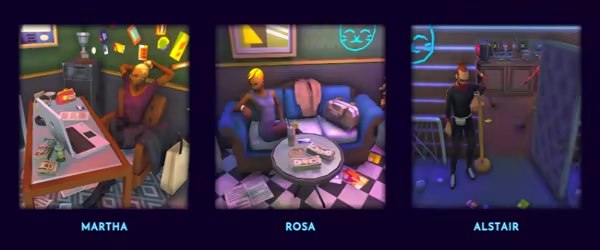
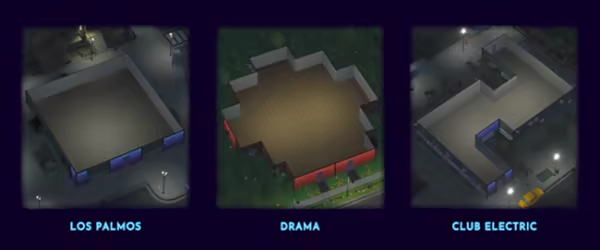
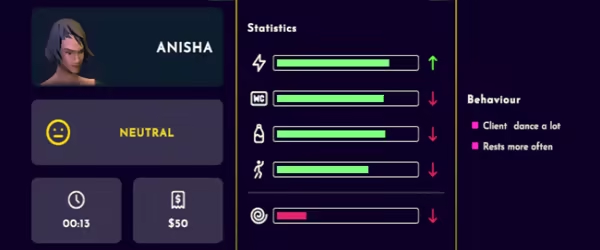
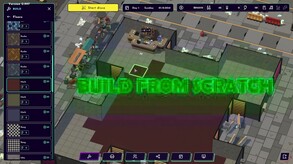
Disco Simulator is a tycoon type game based on club management. Your task will be to set up the club from scratch, put up walls, arrange furniture, hire staff, plan events, invite artists, put on concerts. Create your own club!
Modeled estimate, not a reported figure. How we estimate →
Media

About


Genres
Stats
All-time low is the lowest price we've recorded for this game since we started tracking it.
Languages: English*, French, Italian, German, Spanish - Spain, Polish, Simplified Chinese, Korean, Russian, Turkish, Japanese, Portuguese - Brazil +1 more
Engagement
Hours played at review time, across 40 reviews with recorded playtime.
Reviews
Themes across 40 recent reviews and how positive each mention is. A keyword signal, not full sentiment analysis.
positive critical· bar length = how often the theme comes up
Reviews
It's been fun for the few hours i played but clear that more needs to be added for this game to really hit hard.
은근 꿀잼쓰
schlecht
Disko trysko
good game
Ist ein sehr gutes Spiel Langeweile hat man nicht :D
I'm a regular clubgoer in real life and this game is fun, simple and easy to beat. Makes me miss clubbing every weekend haha.
Disco Simulator is a business-focused simulation that leans into the fantasy of owning and operating a nightclub, prioritizing planning, layout design, and customer flow over fast-paced interaction. Developed by Games Incubator in collaboration with Frozen Cave Studio and published by Games Incubator alongside PlayWay S.A., the game fits squarely within the publisher’s recognizable simulation catalog, offering a methodical, systems-driven experience where success comes from preparation and optimization rather than moment-to-moment action. The core concept places you in charge of building a nightclub from the ground up, beginning with a modest venue and limited resources. Early decisions, such as choosing a location and selecting a manager with specific bonuses, subtly shape the direction of your business. These initial choices affect staffing efficiency, customer satisfaction, and profitability, giving the opening hours a strategic tone that encourages experimentation across multiple playthroughs. Rather than overwhelming players immediately, the game introduces its mechanics gradually, allowing you to grow familiar with the rhythms of nightclub management before scaling up. Gameplay is divided between daytime planning and nighttime operation. During preparation phases, you design the club’s interior by placing walls, furniture, dance floors, lighting, bars, and decorative elements. Layout matters more than it might initially appear, as poor placement can cause bottlenecks, unhappy customers, or overwhelmed staff during peak hours. You are also responsible for hiring employees such as bartenders, cleaners, security guards, and DJs, each of whom plays a role in keeping the club functional and profitable. These management layers reward thoughtful organization, as a well-designed club can largely run itself once operations begin. When night falls and the club opens, the focus shifts from construction to observation and light intervention. Customers arrive with different preferences and expectations, spending money on drinks, dancing, and events if their needs are met. Problems arise in predictable but manageable ways: trash accumulates, lines form at the bar, fights break out, and staff can become overworked. While you can step in to resolve issues directly, much of the experience involves watching systems you’ve built either succeed smoothly or reveal inefficiencies that need to be addressed the next day. Customer satisfaction and reputation form the backbone of long-term progression. Visitors respond to music selection, drink pricing, decor quality, and event scheduling, and positive experiences lead to better word-of-mouth and higher attendance. Hosting concerts or DJ nights can dramatically boost income, but they also stress your infrastructure, testing whether your staffing and layout decisions were sufficient. This risk-reward dynamic adds tension to planning, as aggressive expansion can lead to short-term gains but long-term headaches if not supported properly. Visually, Disco Simulator adopts a clean, neon-tinted aesthetic that fits its subject matter without becoming overly flashy. Clubs glow with colored lights, crowds animate convincingly enough to sell the illusion of nightlife, and the interface keeps most information easily accessible. While not particularly detailed or cutting-edge, the presentation is functional and readable, which is essential in a management-focused title. Audio design, including music and ambient club sounds, reinforces the theme but can become repetitive during longer sessions, especially once the novelty of the soundtrack wears off. One of the game’s strengths is its relaxed pacing. Disco Simulator rarely demands rapid reactions, making it approachable for players who enjoy thoughtful planning over constant micromanagement. However, this same quality can also feel like a weakness. Once a club is running efficiently, nighttime phases can become passive, with long stretches where the player has little to do beyond watching profits accumulate. This can create a sense of detachment, particularly for players who prefer more active involvement during operational phases. Community reception reflects this balance of strengths and limitations. Many players appreciate the creative freedom, satisfying growth loop, and approachable mechanics, especially fans of casual tycoon and simulation games. Criticism tends to focus on pacing, repetitive nights, and areas where deeper interaction or more dynamic events could enhance engagement. Technical quirks and interface friction are occasionally mentioned, but they rarely overshadow the core experience. Ultimately, Disco Simulator is a management game that succeeds by offering a clear, focused fantasy: designing and running a nightclub as a business rather than an action-packed social space. It does not aim to overwhelm with complexity or surprise with dramatic twists, instead providing a steady, system-oriented experience built around planning, optimization, and gradual growth. For players who enjoy watching carefully constructed systems operate and improve over time, it delivers a satisfying and thematically distinct take on the simulation genre, even if it sometimes leans more toward observation than interaction. Rating: 7/10
It's a good game at its core. It could be something special, it just feels very bare bones. One of the biggest peeves about it, it feels like whoever made this game has never held an event or ran a club/bar before, so a little input from those who have is sorely needed... like, having the punters walking into your back rooms and storage is a serious no-no... why can't we lock the doors/assign them to staff only? Despite that, it's still pretty enjoyable to kill an hour or two.
Als jemand, der den alten Disco Manager früher rauf und runter gespielt hat, war ich anfangs skeptisch – aber dieses Spiel hat mich komplett überzeugt. Für mich ist es der wahre geistige Nachfolger des Klassikers. Warum sich der Kauf lohnt: Authentisches Spielgefühl: Man merkt sofort, dass die Entwickler den Charme des alten Teils verstanden haben. Es fühlt sich einfach "richtig" an. Nostalgie pur: Das Planen der Tanzfläche, das Management des Personals und der Aufbau des Clubs wecken genau die gleichen Glücksgefühle wie früher. Sinnvolle Neuerungen: Es behält die Seele des Originals bei, bringt aber genug frische Ideen und eine zeitgemäße Grafik mit, um stundenlang zu fesseln. Wer den alten Teil geliebt hat, kann hier blind zugreifen. Es ist eine wunderbare Hommage an die gute alte Zeit der Club-Simulationen. Fazit: Die Legende ist zurück – nur in einem neuen Gewand!
Related
Related
Trends
Modeled estimate over time, reconstructed from Steam's monthly review histogram.
Momentum
Pace estimated from the game's recent review growth (our daily snapshots) at its own sales-per-review ratio — a momentum signal, not booked sales.
Audience
Estimated from the language of this game's reviews — a proxy for where players are, not official Steam demographics.
Related
| Kono Aozora ni Yakusoku o Refine | $106.6K | 199 | 86% | $29.99 |
| KnightShift | $106.6K | 1.4K | 70% | $2.69 |
| BANNERMEN | $106.6K | 296 | 53% | $14.99 |
| Alder's Blood: Definitive Edition | $106.7K | 260 | 61% | $19.99 |
| Lumberjack Simulator | $106.6K | 211 | 64% | $17.99 |
| Super Puzzle Platformer Deluxe | $106.7K | 506 | 90% | $7.99 |