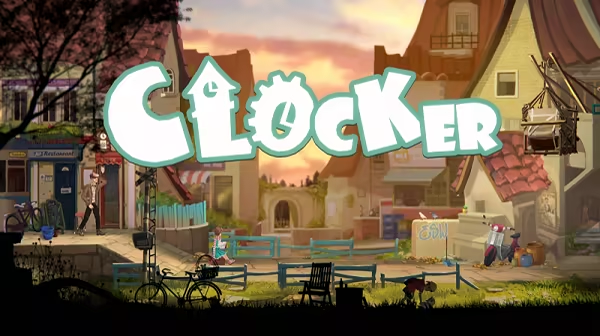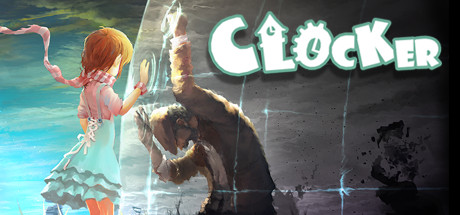
The world has been swallowed into the grey void of time and space. The only key to the winding puzzle - a time-controling pocket-watch - lies in the hands of a clockmaker Father. The watch creates a mysterious barrier between the Father and his estranged Daughter.
Modeled estimate, not a reported figure. How we estimate →
Media

About

Stats
All-time low is the lowest price we've recorded for this game since we started tracking it.
Languages: English, Simplified Chinese, Traditional Chinese, Spanish - Spain, Russian, Japanese, Portuguese - Portugal, German
Engagement
Hours played at review time, across 40 reviews with recorded playtime.
Reviews
Themes across 40 recent reviews and how positive each mention is. A keyword signal, not full sentiment analysis.
positive critical· bar length = how often the theme comes up
Reviews
(ノ◕ヮ◕)ノ*:・゚✧ The loading dock defeated me but the game is a still a beautiful game!
Это не просто головоломка, а глубоко проработанная история о времени, воспоминаниях и семейных отношениях. Игра привлекает оригинальным подходом и заставляет задуматься о том, как мы воспринимаем время и влияние различных поколений на нашу жизнь. Рекомендуется всем любителям интеллектуальных игр и хороших историй.
操控时间轴改变现实推进剧情的设定挺有意思,但是游戏实现起来比较灾难。 本作虽然是解谜玩法,但纯纯的就是猜作者脑洞,很多地方都没什么逻辑可言。 [spoiler]比如能踩的小鸟,飞机把碎片撞下来,踢球那个更是噩梦,逐帧操作[/spoiler] 整体来说,不看攻略自己尝试的话除了浪费时间并没有感觉到什么乐趣的存在,就是在通过穷举法尝试各种可能性,如果get不到作者的意图的话。 真结局和成就更是刁钻,很多细节都需要逐帧,并且错一点就要整体重来,非常恶心。 其他的关于人物动作僵硬,步行缓慢,音乐单曲循环,剧情聊胜于无之类的都不算什么大问题了。
首先,这游戏价格达到史低的时候买一份是值得的——几块钱买个画面还成的温馨解谜小游戏打发时间也没啥不好。 然后就说说问题:1、存档系统,无手动存档功能。2、成就系统,①成就设置为不同选择后的种种结果,但因为存档系统的问题,只能从关卡开头进行;②部分成就包括真结局设置过于扯淡,不看攻略基本没可能达成。3、解谜设置,部分解谜不太符合逻辑且条件严苛,基本上得和出题人对上脑电波才能成功。 总的说来整体的感受就是制作方是凭着一个不错的点子做了个游戏出来,然而除了这个点子之外,其他做的就都一般了。
攻略見ないと真エンド見れないようなゲームをなぜ買わないといけないんだ? 他人のプレイ動画見ればいいよね シナリオ 4/10 システム 3/10 音楽・ボイス 2/10 世界観・ビジュアル 4/10 コストパフォーマンス 2/10 15点
Довольно не плохая игрушка.
O jogo não era que eu esperava, até que é divertido mas é bem estranho.
非常垃圾的指引,如果你想打真结局那你有福了,四个条件缺一不可我可以理解,但是为什么重来必须一整个大章重来?如果不小心打错了进了假结局,那么不好意思,你将再次被硬控五分钟,如果你这个时候心急点了重新开始本章节,那么恭喜你将重头体验一遍这个游戏,为了这个真结局我反反复复打了三遍,如果你克服了以上种种,达成真结局条件进入结局,而你如往常一般接着往前走,而不是往后方那个在先前一进入就死的裂缝走的话,那么恭喜你你又进入了假结局,纯纯反人类设计,设计出来这种真结局条件的全家死光了
кайф имеется
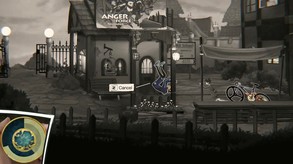
Clocker, developed by Wild Kid Games and published in collaboration with indienova, is a quiet yet emotionally resonant puzzle adventure that explores the relationship between time, memory, and family. At its core, it tells the story of a father and daughter separated by a mysterious temporal disturbance, and the player’s task is to guide them toward reunion through a series of intricate time-based puzzles. Rather than relying on dialogue-heavy storytelling, Clocker uses its mechanics and atmosphere to express emotion, creating a narrative that unfolds organically through the player’s actions. The concept is both intimate and ambitious, blending heartfelt storytelling with a mechanical complexity that challenges the mind as much as it tugs at the heart. The game begins with a clockmaker father who, through his experiments, accidentally alters the flow of time in his world. His pocket watch, a symbolic and literal embodiment of time’s fragility, becomes the key to manipulating the environment and solving puzzles. The world around him is frozen in stasis, and by using the watch’s power, the player can fast-forward or rewind the lives of the people and objects suspended in this moment. Later, control shifts to his daughter, who must navigate the consequences of her father’s actions. This dual-character structure is central to Clocker’s design, allowing the story to be told from two perspectives that ultimately intertwine. The father’s manipulation of time changes the world in unpredictable ways, while the daughter’s exploration and determination to fix the damage bring emotional weight to the mechanical process. Together, they create a layered narrative that feels deeply human despite its fantastical premise. Clocker’s puzzles are its strongest and most defining feature. Each scenario requires an understanding of cause and effect—how moving one element in the past will influence another in the future. The father can alter objects and characters in various temporal states, while the daughter deals with the results of those manipulations. This creates a fascinating interplay where one puzzle solution might disrupt another, forcing players to think in loops rather than straight lines. The sense of discovery that comes from seeing the world shift under your control is immensely satisfying, but it can also be demanding. Some puzzles require keen observation and patience, as the relationships between objects and time sequences are not always immediately obvious. The game never holds the player’s hand, and this deliberate ambiguity gives its challenges more depth. However, this complexity can sometimes lead to frustration, particularly when the logic behind a puzzle feels opaque or when progress hinges on noticing subtle environmental cues. Visually, Clocker adopts a hand-painted style that evokes a storybook or watercolor painting. The color palette shifts gently as time moves, helping to differentiate between temporal states and emotional beats. Environments are modest in size but filled with small, evocative details—a frozen fountain, a clock tower mid-chime, people caught mid-step—that remind the player of the stillness that defines this disrupted world. The art direction contributes significantly to the game’s emotional impact; it doesn’t aim for realism but for texture and tone, crafting a world that feels dreamlike yet grounded. The sound design complements this perfectly. A soft, piano-driven score carries the player through moments of discovery and sorrow, reinforcing the game’s themes of loss and connection. The music often fades into near silence, creating a reflective atmosphere that gives the player space to think and feel between puzzles. Where Clocker falters is mostly in pacing and accessibility. The game’s complexity, while intellectually engaging, can occasionally slow its momentum, especially when a puzzle sequence requires backtracking or extended trial and error. Some players might find the progression uneven, as moments of revelation are interspersed with stretches of confusion. The interface, though functional, occasionally feels cumbersome when switching between time manipulation and exploration, and the control scheme can feel imprecise in certain sections. These issues don’t undermine the experience entirely, but they do interrupt the flow of an otherwise meditative game. The narrative, while affecting, is minimalistic; it leaves many emotional threads implicit rather than stated, relying on the player’s interpretation to fill the gaps. This can be powerful for those who appreciate subtle storytelling, but others may wish for more direct emotional payoffs or dialogue-driven moments. Despite its imperfections, Clocker achieves something rare in its genre. It creates a space where logic puzzles serve emotional storytelling rather than distracting from it. Every action the player takes—every rewound moment, every shifted timeline—feels like an expression of the characters’ bond. The father’s attempts to control time mirror his desire to protect his daughter, while her journey to restore balance reflects her acceptance of loss and responsibility. The story concludes on a bittersweet note that reinforces the central idea that time cannot be conquered but only understood. Clocker leaves the player with a lingering sense of melancholy and reflection, not through grand spectacle but through quiet, deliberate design. It’s a small game with a big emotional heart, and its ability to connect complex mechanics with human storytelling marks it as a standout within the indie puzzle landscape. For players who value introspective, artistically driven experiences that challenge both the mind and the heart, Clocker is a moving and memorable journey through the fragile beauty of time. Rating: 7/10
Related
Related
Trends
Concurrent players on Steam, sampled daily since tracking started.
Audience
Estimated from the language of this game's reviews — a proxy for where players are, not official Steam demographics.
Related
| Mr. Hopp's Manor Escape | $3.9K | 53 | 94% | $3.99 |
| Ontotis | $3.9K | 117 | 83% | $1.79 |
| Smoking Simulator | $3.9K | 150 | 84% | $0.99 |
| Ravva and the Cyclops Curse | $3.9K | 106 | 92% | $1.99 |
| Brutalism22 | $3.9K | 70 | 64% | $3.99 |
| E-Girl RoomMate | $3.9K | 84 | 77% | $2.99 |
Related
| 7 Days to Die | $425.3M | 403.5K | 87% | $44.99 |
| Mount & Blade II: Bannerlord | $309.8M | 293.9K | 88% | $49.99 |
| Palworld | $279.6M | 445.8K | 94% | $20.99 |
| Clair Obscur: Expedition 33 | $263.7M | 178K | 95% | $47.99 |
| Project Zomboid | $239.1M | 460.8K | 94% | $19.99 |
| Terraria | $187.5M | 1.5M | 97% | $9.99 |