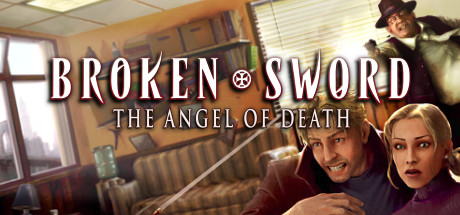
When a mysterious and beautiful woman rushes into George Stobbart’s office, pleading for help, he cannot know that he will be inextricably drawn into terrifying conspiracy, and a desperate search for a nefarious artifact of great and terrible power. For George, it looks like the world needs saving. Again.
Modeled estimate, not a reported figure. How we estimate →
Media
About
Stats
All-time low is the lowest price we've recorded for this game since we started tracking it.
Languages: English*, French*, Italian, German*, Spanish - Spain*languages with full audio support
Engagement
Hours played at review time, across 40 reviews with recorded playtime.
Reviews
Themes across 40 recent reviews and how positive each mention is. A keyword signal, not full sentiment analysis.
positive critical· bar length = how often the theme comes up
Reviews
good
Następna dziadowska odsłona i próba połączenia point and click z tomb raiderem... Gónwo z 2006 roku. Dla fanów gatunku tylko i wyłącznie.
Aunque recomiendo este juego, tiene muchas cosas mejorables, los personajes parece que no tienen vida, no vino traducido al español en cuanto a voces y el final, buf..., parece que esta hecho sin emociones, ojala le caiga un reforged y lo mejoren, porque mal no le vendria.
Broken Sword 1,2,5 are the best! 3 and 4 are the worst!
Genial
Zwar etwas holprig, aber es hat dennoch viel Charme und gehört einfach zur Reihe dazu.
Broken Sword 4: The Angel of Death is an intriguing but uneven continuation of the long-running adventure series, one that reflects both the enduring strengths of its characters and the transitional struggles of mid-2000s 3D adventure design. Developed by Sumo Digital in collaboration with Revolution Software, the game returns once again to George Stobbart’s globe-spanning misadventures, this time beginning in New York where a mysterious woman named Anna Maria drags him into a conspiracy involving ancient manuscripts, religious artefacts, and powerful factions hidden in the shadows. From the outset, the game is grounded in the familiar Broken Sword formula—witty dialogue, exotic locales, and an escalating mystery rooted in historical mythology—yet it also attempts to modernize itself through full 3D environments and hybrid controls. The result is a game filled with ambition and charisma but marked by technical limitations and pacing issues that prevent it from reaching the narrative and mechanical heights of its predecessors. One of the most enjoyable elements of The Angel of Death is its writing and characterization. George Stobbart retains his sardonic charm and dry wit, and his interactions with returning companion Nico Collard provide some of the game’s best moments. Their banter, filled with subtle warmth and occasional tension, grounds the adventure and reminds players why the series gained such a loyal following. The story also features a variety of atmospheric locations—New York, Rome, the Vatican, Istanbul, and the American Southwest—each with its own visual flavor and set of challenges. These settings contribute a sense of scale and variety that keeps the narrative moving, even when its pacing stumbles. The central mystery, revolving around lost knowledge and secretive religious orders, taps into the franchise’s hallmark themes and retains enough intrigue to motivate players through the more cumbersome segments. As a puzzle-driven adventure, the game offers a mix of traditional point-and-click design and more experimental mechanics. Inventory-based puzzles make a welcome return and are often clever, requiring careful observation of the environment and logical object use. Some of these puzzles stand out as well-constructed and satisfying, successfully capturing the spirit of classic Broken Sword design. At the same time, the developers introduce stealth sequences, hacking mini-games, and environmental navigation challenges that are less successful. These additions appear to be attempts to modernize the genre, but they sometimes feel tacked-on, disrupting the flow and leaning too heavily on clunky 3D movement. When puzzles stay grounded in thoughtful adventure logic, the game excels; when it veers into awkward action-lite segments, it loses momentum. Technically, Broken Sword 4 reflects the growing pains of its era. The shift to full 3D environments allows for more dynamic camera angles and richer location design, but it also introduces several problems. Character animations often lack nuance, facial expressions can feel stiff, and certain environments appear sparse or under-detailed. The camera, meanwhile, can be unwieldy, especially when navigating tight spaces or trying to locate small interaction points. Combined with inconsistent object detection and occasionally awkward controls, these issues can turn simple tasks into minor frustrations. The game’s overall visual identity is functional but noticeably dated, lacking the timeless appeal of the earlier 2D entries. Performance aside, one of the more contentious aspects of the game is its pacing. The opening chapters build intrigue effectively, balancing humor, mystery, and puzzle-solving quite well. However, the narrative later begins to lose coherence and urgency, with certain sequences feeling rushed or underdeveloped. Some plot threads are introduced with great promise but resolved abruptly, while others suffer from uneven storytelling. This does not entirely undermine the experience, but it does create a lingering sense that the game’s narrative ambitions outpaced its execution. Despite its flaws, The Angel of Death offers enough charm to appeal to longtime fans of the series. There’s a nostalgic pleasure in joining George and Nico on another adventure, navigating conspiracies, deciphering ancient texts, and outwitting dangerous adversaries. The solid voice acting, familiar tone, and occasionally brilliant puzzle design underscore the qualities that made Broken Sword a beloved franchise. The game may not reach the heights of the first two entries, but it carries enough personality and effort to feel like a legitimate, if imperfect, continuation. Ultimately, Broken Sword 4: The Angel of Death stands as a transitional chapter for the franchise—caught between the classic point-and-click sensibilities of the past and the push toward fully 3D cinematic adventures. Its heart remains intact, characterized by sharp writing, global intrigue, and an endearing protagonist pair, but its execution falters under the weight of technical limitations and uneven pacing. For dedicated fans, it offers a worthwhile, if flawed, return to George Stobbart’s world. For newcomers, it functions more as a historical curiosity—an example of how beloved adventure series struggled to evolve in changing technological landscapes. Rating: 5/10
J'ai tenu 30 mns, pourri de bugs, mur invisible, inventaire qui s'ouvre pas, j'ai arrété avant d'en trouver d'autres et me faire rembourser.
+ 1) Switching between mouse clicking to wasd 2) Decent graphics 3) Same old characters 4) Cool puzzles including researching the manuscripts and hacking the computers - 1) Clunky. Sometimes you just get stuck and need to reload the save 2) Nico's voice acting was terrible sometimes. Also her model barely moved at first. Is she reskin of Anna Maria? 3) Terrible humor. Terrible interactions with NPC. 4) The story seems rushed in the end 5) Repetitiveness in actions to move to the next room. 6) Too much pixel hunting. You gotta squint really hard to find something on the screen. 7) Some solutions didn't make any sense Overall, this might be my least favorite game in the series. It's very frustrating, boring and some stuff aged really badly. With proper budget it might have been better, but the jokes and the dialogues are still very weak so IDK. Previous titles also had problems with rushed endings but they had its charm. Think Sleeping Dragon might be still my favorite in the series : )
I haven't gotten terribly far into the game but I've already run into a game breaking bug and and several annoyances that got me stuck for a long time. There's a staircase near the beginning that allowed be to go down but I could not go back up (it was a dead end at the bottom so I had nowhere to go but back up). I had to start over from the beginning as I had not saved yet. I got stuck not long after because there was no hotspot on a ladder that I needed to climb. You had to click on just the right spot without a hotspot to indicate that you could even interact with it. I clicked on the ladder many times without success as there was no other way to go that I could see. But if you don't click on just the right spot (near the top for some reason) you can't climb it. Then there's another puzzle where I had figured out the correct action to take but doing it the first time doesn't work. There was no reason to think doing it again would give me a different outcome so I wasted a lot of time trying to do other things. The solution turned out to be doing the same action a 2nd time.
Related
Related
Trends
Modeled estimate over time, reconstructed from Steam's monthly review histogram.
Momentum
Pace estimated from the game's recent review growth (our daily snapshots) at its own sales-per-review ratio — a momentum signal, not booked sales.
Audience
Estimated from the language of this game's reviews — a proxy for where players are, not official Steam demographics.
Related
| Human Fall Flat | $109.3M | 225.6K | 95% | $19.99 |
| House Flipper | $65.8M | 110.8K | 94% | $24.99 |
| The Scroll of Taiwu : Beyond The Dome | $62.3M | 69.6K | 66% | $29.99 |
| Slime Rancher 2 | $45.9M | 49.2K | 95% | $29.99 |
| Castle Crashers® | $41.4M | 139.7K | 96% | $14.99 |
Related
| 幻想三国志3 | $17.1K | 169 | 48% | $3.99 |
| Shining Princess Lapisphilia | $17.1K | 52 | 79% | $12.99 |
| Zero Killed | $17.1K | 61 | 51% | $14.99 |
| Imagination | $17.1K | 61 | 51% | $14.99 |
| Harmonia Full HD Edition | $17.1K | 88 | 97% | $5.99 |
| Island Life With Mayalala | $17.1K | 65 | 82% | $10.39 |