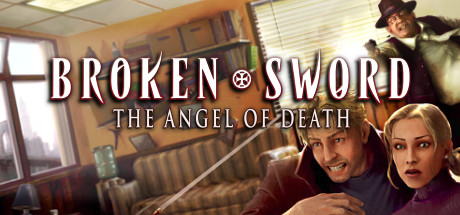
Broken Sword 4: The Angel of Death is an intriguing but uneven continuation of the long-running adventure series, one that reflects both the enduring strengths of its characters and the transitional struggles of mid-2000s 3D adventure design. Developed by Sumo Digital in collaboration with Revolution Software, the game returns once again to George Stobbart’s globe-spanning misadventures, this time beginning in New York where a mysterious woman named Anna Maria drags him into a conspiracy involving ancient manuscripts, religious artefacts, and powerful factions hidden in the shadows. From the outset, the game is grounded in the familiar Broken Sword formula—witty dialogue, exotic locales, and an escalating mystery rooted in historical mythology—yet it also attempts to modernize itself through full 3D environments and hybrid controls. The result is a game filled with ambition and charisma but marked by technical limitations and pacing issues that prevent it from reaching the narrative and mechanical heights of its predecessors.
One of the most enjoyable elements of The Angel of Death is its writing and characterization. George Stobbart retains his sardonic charm and dry wit, and his interactions with returning companion Nico Collard provide some of the game’s best moments. Their banter, filled with subtle warmth and occasional tension, grounds the adventure and reminds players why the series gained such a loyal following. The story also features a variety of atmospheric locations—New York, Rome, the Vatican, Istanbul, and the American Southwest—each with its own visual flavor and set of challenges. These settings contribute a sense of scale and variety that keeps the narrative moving, even when its pacing stumbles. The central mystery, revolving around lost knowledge and secretive religious orders, taps into the franchise’s hallmark themes and retains enough intrigue to motivate players through the more cumbersome segments.
As a puzzle-driven adventure, the game offers a mix of traditional point-and-click design and more experimental mechanics. Inventory-based puzzles make a welcome return and are often clever, requiring careful observation of the environment and logical object use. Some of these puzzles stand out as well-constructed and satisfying, successfully capturing the spirit of classic Broken Sword design. At the same time, the developers introduce stealth sequences, hacking mini-games, and environmental navigation challenges that are less successful. These additions appear to be attempts to modernize the genre, but they sometimes feel tacked-on, disrupting the flow and leaning too heavily on clunky 3D movement. When puzzles stay grounded in thoughtful adventure logic, the game excels; when it veers into awkward action-lite segments, it loses momentum.
Technically, Broken Sword 4 reflects the growing pains of its era. The shift to full 3D environments allows for more dynamic camera angles and richer location design, but it also introduces several problems. Character animations often lack nuance, facial expressions can feel stiff, and certain environments appear sparse or under-detailed. The camera, meanwhile, can be unwieldy, especially when navigating tight spaces or trying to locate small interaction points. Combined with inconsistent object detection and occasionally awkward controls, these issues can turn simple tasks into minor frustrations. The game’s overall visual identity is functional but noticeably dated, lacking the timeless appeal of the earlier 2D entries.
Performance aside, one of the more contentious aspects of the game is its pacing. The opening chapters build intrigue effectively, balancing humor, mystery, and puzzle-solving quite well. However, the narrative later begins to lose coherence and urgency, with certain sequences feeling rushed or underdeveloped. Some plot threads are introduced with great promise but resolved abruptly, while others suffer from uneven storytelling. This does not entirely undermine the experience, but it does create a lingering sense that the game’s narrative ambitions outpaced its execution.
Despite its flaws, The Angel of Death offers enough charm to appeal to longtime fans of the series. There’s a nostalgic pleasure in joining George and Nico on another adventure, navigating conspiracies, deciphering ancient texts, and outwitting dangerous adversaries. The solid voice acting, familiar tone, and occasionally brilliant puzzle design underscore the qualities that made Broken Sword a beloved franchise. The game may not reach the heights of the first two entries, but it carries enough personality and effort to feel like a legitimate, if imperfect, continuation.
Ultimately, Broken Sword 4: The Angel of Death stands as a transitional chapter for the franchise—caught between the classic point-and-click sensibilities of the past and the push toward fully 3D cinematic adventures. Its heart remains intact, characterized by sharp writing, global intrigue, and an endearing protagonist pair, but its execution falters under the weight of technical limitations and uneven pacing. For dedicated fans, it offers a worthwhile, if flawed, return to George Stobbart’s world. For newcomers, it functions more as a historical curiosity—an example of how beloved adventure series struggled to evolve in changing technological landscapes.
Rating: 5/10