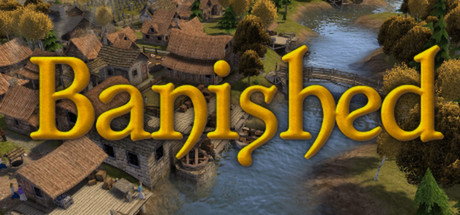
In this city-building strategy game, you control a group of exiled travelers who decide to restart their lives in a new land. They have only the clothes on their backs and a cart filled with supplies from their homeland. The townspeople of Banished are your primary resource.
Modeled estimate, not a reported figure. How we estimate →
Media

About
Genres
Stats
All-time low is the lowest price we've recorded for this game since we started tracking it.
Languages: English**languages with full audio support
Updates
Build ids and update times come straight from Steam's PICS — the same source SteamDB reads. Patch history grows as we record new builds.
Engagement
Hours played at review time, across 608 reviews with recorded playtime.
Reviews
Themes across 606 recent reviews and how positive each mention is. A keyword signal, not full sentiment analysis.
positive critical· bar length = how often the theme comes up
Reviews
Banished (Vanilla) – A Player Review Based on My Run Banished is the kind of city-builder that smiles politely while sharpening a knife behind its back. On paper, it’s a simple loop: gather food, keep people warm, make tools, expand. In practice, it’s a brilliantly cruel logistics simulator where “I have 7,000 food” can still mean “my houses are empty and everyone is about to die.” The Experience: From “Why Are You Like This?” to “Okay, I Get It” My early game was a repeating pattern of hope and collapse. I kept hitting a wall around 40–45 population, where things stopped feeling manageable and started feeling like an uncontrolled system failure. The classic Banished trap showed up again and again: resources existed, but not where people needed them. Barns were full, homes were empty, morale dropped, births stalled, and suddenly the village wasn’t a village anymore. The moment the game finally “clicked” was when I stopped treating it like a production problem and started treating it like what it really is: a distribution problem. The key wasn’t adding more buildings. It was anchoring logistics. The Real Lesson: Logistics Is the Main Boss If your houses are empty, it doesn’t matter how much food or firewood you have in total. People don’t live in your summary screen, they live in their homes. That single realization flipped the whole run. What worked: Enclave thinking: production clusters with nearby storage, not everything scattered. Barns placed with intent: storage near sources and near housing mattered more than “more production.” Laborer buffer: having enough people free to haul and stabilize the system was the difference between survival and collapse. Slow expansion: keeping builders low and avoiding construction frenzies prevented the economy from starving itself. Once I stabilized distribution, the game stopped being a disaster simulator and became a calm machine. Livestock: The Great Love Story (With Casual Tragedy) Livestock felt like a turning point, but also a source of confusion early on. Chickens, in particular, were ridiculously effective. Once eggs started flowing consistently, it was like installing a safety net under the entire food economy. Eggs became a steady baseline that made everything else easier to manage. Sheep and cows added depth (and production options), but livestock can also be maddening. Animals sometimes seemed to “disappear” even without obvious player mistakes, which adds a frustrating layer of uncertainty. Still, once it worked, it worked. Trading, Nomads, and Disease: The Drama You Didn’t Ask For Eventually, I got my first nomads (only nine, thankfully), and of course they immediately brought illness. Influenza and scarlet fever popped up, but the outbreak stayed small: a functioning hospital and stable logistics made the difference between a brief scare and a population wipe. Later on, I also built a proper “civilized” economy: sheep, cows, chickens, cherry-based alcohol, plus the usual staples like potatoes and cabbage. At that point the game shifted again: survival wasn’t the question anymore. It became about scaling, trading, and map constraints. Endgame: When You “Win” by Getting Bored By the time I hit 164 citizens, I realized the real endgame of Banished is simple: you stop because you’ve proven you can. The game doesn’t roll credits. It just gradually turns into a sprawling logistics sandbox where the only real limiter is map space (and your patience). What Banished Does Brilliantly Meaningful difficulty: failures feel earned, and lessons stick. Logistics-focused gameplay: it rewards planning, not button-mashing. Strong progression: the shift from survival panic to stable economy is genuinely satisfying. Tension without combat: the threats are systemic, not scripted. What Frustrates Opacity: the game often doesn’t clearly tell you why things went wrong. Snowball collapses: one weak link (tools, firewood, distribution) can cascade fast. Livestock weirdness: animal management can feel unintuitive, and occasional “disappearances” don’t help. Final Verdict Banished is harsh, smart, and weirdly addictive. It punishes sloppy planning and rewards calm discipline. Once you understand that the real enemy is logistics, not food production, the whole game opens up. And when it finally works, it feels less like you “played well” and more like you tamed a system that wanted you dead. I stopped at 164 citizens because I was done proving the point. Banished didn’t beat me this time. That’s the win.
I've been sinking time into Banished for almost a decade now, and although modders and other devs have built upon its foundation, its still worth getting. As a teen growing up on the Anno, Stronghold and especially The Settlers games, I still recall being captivated by Banished and its unique premise; no combat, no tech tree, no aim for glory or expansion, just a bunch of exiled peasants having to deal with food security, population growth/decline and just winter in general. I loved the detailed and complex chain of production and resource management of The Settlers games (like in IV, different workers had different food preferences which affected their efficiency lol) and Banished scratched the same itch, except you're not amassing resources just to throw at the military or for conquest, and this isolationist schtick was not only weirdly refreshing in 2014, but it ushered in a new chapter in the RTS city building genre which pared things right back to just survival. The gratification came from creating a balance, and the more tenuous it was, the more gratifying it is was when you got it. Now I'm just waxing lyrical, but the dev made an incredible, challenging yet rewarding foundation, and I think that was always his goal, because he opened it up to modders only a few months after launch. But for this reason, I believe Banished still holds up and would still recommend it.
don't play this game without mods, else you'll do everything in it in 4hours and get bored. still recomended as it is fun and very challenging
Challenge
recomendo jogo extremamente dificil
Eins der schönsten Ausbauspiele, und hat sich für das alter auch top gehalten, workshop hat sehr viele mods die das base game gut erweitern, immernoch ein top spiel und krass das nur eine person dahinter steckt
I come back time and time again to play this as a comfort game Not very comforting when you get into a "people starve - less crops gets harvested - repeat" loop :D
I like it
This is a wonderfully difficult game.
Its a great game
Related
Related
Trends
Modeled estimate over time, reconstructed from Steam's monthly review histogram.
Engagement
DAU/MAU are modeled from peak concurrent players (≈×8 and ×28) — Steam publishes no active-user counts, so treat these as rough estimates, not reported figures.
Audience
Audience
Estimated from the language of this game's reviews — a proxy for where players are, not official Steam demographics.
Games most often reviewed by the same players — an audience-affinity signal from our review sample, not full ownership data.
Related
| Two Point Hospital | $28.8M | 34.8K | 92% | $29.99 |
| POSTAL 2 | $28.9M | 136.1K | 97% | $9.99 |
| Foxhole | $28.7M | 52.5K | 80% | $29.99 |
| A Hat in Time | $29.1M | 53.3K | 98% | $29.99 |
| The Walking Dead: The Telltale Definitive Series | $29.1M | 46K | 97% | $49.99 |
| Ori and the Blind Forest: Definitive Edition | $29.1M | 71.2K | 95% | $19.99 |