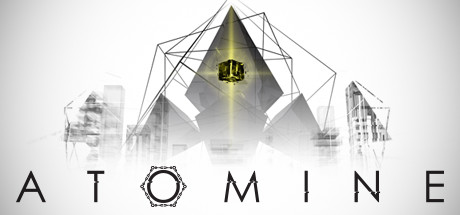
Atomine is a twin stick procedural shooter rogue-lite set in a virtual world with minimalist design, where the player recounts on the screen the real events of STUXNET, the first weapon ever created in the form of computer virus.
Modeled estimate, not a reported figure. How we estimate →
About
Stats
All-time low is the lowest price we've recorded for this game since we started tracking it.
Languages: English*, Italian, Russian, French, German, Simplified Chinese, Korean, Japanese*languages with full audio support
Engagement
Hours played at review time, across 40 reviews with recorded playtime.
Reviews
Themes across 40 recent reviews and how positive each mention is. A keyword signal, not full sentiment analysis.
positive critical· bar length = how often the theme comes up
Reviews
Arkada sevdiğim yayıncıları dinlerken, bazen müzik dinlerken oynamalık bir oyun. "Glitch" sanat tarzı ve siberpunk atmosferini beğendim. Roguelite türü olduğu için öldüğünüzde başa dönüyorsunuz ama "bir tur daha" dedirten o bağımlılık hissini çok iyi veriyor. Hızlı refleksler gerektiren, ekranın kaosa dönüştüğü anlarda bile kontrolü elden bırakmamanız gereken bir yapım. It's a game to play while listening to my fav streamers or sometimes music in the background. I liked the "Glitch" art style and the cyberpunk atmosphere. Since it is a Roguelite genre, you start over when you die but it gives that addictive feeling that makes you say "just one more run" very well. It is a production that requires fast reflexes and demands you not to lose control even when the screen turns into chaos.
Aparentemente amigável mas muito frenético. É um bom jogo e tem que ter paciência pra sua dificuldade. Seu cenário e design minimalistas tão um bom toque pra sua arte. É um jogo bom se for pego em promoção.
ATOMINE is a fast-paced twin-stick shooter that blends the sleek precision of arcade-style combat with the unpredictability of roguelike progression. Developed and published by Broken Arms Games, it stands out not through an elaborate story but through its conceptual design — an abstract, digital battleground where players embody a self-replicating computer virus infiltrating layers of a virtual defense network. The game’s aesthetic draws heavily from cyberpunk and hacking imagery, transforming data streams, firewalls, and system nodes into visually striking arenas of chaos. Beneath the sharp neon lines and glitch effects, however, lies a deceptively challenging experience that tests reflexes, spatial awareness, and adaptability across procedurally generated stages filled with relentless enemies and shifting upgrades. The premise of ATOMINE is simple yet effective: as an autonomous digital entity inspired by the infamous Stuxnet virus, you’re unleashed into a hostile system to dismantle its defenses one layer at a time. Each run through the network represents a hacking session, and every node cleared brings you closer to system domination. The game wastes no time on cutscenes or exposition — the narrative unfolds almost entirely through aesthetic cues and environmental symbolism. Enemies take the form of system programs and anti-virus constructs, while each level is styled like a corrupted operating environment filled with static distortion and pulsing electronic soundscapes. This design choice reinforces the feeling of inhabiting a digital battlefield where code is both weapon and terrain. The stripped-down storytelling works in the game’s favor, keeping the focus on survival, movement, and progression rather than lore-heavy explanations. At its core, ATOMINE’s gameplay is a refined exercise in precision and control. Using dual-stick mechanics, players move fluidly through confined spaces while firing in any direction, balancing aggressive offense with constant evasion. Each run is procedurally generated, ensuring that level layouts, enemy spawns, and upgrade drops vary with every attempt. The most distinctive system in the game is its modular weapon customization. As you progress, you collect modules that modify your gun’s performance — increasing fire rate, bullet spread, damage, or adding elemental and mechanical effects such as ricochets or energy beams. The modules stack in complex ways, allowing for experimental builds that can drastically change how you approach combat. This freedom of customization is one of ATOMINE’s major strengths, offering a sense of strategic experimentation rarely seen in the genre. Every new configuration feels like fine-tuning a digital weapon built from code, adapting to the escalating demands of the system’s defenses. The visual presentation complements the gameplay’s precision beautifully. ATOMINE’s minimalist wireframe aesthetic evokes the sensation of navigating a living circuit board, with levels rendered in glowing vectors and dynamic color palettes. Enemies shimmer into existence with a burst of static, and particle effects explode into bright, fragmented patterns when you destroy them. The clean geometry and abstract landscapes not only create a distinct mood but also serve a functional purpose — clarity in chaos. Despite the density of projectiles and enemies on screen, the visual style ensures that movement and positioning remain readable. The soundtrack underscores the experience with pulsing electronic beats and ambient distortion, perfectly matching the rhythm of the action. While the sound design adds immersion, its intensity can be overwhelming at times due to limited volume control, a flaw that some players have noted. Nonetheless, the audiovisual synergy captures the frenetic energy of hacking through hostile systems, wrapping every encounter in a layer of electric tension. Where ATOMINE falters slightly is in its sense of progression and variety. While the procedural generation keeps runs unpredictable, the environments and enemy designs eventually begin to blend together. The visual theming, though consistent, doesn’t evolve much across the campaign, and players who spend extended time with the game may find themselves craving more distinctive zones or bosses. The combat loop, while tight, relies heavily on small variations in module combinations to maintain freshness. There is also a degree of opacity in how some systems work — weapon stats and item effects are conveyed through minimalist icons rather than clear explanations, forcing players to learn through experimentation. For some, this discovery-driven design adds depth; for others, it can lead to confusion and frustration, especially during tense moments where indecision can result in death. Even the interface itself can be punishing — it’s possible to take damage while navigating upgrade menus mid-combat, which reinforces the game’s relentless pace but can feel unfair in execution. Boss fights form the highlights of ATOMINE’s challenge, pushing players to apply everything they’ve learned about movement, timing, and weapon control. Each boss behaves like a specialized anti-virus construct, attacking with unique bullet patterns and environmental hazards. These encounters are chaotic and demanding, often filling the screen with projectiles and forcing players into split-second decisions. While thrilling, the difficulty spikes can feel abrupt, and the lack of clear telegraphing sometimes makes certain attacks hard to anticipate. Despite these flaws, the adrenaline rush of surviving a boss encounter and advancing to the next layer of the system remains immensely satisfying. The game rewards adaptability and persistence, encouraging repeated runs not just to unlock new modules but to refine your own mastery of the mechanics. In terms of performance and technical execution, ATOMINE runs smoothly for the most part, though minor frame rate dips can occur during heavy particle effects or when multiple enemies swarm the player. The controls are responsive and tight, making even the most frantic battles feel manageable. The roguelike progression system is well-implemented, allowing for gradual improvement across multiple sessions, but the balance between risk and reward can feel skewed at times — certain module drops are essential to surviving later levels, and unlucky runs can end prematurely through no fault of the player. Still, the compact design ensures that failure never feels punishing for long; a new attempt is always just a moment away. Ultimately, ATOMINE succeeds as an engaging, skill-based shooter that thrives on momentum and precision. Its thematic focus on digital warfare gives it a distinct personality within the roguelike genre, and its blend of fluid combat, procedural design, and modular customization provides a satisfying gameplay loop. While it suffers from repetition and occasional rough edges, it remains a polished and challenging experience that rewards mastery over time. For players who appreciate minimalist aesthetics, fast reflexes, and experimentation-driven gameplay, ATOMINE offers a sleek and stylish descent into a world of data corruption and algorithmic warfare. It’s a game that doesn’t reinvent the twin-stick shooter, but it sharpens it to a fine, electric edge — a pulse of cybernetic adrenaline rendered in glowing lines of pure code. Rating: 7/10
хорошие игры заебись
It's too difficult for me, but it doesn't mean it's not a good game.
ATOMINEは斜めからの見下ろし型シューティングだ。操作方法もシンプルであり、ある程度の運と弾除けスキルとグラボの性能があれば楽しめるゲームとなっている。一番下にまとめを書いてあるので時間がある方は説明を読んでいって欲しい。 プレイヤーはランダムに生成されるマップで敵を倒し、自身をアップグレードしていく。敵を倒すと緑色のキューブが生まれる。それを一定数回収するとレベルアップし、どのステージにもある(ボス部屋は除く)改造部屋でその回限りのパッシブを解放できる。個人的におすすめなのは「レベルアップ毎に1エネルギー回復」「外部プログラムによる援護」などだ。 また、改造部屋ではステージ毎に自身の武器を強化できる。様々な種類があり非常にワクワクするのだがこのゲームは高い攻撃力と射程を持ち合わせているものが全てなので、ほとんどのアップグレードはハズレとなる。 このゲームはグラボの3Dの使用が恐ろしく恐ろしい為ある程度の性能が無ければ快適に遊べないだろう。また、後半は弾幕ゲーになったりするので弾除けスキルも必要だ(風神録3面すら厳しい私でも遊べるのでそこまでではないが)。 これ以上書くとさすがに長いためまとめに入らせていただく。 まとめ 要求されるもの 運 弾除けスキル グラボの性能 大まかな内容 敵を倒したり特殊部屋に入ったりして自身を強くしていく 個人的にはおすすめのゲームではあるのだがこの価格のゲームにしては粗い所があるため、(主に説明不足)セールの際に購入するのがおすすめだ。(サマーセールでは98円だった)
It's like the hacker missions in the Sly Cooper series but harder and designed to actually make your life hell. This is extremely hard, but very satisfactory when you get a deep run.
enes batur kaza (GERÇEK)
-Can barley get past the first boss. 80% of the time shots dont register when im clearly shooting through the gaps. and also tried shooting the red sheilds too. -Enemy projectiles are very random and are difficult to kite -Enemies will spawn directly ontop of you making you instantly loose health without enough time to react to them -Projectiles will randomly do damage. Sometimes its 1 sometimes its 2. This happens on at least all of the new characters I've unlocked so far. (i also know enemies do different amount of damage 0.20, 0.50, 1.0 dmg) -Camera will completly brick and glitch out each and everytime I Alt Tab ending as a run killer. Im just trying to get some achivements for my profile and id be more ok with the other issues and glitches i have. However that very first boss is so obnoxious and stupid. none of your attacks register and looking it up online it seems im not the only one having this issue and people are also having hit registration issues on the other bosses too.
изначально качал игру для оформления, уж больно красивые буквы но так-то прикольная аркада. поэтому выбил все ачивки сам. советую
Related
Related
Trends
Concurrent players on Steam, sampled daily since tracking started.
Audience
Estimated from the language of this game's reviews — a proxy for where players are, not official Steam demographics.
Related
| A Walk in the Dark | $76.2K | 388 | 80% | $6.99 |
| Maids of Storm | $76.2K | 152 | 93% | $12.99 |
| BOXROOM | $76.1K | 247 | 72% | $7.99 |
| DIG IT! - A Digger Simulator | $76.2K | 214 | 62% | $9.99 |
| Project Chemistry | $76.1K | 222 | 76% | $12.99 |
| GOHOME | $76.2K | 362 | 83% | $14.99 |