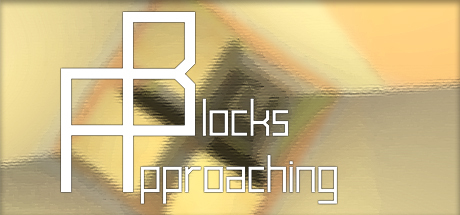
Play and study foreign words! Try dodge from blocks. When you loss, showing words in a foreign language. To complete each level hold 100 seconds. First two levels are quite simple, but starting from the third, it will be hard.
Modeled estimate, not a reported figure. How we estimate →
Discounts
Every price cut of more than 20% we have observed, in each market that quoted one, with this game's chart position on either side of it. These are episodes, not a model: a sale is one event, and one event cannot tell you what the next one will do.
Reviews, worldwide (the counter carries no country): 0/day in the week to Aug 25 → 0/day in the week after.
For scale, across Steam · Top Sellers · Brazil over the last 30 days: the 25 chart moves that followed a price cut of more than 20% went a median of 10 places towards #1, and the 2,413 moves with no price cut behind them went 2 away. One store, one chart, one country — it is the only place we have enough observations to say even that.
Prices outside the United States have been collected since 6 August 2026 and chart positions since 19 July 2026, so a cut older than that has no market to compare and a market that joined later has no history yet. Nothing here is converted between currencies.
About
Stats
All-time low is the lowest price we've recorded for this game since we started tracking it.
Engagement
Reviews
Themes across 45 recent reviews and how positive each mention is. A keyword signal, not full sentiment analysis.
Reviews
Approaching Blocks is a game that builds its entire experience around a simple idea and attempts to prove how much depth can emerge from that simplicity. Instead of relying on elaborate stories, progression systems, or complex mechanics layered together, the game appears focused on pure puzzle-solving. It strips away unnecessary distractions and places all attention on movement, positioning, and problem-solving. The result is an experience that feels designed for players who enjoy learning systems and gradually mastering challenges through understanding and practice. The core concept revolves around blocks that constantly influence the player's available space and movement options. While the mechanics may initially seem straightforward, the pressure created by shifting positions and changing conditions quickly transforms simple situations into increasingly demanding challenges. Players are required to think carefully about each action because every movement can affect future possibilities. Solutions are not simply about responding to immediate obstacles but about understanding how current decisions shape the entire situation moving forward. One of the stronger qualities of the game is how it appears to create complexity without introducing overwhelming systems. Rather than continuously adding entirely new mechanics, the challenge seems to evolve by changing the relationships between existing elements. This approach often works well in puzzle design because players are encouraged to fully understand one idea before seeing it used in unexpected ways. Familiar mechanics begin creating unfamiliar situations, forcing players to adjust and rethink assumptions they may have developed earlier. The learning process itself becomes an important part of the experience. Early stages likely introduce players to basic concepts and movement patterns, but later situations appear designed to test how effectively those lessons have been understood. Many puzzle games create satisfaction through moments where confusion suddenly transforms into clarity, and Approaching Blocks seems built around that type of progression. Players gradually shift from relying on trial and error toward recognizing patterns and anticipating outcomes before they happen. Another interesting aspect is the balance between careful planning and constant attention. Since movement and positioning appear central to gameplay, players are encouraged to remain engaged and think actively rather than waiting passively for opportunities. Challenges seem designed to create pressure without completely removing the need for strategy. The game asks players not only to identify solutions but also to determine when and how those solutions should be executed. The visual presentation also appears suited to the type of experience the game wants to deliver. Puzzle-focused games frequently benefit from clean and readable design because clarity becomes more important than visual complexity. When players need to understand movement and spatial relationships quickly, unnecessary detail can become a distraction. Simpler visual choices often help strengthen gameplay by keeping attention focused directly on the mechanics and information that matter. Progression in puzzle games also creates a different kind of satisfaction compared to many other genres. Instead of becoming stronger through statistics or unlocking more powerful abilities, improvement comes from personal understanding. Difficult situations that initially appear impossible eventually become manageable because players themselves improve rather than because their character receives upgrades. This creates a rewarding feeling because success feels directly connected to learning and persistence. Of course, games built around focused mechanics can naturally appeal to a specific audience. Players looking for extensive storytelling, large worlds, or broad gameplay variety may feel that the experience remains heavily centered on its main concept. Puzzle games also tend to demand patience and experimentation, which may not appeal equally to everyone. Some players may eventually wish for additional systems or more dramatic shifts in gameplay beyond the core mechanics. Despite this, Approaching Blocks succeeds because it understands the value of refining a single idea rather than overcomplicating it. Instead of relying on constant spectacle or endless features, it concentrates on building meaningful challenges through intelligent design. Sometimes a strong concept supported by thoughtful progression can create an experience that feels more satisfying than games with much larger ambitions. For players who enjoy puzzle experiences built around logic, spatial awareness, and steadily mastering increasingly difficult situations, Approaching Blocks offers a focused and rewarding challenge that emphasizes skill and understanding above everything else. Rating: 6/10
Media

Related
Related
Price dynamics, follower growth, revenue and sales trajectories with interactive tooltips
This and every other Pro feature is free until October 20, 2026. A free account is all it takes.
Languages: English
Hours played at review time, across 45 reviews with recorded playtime.
positive critical· bar length = how often the theme comes up
Норм
уууууу фрактальные кубы, класс! На вечер посидеть позалипать пойдёт
A disgusting game with the same controls. A special "thank you" to the developer for the third level, which can be used to torture people. Don't even take it on the maximum discount.
I am the storm that is approaching Provoking black clouds in isolation I am reclaimer of my name Born in flames, I have been blessed My family crest is a demon of death! Forsakened, I am awakened A phoenix's ash in dark divine Descending misery Destiny chasing time Disappear into the night Lost shadows left behind Obsession's pulling me Fading, I've come to take what's mine!
it's a pretty experimental way to learn some words, but there aren't many of them, and they're repeated frequently. It's okay to spend a couple of hours on it
That was an interesting game—it almost made me throw up :)
бред
You start playing thinking, “Alright, just a casual little game, I’ll beat it in half an hour, grab a few achievements, and move on.” Spoiler: you’re dead wrong. The first two levels are manageable, even though right away something feels off — the hitboxes are imprecise, and the camera spins in a disorienting way. Then you hit level three and realize this game wasn’t made to be beaten. It was designed to break you. You have to dodge obstacles while falling, with a camera that not only rotates but slightly shifts your position, forcing you to constantly correct your movement. You can’t tell if it’s a bug, a deliberate design choice, or the developer’s personal revenge against the world. If the creator did this on purpose, it’s borderline genius in sadistic design. If it wasn’t intentional... that might be even worse. The background music, though? Absolutely slaps. Looking for a chill experience? Don’t bother. Want to rage at your screen over a €2 game with 100-second levels? Be my guest. Recommended only if you’ve got a bit of self-hating masochism in you. And even if you don’t expect it… you might actually end up liking it. Rating: 10/10
uuuuuu fractal cubes, cool! It's a good idea to sit and stare for an evening
Selling now
See how fast this game is selling right now — estimated copies and revenue per day from recent review growth.
Players by region
Where this game's players are, estimated from review languages.
Related
| Game | Estimated lifetime revenue | Reviews | Review score | Price |
|---|---|---|---|---|
| $262.4M | 893.7K | 99% | $14.99 | |
| $205.9M | 191.7K | 98% | $35.00 | |
| $28M | 174.7K | 95% | $5.99 | |
| $104M | 1.3M | 97% | $4.99 | |
| $101M | 196.3K | 97% | $19.99 | |
| $80.3M | 162.5K | 96% | $19.99 |
Related
| Game | Estimated lifetime revenue | Reviews | Review score | Price |
|---|---|---|---|---|
| $8.1K | 100 | 46% | $3.24 | |
| $8.1K | 149 | 68% | $2.99 | |
| $8.1K | 119 | 98% | $2.99 | |
| $8.1K | 65 | 55% | $3.89 | |
| $8.1K | 57 | 77% | $8.99 | |
| $8.1K | 56 | 64% | $4.99 |