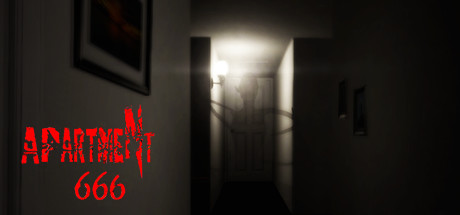
One day you wake up and realise that nobody is home. You try to exit the apartment only to wake up again in your room.You are stuck in an endless cycle of loops with only one way out.
Modeled estimate, not a reported figure. How we estimate →
Media

About
Stats
All-time low is the lowest price we've recorded for this game since we started tracking it.
Languages: English**languages with full audio support
Engagement
Hours played at review time, across 40 reviews with recorded playtime.
Reviews
Themes across 40 recent reviews and how positive each mention is. A keyword signal, not full sentiment analysis.
positive critical· bar length = how often the theme comes up
Reviews
2025.01.10,评价:别玩。
норм игра если у тебя запор
Das Spiel ist die Zeit und das Geld nicht wert.
Ok, vamos lá . . . Walking simulator de terror psicológico barato. Loop repetitivo de corredor, porta e evento estranho. Sustos previsíveis, ambientação ok no começo e desgaste rápido. História vaga jogada em migalhas, sem payoff real. Dura pouco, não inova e depende quase exclusivamente de “coisas mudando” pra tentar gerar tensão. Tecnicamente funcional, criativamente preguiçoso. Serve mais como experimento do que como jogo completo. Perfeito pra quem sempre sonhou em pagar pra andar em círculo num prédio amaldiçoado, esperando algo acontecer… e quando acontece, é isso mesmo. 666 no nome, 6/10 no máximo e 0 vontade de jogar de novo. Uma verdadeira experiência paranormal: seu dinheiro simplesmente desaparece. “A esperança é o pior dos males, pois prolonga o sofrimento do homem.” — Friedrich Nietzsche
gameplay horrible complétement vide... rien d'intéressant j'ai même pas pu finir le jeu bloquer à un endroit pouvoir rien faire c'est nul presque 2 balles c'est une arnaque éviter à tout pris de payer ce jeu ça devrait être gratuit !
This S***t Droped Me Card And Card Give Me 7Dollar And Game Was 0.67 This Game So Sick Game You MUSTTT SHOULD BUY THIS
Apartment 666 is a small-scale psychological horror experience that leans heavily on atmosphere, repetition, and unease rather than traditional gameplay complexity. Developed and published by I Need Play, the game places players in the role of a young boy named Julian who finds himself alone in his family’s apartment after their unexplained disappearance. What initially appears to be a familiar domestic setting gradually transforms into something unsettling, as the apartment begins to loop, distort, and reveal subtle signs that something deeply wrong is unfolding behind the walls. The core structure of the game is built around repetition. Players repeatedly wake up in the same apartment and attempt to navigate their way out, only to find themselves pulled back into the same space with small but meaningful changes. Doors may lead to unexpected rooms, hallways may shift, and environmental details subtly rearrange themselves between loops. This design is clearly intended to create a sense of disorientation and psychological discomfort, encouraging players to question their surroundings and remain alert to even the smallest changes. Rather than relying on explicit scares, the game aims to unsettle through familiarity slowly turning hostile. Gameplay is minimalistic and firmly rooted in the walking-simulator tradition. Interaction is limited mostly to movement and observation, with progress tied to triggering certain narrative beats or environmental changes rather than solving traditional puzzles. The apartment itself becomes the primary character, its confined spaces and repetitive layout reinforcing the feeling of being trapped in a nightmare that refuses to end. This approach places heavy emphasis on mood and immersion, asking players to engage with the experience on an emotional level rather than through mechanical challenge. The narrative unfolds in fragments, largely communicated through Julian’s perspective and occasional environmental storytelling. The choice to frame the experience through the eyes of a child gives the horror a more vulnerable and personal tone, as the confusion and fear feel grounded in a sense of innocence. However, the story remains deliberately vague, leaving much open to interpretation. While this ambiguity may appeal to players who enjoy piecing together meaning from subtle cues, others may find the lack of clear resolution or explanation unsatisfying. Visually, Apartment 666 adopts a simple, functional presentation. The apartment interiors are modestly detailed, focusing more on realism than stylization, which helps ground the horror in an everyday setting. Lighting and sound design do much of the heavy lifting, using dimly lit corridors, ambient noises, and sudden silences to build tension. While the visuals are not technically impressive and can feel dated, they serve the atmosphere adequately by keeping the focus on subtle environmental shifts rather than spectacle. One of the game’s most notable characteristics is its brevity. Most playthroughs are short, often completed in under an hour, which aligns with its looping structure and limited scope. This concise runtime works in the game’s favor when viewed as a brief horror vignette, but it also highlights the repetition and lack of mechanical depth. Players expecting evolving gameplay systems or escalating challenges may feel that the experience ends just as it begins to establish its ideas. There are also rough edges that reflect its indie origins. Movement and pacing can feel awkward at times, and the lack of clear guidance may lead some players to wander aimlessly, unsure whether they are progressing or simply retracing the same steps. These elements can weaken immersion for players who prefer more structured horror experiences. However, for others, this aimlessness contributes to the unsettling tone, reinforcing the feeling of being trapped in a space that operates by its own rules. Ultimately, Apartment 666 is best understood as a short psychological horror experiment rather than a fully realized horror adventure. Its strength lies in its looping structure, oppressive atmosphere, and the discomfort generated by subtle environmental changes within a familiar setting. While its limited interactivity, sparse narrative, and technical roughness may frustrate some players, those who appreciate minimalist horror experiences focused on mood and psychological tension may find it an effective, if brief, descent into a haunting domestic nightmare. Rating: 5/10
the controls were the worst part. I didnt feel as if i had complete access to my movement
Ein P.T. Klon der echt schlecht ist. Apartment 666 versucht krampfhaft gruselig zu sein mit vielen und teilweise einigen zu lauten Sounds. Musste oft meine Stirn runzeln und schmunzeln, weil viele Stellen einfach komisch waren. Am meisten haben mich diese Sounds echt genervt - Der Sound der Fußschritte - Im Hintergrund hat jemand auf seiner Panflöte aus Peru gespielt (was ein Gequietsche...) Schrecklich! Finger weg lohnt nicht
Симулятор пустого коридора, где все черным черно и даже скримера не видно, которого, в принципе, и нет.
Related
Related
Trends
Modeled estimate over time, reconstructed from Steam's monthly review histogram.
Momentum
Pace estimated from the game's recent review growth (our daily snapshots) at its own sales-per-review ratio — a momentum signal, not booked sales.
Audience
Estimated from the language of this game's reviews — a proxy for where players are, not official Steam demographics.
Related
| 7 Days to Die | $425.3M | 403.6K | 87% | $44.99 |
| Palworld | $279.6M | 447.5K | 94% | $20.99 |
| The Forest | $254.8M | 678.6K | 96% | $19.99 |
| Ready or Not | $238.1M | 339K | 78% | $49.99 |
| Sons Of The Forest | $201.1M | 315K | 88% | $29.99 |
Related
| Chicago 1930 : The Prohibition | $20.6K | 175 | 70% | $4.99 |
| Gabriel Knight: Sins of the Father® | $20.6K | 194 | 88% | $5.99 |
| MANOS: The Hands of Fate ~ Director's Cut | $20.6K | 227 | 80% | $3.99 |
| Uchikano - Living With My Lovers | $20.6K | 54 | 98% | $24.99 |
| GOMA AYAKAZE | $20.6K | 68 | 93% | $13.99 |
| Save One More | $20.6K | 204 | 62% | $4.99 |