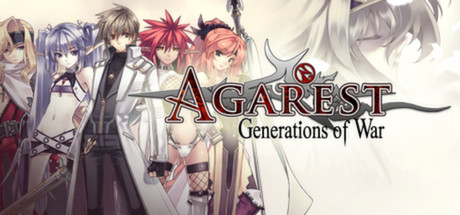
At the dawn of time, a terrible war raged between the forces of good and evil, ending in the destruction of the world of Agarest. After their victory, the Gods of Light unified the decaying bodies of the Gods of Darkness and created a new world.
Modeled estimate, not a reported figure. How we estimate →
About
Genres
Stats
All-time low is the lowest price we've recorded for this game since we started tracking it.
Languages: English
Engagement
Hours played at review time, across 40 reviews with recorded playtime.
Reviews
Themes across 40 recent reviews and how positive each mention is. A keyword signal, not full sentiment analysis.
positive critical· bar length = how often the theme comes up
Reviews
Ce n'est, objectivement, pas un bon jeu. Ayant stoppé l'aventure (peut être temporairement) au milieu de la 2ème génération, je ne peux pas commenter sur l'histoire dans son intégralité. Même si celle ci semble incroyablement générique. Toutefois, le storytelling (la façon de raconter l'histoire) est terrible. Tout d'abords, l'histoire commence sur un générique décrivant la mythologie très simpliste (des bon dieux VS Le MAL), mais après ça...bon courage pour comprendre le contexte. Car le jeu commence directement sur un empire envahissant un autre royaume? Village? D'ailleurs quel est la place du MC de la génération 1 au sein de l'empire? Et bien, sans aller lire le profile du personnage dans le menu, ce n'est pas super clair. Aussi, ce même profile de personnage décrit aussi comment l'aventure du personnage se termine... Le début de l'histoire pour la 2ème génération n'est pas mieux. Sans lire le profile du MC 2.0, je ne savais même pas où était le MC et pourquoi le nom du royaume avait changé par rapport à la 1ère génération. Le Système de Romance n'est guère mieux. Mis à part quelques dialogues très clairsemés, cela se termine par un questionnaire pour choisir une des 3 héroïnes de la génération. On a vu plus romantique... Le Jeu n'est pas rattrapé par son gameplay. Son Gameplay n'est pas mauvais en soi. Mais les combats sont extrêmement lent et long! Ce qui ne poserait pas tant de problème s'il n'y avait pas autant de combat! Et il n'y a aucun moyen de les accélérer. Finalement, les donjons. Ce sont des donjons relativement courts mais avec des combats aléatoires a la manière de FF7 - FF8. Et parfois un Boss. Cela ne serait pas un problème si le joueur pouvait sauvegarder à l’intérieur du donjons! Donc si vous mourrez contre le Boss...il faudra refaire le donjon en entier. Ai-je oublier de préciser qu'il y a un nombre de tours limite pour atteindre la vrai fin? Donc les plus courageux ne pourront même pas grind en paix. Pour résumé: C'est un jeu avec des concepts relativement cool et intriguant. Une histoire et des personnages simplistes mais attachants. Un Gameplay long et lent mais qui marche. Mais ce jeu a bien trop de défaut et une durée de vie trop importante pour que le jeu soit intéressant à terminer. Cela explique donc pourquoi environ 60% des joueurs n'ont même pas atteint la première auberge... Je comprend que certains aient aimé, mais je ne peux pas recommander ce jeu.
I guess it's not bad, maybe i just hate everything but, my review. The game gives you some great weapons at the start, i think because you could not afford to fight and revive your party members. It would be nice if it had an auto battle system that didn't have a six year old IQ and could run multiple battles, what it would take to grind the money you would need to update gear so you didn't spend 10 times what you earn in a battle to revive who you need. ♥♥♥♥ this game personally, cheap, generic, and boring after 2 hours.
Agarest: Generations of War is an ambitious and unusually structured tactical role-playing game developed by Idea Factory and published on PC by Ghostlight LTD that sets out to tell a long-form fantasy saga across multiple generations of heroes. Rather than focusing on a single protagonist and a contained storyline, the game embraces a sweeping legacy-based narrative, asking players to guide an entire bloodline through an ongoing war against darkness. This design choice immediately separates it from more conventional JRPGs, framing the experience as a marathon of strategic planning, narrative decisions, and long-term consequences rather than a tightly paced adventure. The story begins with Leonhardt, a warrior who forms a pact to defy death and fight an encroaching evil, setting the stage for a conflict that will span five distinct generations. At the end of each generational arc, the player chooses a romantic partner for the current protagonist from a set of heroines, and this decision determines the next hero’s lineage. These choices are not cosmetic; the selected partner directly influences the stats, abilities, and growth potential of the next generation’s main character. This “soul breed” system is central to the game’s identity, intertwining narrative choice with mechanical consequence and encouraging players to think several steps ahead when shaping their party and future strategies. Combat takes place on grid-based battlefields and leans heavily into positioning, formation, and synergy. Characters can link attacks together when placed within specific spatial patterns, allowing for extended combos that reward careful planning and battlefield awareness. Rather than focusing on individual units acting in isolation, Agarest emphasizes cooperation and formation-based tactics, making positioning just as important as raw stats. Each character class offers unique strengths and movement options, and mastering how different units complement each other becomes essential as enemy encounters grow more demanding. That depth, however, comes with a cost. Battles can be lengthy and frequent, and without efficient use of the game’s systems, combat can feel slow or repetitive. Grinding is often necessary, particularly as enemy difficulty ramps up sharply between story segments. For players who enjoy optimizing builds, refining formations, and squeezing every advantage out of the system, this can be satisfying. For others, the pacing may feel punishing, especially during stretches where narrative progression slows and combat dominates the experience. Narratively, the generational structure gives Agarest a unique sense of scope. Watching the world evolve across centuries, seeing familiar characters age or take on new roles, and inheriting unresolved conflicts from previous eras lends the story a feeling of continuity rarely explored in tactical RPGs. At the same time, this structure can dilute emotional focus. Because the cast shifts regularly, some characters do not receive the depth or development they might have had in a more tightly focused story, and the overarching plot can feel fragmented as it jumps forward in time. Visually, the game reflects its console origins with static backgrounds, character portraits, and sprite-based combat animations. While the presentation may feel dated compared to modern tactical RPGs, it carries a distinctive aesthetic that fans of older JRPGs may find nostalgic. The soundtrack and voice acting help reinforce the game’s tone, adding weight to dramatic moments even when the pacing falters. On PC, the experience is largely faithful to its original release, with minimal modernization beyond resolution and interface adjustments. Perhaps the most defining aspect of Agarest: Generations of War is its sheer scale. Completing the main story alone can take dozens of hours, and exploring alternate relationship paths, endings, and generational outcomes can easily push playtime well beyond that. This is a game designed for long-term commitment, one that expects patience and a willingness to engage deeply with its systems. It does not rush the player, nor does it attempt to streamline its complexity for accessibility’s sake. Overall, Agarest: Generations of War is a bold and demanding tactical RPG that rewards dedication more than casual play. Its generational narrative and relationship-driven mechanics offer a distinctive twist on the genre, while its deep combat systems provide plenty of room for strategic mastery. While its slow pacing, heavy grinding, and dated presentation may deter some players, those who embrace its ambition will find a richly layered experience that feels less like a single adventure and more like guiding a dynasty through an epic, enduring conflict. Rating: 7/10
剧情拖沓无营养,地雷式遇敌,无官中更是雪上加霜。 个人收藏这个系列的原因是战斗系统有女神侧身像的影子,但是别期待太多。
Что ж, вердикт скорее негативный. Это не прям ужасно и невозможно играть, однако минусы у игры существенные. Помимо того, что она неудобная в управлении, она очень душная (в плохом смысле): нужно много гринда, но это не весело, потому что в игре очень много абсолютно одинаковых боев, которые проходятся абсолютно одинаковым набором действий и это повторяется сотни раз. Причем, игра еще и не выглядит хорошо сбалансированной, потому что одни персонажи получают очень мало урона, другие - просто ваншотятся от атак врагов (не использовал имбовые вещи из длс). Но есть и плюсы: система поколений (напоминает чем-то romancing saga), система совместных атак и синергий между героями, в целом, если вы любите что-то очень педантичное и репитативное - вам может понравиться коллекционирование монстров, предметов, крафт, прокачка всех героев и т д. Но вообще - игра просто скучная. Я ей дам еще шанс, возможно даже - пройду, однако не верю, что испытаю от нее прям восторг. Сюжет банальный, но он есть. Музыка запоминается, хотя и если играть долго начинает надоедать, графика... в таких играх не главное.
игруха вернула меня на 30 лет назад. очень похожа на фф 0 на плойке 1. рекомендую для ознакомления олдам таким как я
だいたいスペクトラルソウルズシリーズなので冥界住民にはおすすめです。 他の方のレビューでもある通り音声だけでもストーリーはあまり困らないと思います が、システムはソウルズシリーズ経験者でないとすんなり理解しにくいかも。
gg
Generational tactical RPG. You are a human who has given up on humanity in the face of what feels like meaningless war. Take on the powers of a goddess to maintain balance in the world. Choose a bride and raise a son to carry on your legacy. Repeat four times. This game may have been hot stuff in its day. It has JRPG elements, but instead of the two lines of enemies facing each other, you have a grid over which the characters in your party move. Positioning determines what targets are in range, whether a character is providing support to another, and how much energy is spent on moving rather than fighting. It has a rather impressive anime opening credits clip that hints at a lot of story, though also hints at what looks like harem romance, with trios of women alternating between armor and bridal wear. This reflects an element of the story, where the hero fails to properly defend an elf girl from human aggressors and is left for dead, whereupon a woman gives him a chance at power to accomplish his goals...if only he pledges himself and his descendants to her cause of maintaining balance in the world. Which means he has to have descendants, which leads to the trios of women. Hence the title: "Generations of War." Dialogue is done visual-novel-style, with character sprites and dialogue boxes. There's voice acting in Japanese and text in English. Not everything is translated, though...some characters say things on the battlefield in Japanese with no text. This is not a new game. Steam lists its release date as 2014, but Wikipedia claims 2008, 2014 isn't old enough for it to have been hot stuff in its day, but 2008 is closer. It's certainly not hot stuff today. I am less tempted to play a game with menu-driven turn-based combat when I play an MMO with realtime combat and a hotbar. But there doesn't appear to be anything wrong with it for what it is. No bugs I encountered, the English translation seemed clean and the story might be worthwhile. And some people are in fact into retro. So I'm giving it a positive rating, even though it isn't something I'm slavering to play when there's other stuff in my library. Got it in a Humble bundle, so likely for around US$1. I would not pay the current store price of $15, and would in fact recommend waiting for it to be on discount. Deep discount, for its age...I'd be shocked if the developers were still trying to make a living off of it.
just good game
Related
Related
Trends
Modeled estimate over time, reconstructed from Steam's monthly review histogram.
Momentum
Pace estimated from the game's recent review growth (our daily snapshots) at its own sales-per-review ratio — a momentum signal, not booked sales.
Audience
Estimated from the language of this game's reviews — a proxy for where players are, not official Steam demographics.
Related
| Juicy Realm | $774.4K | 3.7K | 88% | $9.99 |
| No Umbrellas Allowed | $774.6K | 1.5K | 81% | $19.99 |
| Journey to the West | $774.2K | 1.7K | 81% | $19.99 |
| Far Cry® | $774.7K | 11.7K | 82% | $2.99 |
| Eastside Hockey Manager | $774.9K | 1.2K | 86% | $19.99 |
| UNSIGHTED | $773.9K | 2.2K | 93% | $19.99 |