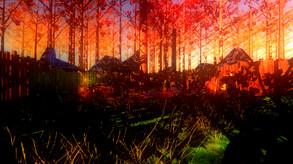
A one-armed young girl finds herself locked in a shed in the middle of an idyllic autumn forest, with threats both physical and immaterial drawing closer.
Modeled estimate, not a reported figure. How we estimate →
Media
About
Stats
All-time low is the lowest price we've recorded for this game since we started tracking it.
Languages: English
Engagement
Hours played at review time, across 40 reviews with recorded playtime.
Reviews
Themes across 40 recent reviews and how positive each mention is. A keyword signal, not full sentiment analysis.
positive critical· bar length = how often the theme comes up
Reviews
Games usually cast us in the role of villain or hero; rarely does anything deviate from this pattern, and so we are conditioned to follow our journey without questioning it much. But what about when we take on someone in such a degraded state that their perspective on the world defies all common sense and reason? To what extent can a child's morality be called into question? Is evil an external agent, or something embedded in our psyche by the circumstances of the world around us? Iron Lung and DUSK are perhaps David Szymanski’s most recognized titles, as they demonstrate a more refined level of consistency, meeting the standards of a solid commercial product, but it is in Fingerbones and A Wolf in Autumn that I see his great potential to create atmospheric, multi-layered games capable of transporting us to dark and terrifying realities. A Wolf in Autumn draws inspiration from the works of David Lynch and puts us in control of a young woman traversing a surreal world. We begin in a beautiful forest, but the bittersweet calm soon gives way to darkness. The events offer clues about the girl's troubled relationship with her mother, but as the story unfolds, the situation proves to be worse than it appears.
[h2]Der Wolf im [i]Schafs[/i]pelz[/h2] Nüchtern betrachtet ist dieses Puzzle-Adventure kein Spiel, das direkt heraussticht. In der Haut eines kleinen Mädchens namens Autumn erwachen wir in einer verschlossenen Hütte, doch der Schlüssel hängt direkt neben uns. Das ist der Gameplay-Auftakt für die nächste Dreiviertelstunde, in der wir im Escape Room-Stil eher simple Rätsel lösen. Hier und da kann die Spielerfahrung etwas kantig werden, einmal hat es eine mittelgroße Verwirrung auf meiner Seite gegeben - weil ich manchmal auch peinlich unbeholfen agiere in solchen Spielen. Es wäre vom Programm aber einfach vermeidbar gewesen. Doch Schwamm drüber, ich hatte großteils eine gute Knobelerfahrung. Die traumähnliche Umgebung gefiel mir stilistisch besser, als ich es anhand der Screenshots erst vermutet habe. Aber würde dieser Teil reichen, um das Spiel nachhaltig in Erinnerung zu behalten? Wahrscheinlich nicht. Es ist also gut, dass A Wolf in Autumn noch mehr bietet. Der spielerische Aspekt ist letztendlich nur Mittel zum Zweck, um eine Geschichte zu erzählen, die wirken kann. Wenn man denn gut aufpasst und - ja natürlich, es war wohl zu erahnen - eine gewisse Motivation zur Interpretation mitbringt. https://steamcommunity.com/sharedfiles/filedetails/?id=3596671727 Das Spiel ist umrahmt von recht ausführlichen Texten. In diesen beschreibt Autumns Mutter ihre Gefühlswelt auf eine sehr explizite und dennoch nebulöse Weise. Die Schreibe von Entwickler David Szymanski hat mich direkt abgeholt. Die Textschnipsel sind roh und emotional, ohne an Eleganz zu kranken. Im Spiel selbst hören wir Sprachnachrichten unserer Mutter, deren kraftvolle Vertonung perfekt die obigen Attribute widerspiegelt. Natürlich geht es um schwere Themen. Drogenmissbrauch, Vernachlässigung und Folter spielen etwa eine Rolle. Ich möchte aus Spoilergründen nicht näher darauf eingehen. Nur: Diese Themen sind kein schockender Selbstzweck, sie werden auch nicht unbedingt in direkter Form visualisiert. Hier geht es um die Menschen, ihre Gefühlswelt, ihren Umgang mit den Umständen des Lebens. Und das macht A Wolf in Autumn sehr authentisch. [i]Persönliches Rating:[/i] [b]68[/b]/100 [i]Fazit[/i] [h3]Der nüchterne erste Blick könnte täuschen: A Wolf in Autumn bietet für Freunde der Interpretation eine rohe und eindrückliche Geschichte mit willkommenen Ecken und Kanten. Diese sind auch auf der recht gelungenen spielerischen Seite zu erwarten.[/h3] Wer bereits gespielt hat, dem möchte ich diesen beeindruckenden [url=https://steamcommunity.com/app/395270/discussions/0/517141624279541159/#c352792037323137956]Forum-Post[/url] empfehlen.
This is definitely David Szymanski's big step up in production value. The lone woman who does the voice acting in this game gives a great performance. It's a very simple and easy puzzle to solve, but it does have one moment that unnerved me and it has an ending that leaves you wondering. Another great early indication this guy was a master of indie horror.
A Wolf in Autumn is an atmospheric and deeply introspective psychological horror game developed and published by David Szymanski, known for his talent in crafting compact yet emotionally charged narratives. It is a short experience, lasting about an hour, but within that time it delivers a haunting and ambiguous story that delves into trauma, control, and identity. The game opens with you waking up as a young girl named Autumn, trapped in a shed on the edge of a dense forest. You have no memory of how you got there, and your only connection to the outside world is through a metallic intercom that transmits the voice of your mother. Her tone shifts unpredictably between gentle concern and chilling hostility, establishing a psychological tension that persists throughout the game. This setup immediately draws the player into a confined and intimate world where every object and sound carries symbolic weight. From its opening moments, the game makes it clear that it is not interested in conventional horror tropes. There are no monsters lurking in the dark or cheap jump scares waiting around corners. Instead, the fear in A Wolf in Autumn stems from atmosphere and implication. The environment feels oppressive despite its small size — a shed filled with tools, doors that creak open reluctantly, and machinery that hums ominously in the background. The world outside, though beautiful with its autumnal colors and flickering sunlight, carries a sense of isolation that mirrors the protagonist’s emotional state. The visual presentation is deliberately stylized, using vibrant, almost surreal hues that create a dreamlike quality. Some players find the lighting harsh or the bloom effects overpowering, but these choices serve to blur the line between memory and hallucination, reinforcing the sense that what you are seeing may not be entirely real. Gameplay revolves around light puzzle-solving and environmental interaction. You explore the immediate area, collect objects, and figure out how to use them to open doors or trigger new mechanisms. The puzzles are grounded in logic but often require creative thinking — a rope might be severed with broken glass, or a path unblocked by reconfiguring electrical power. The mechanics are straightforward, allowing the narrative and atmosphere to take precedence, but they are integrated well enough to keep the player engaged. There is a tactile pleasure in interacting with the environment, though the limited space means that every item and puzzle feels deliberate. The game’s single-session design enhances immersion — there is no save system, forcing you to experience it from beginning to end in one sitting. This structure suits the game’s narrative intensity, giving it the rhythm of a short story rather than a traditional adventure. The heart of A Wolf in Autumn lies in its psychological and thematic depth. As you progress, the mother’s voice becomes more prominent and more erratic, shifting from comforting to manipulative and even cruel. Her dialogue hints at a dark and complex relationship between mother and daughter — one marked by control, guilt, and dependence. The more you listen, the more the narrative unfolds as a symbolic exploration of emotional abuse and the struggle for autonomy. Autumn’s environment becomes a reflection of her inner world: every locked door, rusted tool, and flickering light feels like a fragment of her psyche. The “wolf” of the title serves as a recurring motif, embodying both danger and freedom, a symbol of the wild instinct that her mother has tried to suppress. Whether the events are literal or metaphorical remains open to interpretation, but the emotional resonance is undeniable. Sound design plays an essential role in building tension. The mother’s voice, delivered with unnerving conviction, dominates the soundscape. It is calm one moment, furious the next, echoing through static with a sense of confinement and unease. Ambient noises — the creak of metal, the whirr of machines, the distant rustle of the forest — all contribute to an atmosphere that feels alive yet hostile. There is a sense that the world itself is watching, judging, or remembering, blurring the boundaries between physical space and mental state. The absence of a traditional musical score heightens this effect; instead, the rhythm of the game emerges from environmental sounds and the player’s own movement, making silence feel heavy and meaningful. Narratively, the game walks a fine line between clarity and obscurity. Some will find its story fragmented, more evocative than explicit, while others will appreciate the way it trusts the player to piece together meaning from clues. The ending is intentionally ambiguous, providing emotional closure without resolving every mystery. It leaves you questioning what was real, what was imagined, and what it all represents. This lack of definitive explanation is both the game’s strength and its potential frustration. It demands reflection rather than consumption — a willingness to engage with its imagery and tone rather than seeking concrete answers. Players looking for straightforward horror or linear storytelling may find it too abstract, but those who enjoy narrative interpretation will likely appreciate its subtlety. A Wolf in Autumn is, at its core, a meditation on fear and control rather than a conventional horror game. It continues Szymanski’s tradition of crafting intimate, thematically rich experiences that linger long after they end. It shares DNA with his earlier works like Fingerbones and The Moon Sliver, but it demonstrates a greater command of pacing and emotional nuance. The technical limitations are apparent — textures are simple, spaces are small, and mechanics are basic — yet these constraints work in the game’s favor, keeping the focus on the story’s emotional power. Every detail, from the distorted lighting to the mother’s fractured dialogue, contributes to an atmosphere of quiet dread that seeps under the skin. Ultimately, A Wolf in Autumn is a short but potent work of interactive storytelling that invites introspection as much as participation. It’s less about escaping the shed and more about escaping the psychological confines of guilt and repression. For players who value atmosphere, symbolism, and emotional storytelling, it offers an unforgettable journey through the haunted corridors of memory and identity. Its brevity is not a flaw but a strength — a concentrated dose of dread and revelation that captures the essence of psychological horror in its purest form. It may not satisfy those looking for action or spectacle, but for those who seek narrative subtlety and emotional resonance, it stands as one of David Szymanski’s most haunting and thoughtful creations. Rating: 7/10
Compared to David Szymanski's previous work this is definitely a step up in quality by a TON with a lot more interactivity in this one, and with it it's also some of his most intriguing in terms of what it tells you, and to call it "weird" is an understatement but so is literally all of David Szymanski's work, but it still has his own charm. Great short story though, just like all his other work it's fantastic and totally worth playing at least once.
Lowkey a better game and story than Szymanskis overrated [b]Iron Lung[/b], which is just a linear atmospheric experience that doesn't elaborate on its interesting background lore. While also linear, this game at least has a complete story that doesn't leave you unsatisfied.
si le pones onda esta bueno, un poco tosco y medio dramático interesante propuesta
If you like David's first three games you will like this one too. It's short and vague, but you can piece the story together through clues, similar to his first three games. This one is probably the most vague of the first four games. I read some explanations that others came up with a found one in particular that made the most sense based upon what you see and can experience in the game. Pretty interesting game overall.
a deeply depraved mother's hate-letter to her failed abortion of a daughter...hmm. this seems DEEPLY personal and on the nose...like i just wandered into somebody else's nightmare...but not in a cool way. the game is beautiful in its design and lighting...tedious in its gameplay mechanics, which seems the be the point (as one is playing as a one-armed child). wanted to like this but just didn't.
я не хочу ничего писать, если честно, но без текста нельзя лайк поставить
Related
Related
Trends
Concurrent players on Steam, sampled daily since tracking started.
Audience
Estimated from the language of this game's reviews — a proxy for where players are, not official Steam demographics.
Related
| Lost Lands: The Wanderer Collector's Edition | $15.8K | 100 | 93% | $9.99 |
| Psionic Sentry : Infinite | $15.8K | 232 | 84% | $2.99 |
| Head Goal: Soccer Online | $15.8K | 825 | 79% | $0.99 |
| Arcana: Heat and Cold. Season 1 | $15.8K | 251 | 94% | $4.99 |
| DAISY THE SWIMMER | $15.8K | 122 | 64% | $5.99 |
| CAPSULE | $15.8K | 186 | 74% | $4.99 |
Related
| 7 Days to Die | $457.9M | 275.4K | 87% | $44.99 |
| Satisfactory | $314M | 231.8K | 97% | $27.99 |
| Mount & Blade II: Bannerlord | $309.5M | 293.8K | 88% | $49.99 |
| Ready or Not | $296.3M | 259.8K | 79% | $49.99 |
| Clair Obscur: Expedition 33 | $243.3M | 273.1K | 95% | $49.99 |
| Palworld | $231.3M | 374.6K | 94% | $20.99 |