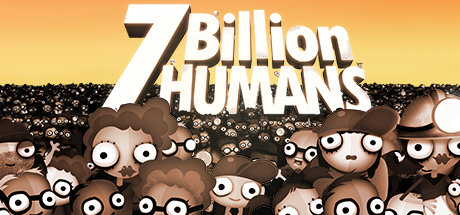
Automate swarms of office workers to solve puzzles inside your very own parallel computer made of people. A thrilling followup to the award winning Human Resource Machine. Now with more humans!
Modeled estimate, not a reported figure. How we estimate →
About
Genres
Stats
All-time low is the lowest price we've recorded for this game since we started tracking it.
Languages: English*, French, Italian, German, Spanish - Spain, Dutch, Russian, Korean, Polish, Portuguese - Brazil, Japanese, Simplified Chinese +1 more
Engagement
Hours played at review time, across 41 reviews with recorded playtime.
Reviews
Themes across 40 recent reviews and how positive each mention is. A keyword signal, not full sentiment analysis.
positive critical· bar length = how often the theme comes up
Reviews
33 часа учил офисных работников работать. В реальной жизни пока не получается.
They tricked me into thinking!
让我明白了程序的速度,我以前一直以为代码越短就越快
可以,如果想双星通关,还是很杀时间的。
Creating problems just to sell the solution under the name of innovation.
7 Billion Humans by Tomorrow Corporation takes a deceptively simple premise and turns it into one of the more memorable logic puzzle experiences on modern platforms. At its core, the game is about giving instructions to a workforce of tiny office employees, guiding them to complete tasks through a stripped-down programming language. What makes it compelling is not just the idea itself, but how it transforms abstract logic into something visual, tangible, and often quietly humorous. It feels like a natural evolution of the studio’s earlier work, expanding the concept into a broader, more intricate system without losing its accessibility. The most significant shift here is the move from controlling a single unit to orchestrating dozens of workers simultaneously. Every command you write is executed by all of them at once, forcing you to think in terms of patterns rather than individual actions. This change adds a layer of complexity that constantly challenges your understanding of efficiency and coordination. Early puzzles ease you into the mechanics with simple sorting or movement tasks, but the game steadily introduces more demanding requirements involving conditionals, loops, and memory handling. By the time you reach later stages, solutions often feel like small programs rather than straightforward answers, and getting them to run correctly can be as satisfying as solving a traditional puzzle. What stands out is how naturally the game teaches programming logic without ever feeling like a lesson. The interface is clean and intuitive, using a drag-and-drop system that resembles a simplified assembly language. Even players with no coding background can quickly grasp the basics, while those with experience will appreciate the underlying structure. Each level includes optional efficiency goals, encouraging you to refine your code by reducing steps or execution time. This creates a dual-layer challenge where simply finishing a puzzle is only part of the experience, and optimizing your solution becomes an equally rewarding pursuit. The presentation plays a crucial role in making the experience engaging. The visuals are minimalistic yet expressive, with the tiny workers carrying out instructions in a way that makes your logic feel alive. There is a subtle charm in watching a carefully constructed program unfold perfectly, or fail spectacularly when a small mistake causes chaos. The corporate setting adds a layer of satire, with humorous dialogue and flavor text that lightly pokes fun at office culture and the idea of human labor reduced to mechanical repetition. It never becomes heavy-handed, but it gives the game personality and keeps the puzzles from feeling too abstract. Pacing is handled with care, gradually increasing difficulty while giving players enough time to absorb new concepts. The progression feels smooth, rarely overwhelming, and the game does a good job of building confidence before introducing more complex ideas. That said, the experience is not without its drawbacks. Some puzzles can feel repetitive, especially when the solution involves small adjustments rather than a new way of thinking. The interface, while functional, can become a bit unwieldy when dealing with longer programs, making it harder to track logic across multiple steps. Additionally, players already familiar with programming may find certain limitations in the system, as it prioritizes clarity and approachability over depth. Even with these minor issues, the overall experience remains consistently engaging. The act of solving a puzzle and then refining it into a more elegant solution provides a strong sense of accomplishment. There is a rhythm to the gameplay that keeps you coming back, driven by the desire to improve your approach and achieve cleaner results. The combination of logical challenge, visual feedback, and understated humor gives the game a unique identity within the puzzle genre. In the end, 7 Billion Humans succeeds because it strikes a balance between being educational and entertaining without leaning too heavily into either side. It introduces programming concepts in a way that feels intuitive and rewarding, while still offering enough depth to keep puzzle enthusiasts invested. It may not push the boundaries of complexity for experienced coders, but it delivers a polished and thoughtfully designed experience that stands out for its creativity and execution. Rating: 9/10
Спустя несколько лет попробовал снова пройти игру без подсказок — не получается. Первая половина игры интересная, а дальше начинается ад: listen, foreach и дисплей. Сидишь и нет ни малейшей идеи, как решить задачу. А традиционный для этих разрабов отвратительный QoL не даёт комфортно экспериментировать.
Игра очень мне зашла, ведь это головоломка обучает думать не как человек, а как бездушная, но очень логичная машина. Ты не просто переставляешь человечков, а пишешь самый настоящий код на визуальном языке, используя команды вроде «шаг», «взять», «если». Каждый уровень — это задачка по оптимизации: сначала ты тупо добиваешься результата «лишь бы работало», а потом сжигаешь нейроны, пытаясь ужать скрипт до 5 строк или заставить 1000 работников трудиться параллельно. Это превращает игру в наркотик для программиста или будущего айтишника — ты реально начинаешь видеть вокруг себя алгоритмы и понимаешь, как больно процессору от глупого цикла. Юмор и пиксельная стилистика скрашивают боль от собственных ошибок. А когда после часа мучений твой скрипт наконец собирает всех человечков с ленты конвейера — испытываешь эйфорию, как после правильно решенного уравнения. Но ближе к середине игра начинает беспощадно накидывать асинхронность и многозадачность, и вот тут-то мой мозг потихоньку потек. Да хоть я ее так и не прошел по естественным проблемам (завис на уровнях с конвейерами и сломал голову о рекурсию), но запомнил, что такое алгоритм. Я теперь и хлеб в тостере не просто жму, а мысленно раскладываю на «взять-положить-проверить-готовность». Рекомендую всем, кто боится слов «цикл» и «условие» — эта игра снимет этот страх и покажет, что код может быть увлекательной головоломкой, а не скучной работой
For multi-threaded assembly professionals.
补了一代才发现竟然还有第二代,从单人流水线变成多人集体作业,还加了更多命令,难度一下子上来了,到第三章后期写不了一点,一点思路没有,抄了几次作业后就不想动脑了。
Related
Related
Trends
Concurrent players on Steam, sampled daily since tracking started.
Audience
Estimated from the language of this game's reviews — a proxy for where players are, not official Steam demographics.
Related
| Dungeons & Dragons Neverwinter Nights 2: Enhanced Edition | $1M | 1.5K | 47% | $29.99 |
| IfSunSets | $1M | 2.3K | 75% | $19.99 |
| AFL 23 | $1M | 375 | 45% | $59.99 |
| Beyond a Steel Sky | $1M | 1.6K | 88% | $6.99 |
| Zort | $1M | 13.8K | 90% | $4.00 |
| Police Stories | $1M | 9.6K | 85% | $3.99 |