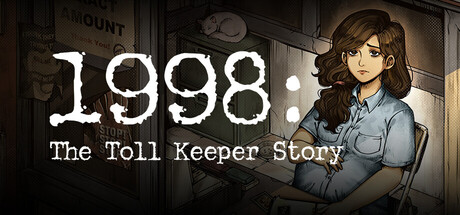
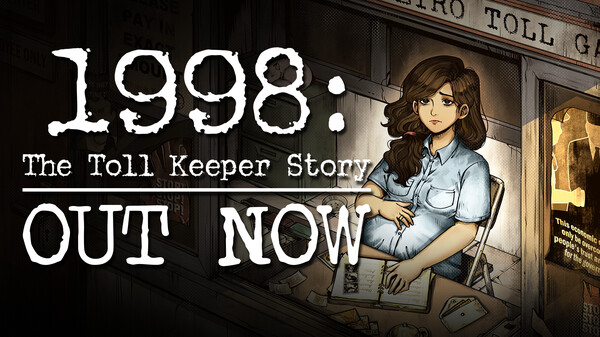
1998: The Toll Keeper Story is a deeply personal and emotionally heavy narrative game that explores political collapse and economic hardship through the perspective of an ordinary worker simply trying to survive another day. Rather than focusing on large-scale warfare or heroic rebellion, the game narrows its attention to the quiet desperation experienced by civilians trapped inside a crumbling society. This grounded approach gives the experience an unusual level of emotional realism, transforming seemingly routine tasks into tense moral dilemmas filled with anxiety, fear, and uncertainty.
The story follows Dewi, a pregnant toll booth employee working in the fictional nation of Janapa during a period of severe political and economic unrest inspired by the Southeast Asian crisis of the late 1990s. Her daily responsibilities initially seem simple enough: collect toll payments, inspect documents, and process vehicles passing through the checkpoint. However, as the country spirals deeper into instability, even these ordinary duties become emotionally exhausting. New regulations appear constantly, protesters flood the roads, food prices rise, corruption spreads, and citizens grow increasingly desperate. Through Dewi’s perspective, the game captures the terrifying feeling of watching society slowly unravel while still needing to wake up every morning and continue working to survive.
One of the game’s greatest strengths is how effectively it builds tension through gradual escalation. Early shifts feel manageable, with only occasional signs of unrest appearing around the checkpoint. Over time, however, the atmosphere becomes increasingly oppressive. Desperate civilians plead for help, counterfeit money becomes common, suspicious travelers appear more frequently, and government oversight grows harsher. The game never relies on exaggerated spectacle to create emotional impact. Instead, it focuses on small moments of pressure and uncertainty that slowly accumulate until every interaction feels emotionally draining. This restrained storytelling approach makes the unfolding crisis feel disturbingly believable.
Dewi is an exceptionally well-written protagonist because she feels painfully human throughout the entire experience. She is not a revolutionary leader or action hero, but a tired working woman carrying the physical and emotional burden of pregnancy while trying to protect her family from forces completely outside her control. Her vulnerability shapes every decision players make. Financial struggles, concerns about healthcare, and fear of losing her job remain constant sources of stress. The game succeeds because it places players inside the mindset of someone trapped between survival and morality, where even small choices can carry devastating consequences.
The moral decision-making system is one of the most compelling aspects of the game. Players constantly encounter situations where there is no truly correct answer. Should a struggling family without proper documents be allowed through the checkpoint? Is it worth accepting bribes when your own family barely has enough money to survive? Can you risk showing compassion if government authorities are watching closely? The game avoids simplistic morality systems and instead presents choices that feel messy, uncomfortable, and emotionally complicated. Most decisions involve sacrifice in one form or another, reinforcing the central theme that survival during societal collapse often demands painful compromises.
The storytelling is subtle and highly atmospheric. Rather than delivering heavy exposition directly, the game reveals the state of the country gradually through overheard conversations, newspaper headlines, environmental changes, and the behavior of people arriving at the toll booth. Familiar faces begin disappearing. Rumors of violence and arrests spread quietly. Tension builds not because the game constantly explains what is happening, but because players witness ordinary life deteriorating piece by piece. This understated narrative style creates a far stronger emotional effect than dramatic cutscenes or excessive dialogue ever could.
Visually, the game adopts a retro-inspired presentation that perfectly matches its bleak atmosphere. Grainy textures, muted colors, and soft lighting effects create a constant feeling of exhaustion and unease. The toll booth itself becomes almost claustrophobic over time, reinforcing Dewi’s growing emotional isolation. While the graphics are relatively simple, the art direction is highly effective because it captures the mood of economic decline and social instability so convincingly.
The sound design contributes enormously to the game’s emotional tension. Distant protests, traffic noise, radio broadcasts, and subdued music constantly remind players that unrest exists beyond the booth walls. Silence is used especially well during emotionally difficult moments, making certain interactions feel painfully intimate and uncomfortable. The audio never becomes melodramatic or manipulative, instead maintaining a grounded realism that strengthens immersion throughout the experience.
The gameplay mechanics themselves are relatively straightforward, focusing primarily on document inspection, conversations, and branching narrative decisions. Players looking for deep simulation systems or complex management mechanics may find the core gameplay somewhat repetitive over extended sessions. However, this simplicity ultimately works in the game’s favor because it keeps attention focused entirely on emotional storytelling and moral pressure rather than mechanical complexity. The repetitive nature of the work itself even reinforces the exhausting routine Dewi experiences daily.
Another particularly effective aspect is how the game portrays authority and systemic abuse. Supervisors, government officials, and law enforcement figures create a constant sense of discomfort through intimidation, corruption, and exploitation. The writing handles these themes seriously, showing how ordinary people become trapped within systems that gradually strip away dignity and security. Several scenes are emotionally difficult to watch because of how realistically they portray fear, helplessness, and emotional exhaustion.
1998: The Toll Keeper Story is not designed as a traditional power fantasy or exciting political thriller. Instead, it focuses entirely on the emotional reality of surviving inside a collapsing society where ordinary people are forced to make impossible decisions every single day. By narrowing its perspective to one pregnant worker trapped inside an increasingly hostile system, the game creates a remarkably intimate and emotionally impactful narrative experience.
The game succeeds because it approaches its subject matter with empathy and restraint. It does not sensationalize suffering or rely on exaggerated drama to make its point. Instead, it quietly shows how political instability affects the lives of ordinary civilians trying to protect their families and preserve their humanity under unbearable pressure. The result is one of the more emotionally mature and thought-provoking narrative games in recent years.
Rating: 9/10