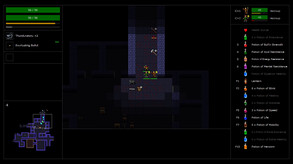
Zorbus is a fantasy-themed, tile-based, turn-based, traditional roguelike game.
Modeled estimate, not a reported figure. How we estimate →
Media

About
A TRADITIONAL ROGUELIKE
Zorbus is a fantasy-themed, tile-based, turn-based, traditional roguelike game. Your goal is to delve deep into a dungeon, find a portal to a mythical place called the Zorbus, where a mere mortal can ascend to demigodhood. You can recruit other creatures along the way so you don't have to adventure alone.
Being a roguelike game, Zorbus creates the dungeon randomly so that every played game is slightly different. The game has permadeath, meaning that when a character dies, it really is permanent, and the player must begin a new game. You can save the game, but the save file is deleted when loaded. Zorbus does not have item identification or a hunger mechanic.
A LIVING DUNGEON
Thematically Zorbus draws influence from the late 70s and early 80s tabletop D&D campaigns, adventures and lore.
The game tries to create a dungeon which feels alive, eventful, and rich in content. Something more than just empty rooms and corridors. Diversely shaped levels with themed content (throne rooms, prisons, hidden treasure caches, etc.) with good connectivity between the areas.
The dungeon denizens act intelligently, fight each other, flee when threatened, and try to gather their friends to overcome a threat. Most creatures can use items, and can also pick them up from the dungeon floor. Creatures are not silent either, but comment on things with speech bubbles.
The dungeon has dynamic lighting. There are light sources as dungeon furniture and in the hands of creatures, and these both can be lit and unlit. Some creatures have darkvision. Creatures react to light and sound.
RPG RULE SYSTEM
The rule system for the game is slightly influenced by the d20 system used in the 3rd edition of Dungeons & Dragons. Zorbus has races and experience levels but no character classes. On each level up, you point buy skills and talents.
CONTROLS & UI
Keybindings are configurable. Mouse control is supported, but is not ideal for playing the game. A game controller can be used. The game has a targeting system, making it very easy to use ranged attacks or talents. Usable items and talents can be assigned to quickslots.
Display size can be configured. You can play in windowed mode or fullscreen and with 32x32-, 48x48- or 64x64-pixel tile graphics or ASCII characters. The font can be changed, and text size can be adjusted.
Stats
All-time low is the lowest price we've recorded for this game since we started tracking it.
Languages: English
Engagement
Reviews
Themes across 41 recent reviews and how positive each mention is. A keyword signal, not full sentiment analysis.
Reviews
An unruly youth called me a zortard and then proceeded to shank me. I taught him a lesson by crushing his body with a flail. Kids these days.
I was initially seduced by the many small and neat design decisions and the visible labour of love that this game look like. Unfortunately the sum of its parts doesn't really work. I'm just having zero fun with it. Only buy this if you're a bit masochistic or have a lot of free time to invest in a little indie game to learn its ways. The game is brutally hard. You will sometimes die and learn nothing from it. You could do semi speedruns with auto navigate and auto battle and just hope for a good outcome but I don't find this gameplay fun. Wiped floor 1 clean, feeling good, eh? Then you open the second door into floor 2 and the Kobold unique starts to 2 shoot your team and follow you to the end of the earth with a very questionable deep grudge. Come on man, you have king duties, stay near your throne, you know, let me take a breather sometimes. Sometimes the dungeon layout is super favorable: you can pick your fights 1 by 1. Sometimes half the dungeon is alerted and come at you at once, with way better gear than you currently have, because enemies have better gear that what you usually find in chests. Blinking away only works if it gets you into a zone that is less dangerous. The archaic D20 system doesn't quite work for me in this format. With a modern and forgiving game like BG3, you can just reload or move on. Here you die. The harmless/dangerous/deadly labels do not mean much in a D20 system. You can sometimes wipe the floor with a dangerous foe; but sometimes it's the opposite. You can't know and your options are super limited when it comes to reacting to bad rolls. Oh, you're out of mobility/escape options? Too bad. You're a stealthy character? Sorry but the guys still see you because bad rolls. There are z-e-r-o high level plays on Youtube in order to kickstart your own gameplay and intuition of what the game wants you to do to survive. There's one finished run from 2021 when the game was waaaay easier; maybe it should have remained that way, or half way between then and now. It was a promising little game but it's way too hardcore for what it is to justify the big time investment.
Related
Related
Trends
Modeled estimate over time, reconstructed from Steam's monthly review histogram.
Hours played at review time, across 41 reviews with recorded playtime.
positive critical· bar length = how often the theme comes up
Zorbus, developed and published by Zorbus, is a classic-style roguelike that strives to capture the essence of old-school dungeon crawling while blending it with modern conveniences and a living, reactive world. It is the kind of game that pays homage to the roots of the genre, evoking the spirit of titles like ADOM, Nethack, and Dungeon Crawl Stone Soup, but with its own particular sense of identity and refinement. Its top-down, tile-based presentation may appear modest at first glance, yet beneath the surface lies an intricate simulation of combat, exploration, and emergent behavior. Zorbus doesn’t try to reinvent roguelikes—it perfects their fundamentals, adding depth where it matters most: in the interaction between player and world. From the moment the game begins, Zorbus wastes no time establishing its tone. The world is procedural, generated anew with every playthrough, yet it feels cohesive and handcrafted. The goal, as with most traditional roguelikes, is deceptively simple: descend into the depths of a vast, dangerous dungeon in search of the mythical portal known as Zorbus, a gateway to ascension and immortality. Every floor introduces new enemies, traps, treasures, and choices, yet it’s the unpredictability of the environment that defines the experience. Unlike many roguelikes where monsters passively wait for the player’s approach, Zorbus gives its creatures a measure of awareness and autonomy. Enemies will react to noise, flee when injured, seek allies for help, and ambush you when you least expect it. The dungeon feels alive—less like a static maze and more like a complex organism adapting to your presence. The game’s combat and progression systems are rooted in D20-style mechanics, but without rigid class structures. Instead of choosing a predefined role, you select a race, distribute attributes, and gradually build your character through talents and skills as you level up. This classless structure allows for immense flexibility, encouraging experimentation with hybrid builds. A dexterous brawler might dabble in stealth or magic, while a wizard can invest in defensive talents to survive longer battles. Every decision matters because the game’s difficulty punishes poor planning. Armor weighs you down and interferes with spellcasting, forcing you to strike a balance between survivability and magical potential. This constant negotiation between power and limitation gives each character a distinct rhythm, and it’s rare to find two playthroughs that feel the same. Zorbus distinguishes itself further through its companion system. Unlike many roguelikes that revel in solitary struggle, it allows you to recruit allies from the dungeon’s denizens. These companions are more than disposable meat shields—they have their own AI routines and can be directed strategically in combat. Managing a small party adds an extra tactical layer to encounters, as positioning, line of sight, and area-of-effect abilities become crucial. A well-timed spell or coordinated assault can turn what might have been certain death into a triumph. Yet there’s always a cost: companions can draw attention, block corridors, or make stealth strategies less viable. The “lone wolf” path remains a viable, and often more rewarding, alternative for players who prefer precision over numbers. The ability to choose between solitary mastery and commanding a squad gives Zorbus an impressive range of playstyles uncommon in its genre. In terms of presentation, Zorbus embraces functional minimalism. The visuals are simple but polished—clearly drawn tiles, readable icons, and intuitive UI elements that can be customized to suit different preferences. The interface allows multiple tile sizes and even ASCII mode for purists who want a more retro aesthetic. Despite its simplicity, the atmosphere is surprisingly rich, thanks to a layered soundscape filled with ambient effects and subtle cues that bring the dungeon to life. The clang of steel, the muffled echoes of footsteps, and the eerie hum of magical traps create a sense of immersion rare for a text-and-tile-based game. There is no orchestral soundtrack or voice acting, but the audio design works precisely because of its restraint. Every sound carries meaning, grounding you in the tension of your surroundings. The game’s design philosophy also shows through its accessibility and quality-of-life improvements. Unlike many traditional roguelikes that require memorizing obscure commands or dealing with cumbersome interfaces, Zorbus streamlines its controls without sacrificing complexity. Auto-exploration is available to remove tedium, but it is smartly limited so as not to play the game for you. The information displays are clear and comprehensive, ensuring you always understand what’s happening and why. The developer’s commitment to iterative refinement is evident in the steady updates and thoughtful balance adjustments. Over time, new races, talents, and minor systems have been added, showing a desire not just to expand content but to polish the underlying mechanics. Despite its strengths, Zorbus is not without flaws. The early game can be punishingly slow and unforgiving, with balance quirks that favor certain builds or strategies over others. Melee-focused characters may struggle in later levels compared to hybrid or caster builds, as magic often scales better in both damage and utility. Some players find the procedural generation repetitive after many runs, with dungeon themes and enemy types eventually blending together. The lack of a strong narrative thread or overarching story may also deter those who prefer more structured progression. Yet, for purists, these are hardly shortcomings—they are part of the genre’s DNA, offering a fair but demanding test of mastery and patience. What elevates Zorbus above many of its peers is its meticulous attention to emergent play. No encounter ever unfolds quite the same way twice, and the unpredictability of AI behavior ensures that strategy remains fluid. A simple fight can spiral into chaos as fleeing enemies alert others, turning small skirmishes into desperate sieges. Resource management—ammo, spells, consumables—becomes a long-term concern, and success depends as much on foresight as on tactics. Even small victories feel earned, and reaching the deeper floors carries genuine satisfaction. This constant tension between control and uncertainty defines the experience and keeps it gripping long after familiarity sets in. Zorbus ultimately succeeds because it understands what makes a roguelike endure: depth born of simplicity, consequence born of choice. It strips away excess, leaving only what matters—tactical combat, emergent systems, and a dungeon that feels both dangerous and alive. It’s a game that demands patience, strategy, and resilience, but rewards those qualities with moments of genuine discovery and triumph. For players who crave a roguelike that bridges the gap between old-school tradition and modern sensibility, Zorbus stands out as one of the genre’s hidden gems—a thoughtful, challenging, and deeply immersive descent into procedural peril. Rating: 8/10
今までやった伝統的ローグライクにはない新鮮さがあってとても面白かった。 Zorbusは仲間をいっぱい連れていけるダンジョンローグライクです。 仲間は賑やかでよくしゃべります。しかも敵もにぎやかで、その敵にあった多彩な行動をしてきます。やばくなれば敵も逃げます。未探索エリアまで深追いしてしまうと見事に釣り野伏にはまってぼこぼこにされゲームオーバーです。わかっていてもあと一発で倒せそうなボスキャラが逃げていくとどうしても追いたくなる。 と、なかなか面白い敵の挙動もあれば、フロアデザインも良い。マップ内の各フロアにテーマがあって(拷問部屋や玉座の間とか)、ダンジョンの雰囲気がいい感じ。変な迷路みたいな無意味な構造がないのが好ポイント。また、基本通路は2マス以上の太い通路になっていてローグライクの基本戦術である1対1でやりあえる場所がなかなかないこともあります。そのため、少ないターンで敵を蹴散らす火力か、暗闇に紛れて一人ずつ削っていくか、こちら側も人数をそろえて対抗するしかありません(このゲームはどの戦術パターンも可能です)。 仲間をただで雇えるので、たくさん引き連れてにぎやかに行くのもよし。ソロでも十分攻略可能。 高スコアのランキングを見ていると、正直、キャラクリ時の能力値ガチャにかかっているような気がする。とにかく序盤がきついので、序盤を乗り越えられるステータスがあれば勝利までは何とかなると思う。逆に足りないと後半の敵の強さのインフレに追いつけず、押し切られてしまいます。 クリアできるビルドの幅が狭いような気がしないではないけど、上記のような要素もあいまって十分たのしく遊ばせていただきました。
Gold Standard for a trad roguelike
A classic with all the features you would want in this type of game. Can be frustrating at times but the difficulty adds to the fun until you cbf and uninstall and then reinstall 9 months down the road.
Wow! So rogue! Much dungeon. Very crawl!
A lovely little "traditional" roguelike. The content is diverse, interesting, and has great pixel art. Most importantly it really feels hand-crafted in the same old-school way, with everything carefully curated and balanced by the developer. Nothing feels auto-generated or sloppily put together, because it isn't. The game is challenging too, which is annoying in places but actually really fun when you learn some of the right techniques. There's also a layer of subtlety that goes above and beyond. NPCs will say things to you occasionally but it's not just flavor -- it actually makes sense contextually. Like if someone gets teleported away from the party across the dungeon and you finally meet up, they'll say "thank goodness, I thought I lost you" or whatever. Each type of character has unique and appropriate dialogue as well as carefully designed sound effects which are also great. My centaur ally makes clip-clop sounds as he walks along. Another interesting detail: if you want to rest and recover in some dungeon corner, it makes a huge difference if you extinguish your light source so enemies can't find you. Just so many little details like that that make the game great. Lastly I will add that I really hate permadeath in games like this and find it pointless, as compared to just setting you back to (for example) starting the dungeon level over. I have worked around this personally by copy-pasting the save folder and playing that way, enabling myself to start over dungeon levels if I die. I prefer it this way, but to each his own. Possibly more importantly, I raised this issue with the developer in the discussion forums and he left a very thoughtful, and kind, reply. Just another reason to appreciate this game -- a responsive, intelligent, and helpful developer. Highly recommend, however you end up playing. 5/5 for sure.
ひたすらダンジョンに潜り続けてZorbusという場所を目指すゲーム。 ターン制でランダムダンジョン。死んだら最初からやり直し。 死んでアンロック要素はないので、プレイヤーの経験だけが頼り。 難易度やや高めだが、極端な理不尽要素(突然死や嫌がらせの固まり)は少なめだと思う。 この手のジャンルが完全に初めてなら、風来のシレンとかのほうが入りやすいと思う。 慣れてくると色んな構成が試せるので、ハマる人は何度も周回すると思う。 通常のクリアとは別にエンドコンテンツ的な要素もある。 癖が強すぎるとまでは言わないけど、やや人を選ぶゲームだとは思う。 ただ、楽しめた場合は、この値段でいいのかと思うくらいには安い。 特徴 ・にぎやか(やかましい) 敵も味方もよくしゃべる。 ストアページの動画を見ると分かるけど、あんな感じでしゃべり続ける。 黙々とダンジョンを潜るように見えて色んな声が響く 敵からは様々な侮蔑的な暴言を浴びせられるので、結構面白い。 ・多人数対多人数になりやすい 完全なソロもできるけど、多人数引き連れて探索して、敵も多人数で戦闘をすることが多い。 ・ダンジョンズ&ドラゴンズの要素がある そっち方面よく知らないのでどの程度採用されているのかとか書けないが、元の要素を よく知らなくてもあまり困らない。 ゲーム内の解説、pdfマニュアルなどで詳しく説明があるので理解はできる。 ゲーム内でサイコロは出ない。ただ、内部の計算式はサイコロに基づいているっぽい。 微妙な点 仲間に関連する操作(アイテムの受け渡しや装備、行動の指示など)がやや分かりにくい。 分かっても動かしにくい。ただオートで戦闘してくれる分には結構、いい動きをしてくれるので勝手に変な動きをしてイライラするというのは少ない。 お金のバランスが少し悪い。序盤はほぼお金がなくお買い物ができず、お店の商品を眺めるだけ。 一定の階層に進むまではかなり買い物しづらいので、序盤をなかなか突破できない間は買えない商品を眺め続けることになる。 逆に、終盤は金が余り過ぎてほしいもの全部買ってもお金だけ増え続ける。序盤からもう少し買い物できるようなバランスがよかった。 その他 操作説明が充実している。 ゲーム内からいつでも基本操作を参照できる。 それとは別に数十ページの説明書があり、基本操作からダメージや命中の計算も紹介されていて、遊び方をとにかく伝えようとしている気持ちが強い。 操作が異様に複雑なローグライクと比べれば、かなり簡潔。このゲームをやってから過去に複雑すぎてぶん投げたローグライクをやったら遊べるようになったので、そういう入門として役に立つのかもしれない。
I'm freaking Zorbing it
Audience
Estimated from the language of this game's reviews — a proxy for where players are, not official Steam demographics.
Related
| Hunters Of The Dead | $22.8K | 172 | 62% | $4.99 |
| Bonds | $22.8K | 120 | 95% | $5.99 |
| Chinese inn | $22.8K | 90 | 77% | $7.99 |
| Cricket Captain 2018 | $22.8K | 72 | 61% | $9.99 |
| Galaxy Girls | $22.8K | 144 | 67% | $9.99 |
| Beastmancer | $22.8K | 88 | 76% | $9.99 |