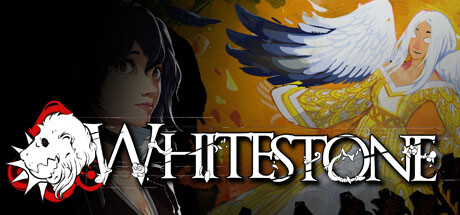
Whitestone is an ambitious indie role-playing experience that blends investigation, psychological horror, social simulation, and branching narrative design into a single, unusual package. Developed and published by Hailstorm Games, the game distinguishes itself not through mechanical polish or genre convention, but through scope and narrative intent. It aims to deliver a long-form, choice-driven story where relationships, mental state, and player decisions meaningfully shape both moment-to-moment interactions and long-term outcomes.
The story places players in the role of Jack, an archaeology apprentice who boards the massive airship Sunchaser for what should be a prestigious research voyage. What begins as an academic opportunity quickly spirals into something far darker when a close friend vanishes, personal belongings are tampered with, and unsettling events ripple through the crew. The ship itself becomes a central character, acting as a closed environment where paranoia, fear, and secrets fester. As the journey continues, the narrative steadily shifts from mystery and investigation into surreal horror, blurring the line between external threats and Jack’s deteriorating psychological state.
Narrative structure is the game’s strongest pillar. Whitestone unfolds over dozens of in-game days, with time management, dialogue choices, and social interactions shaping how the story progresses. Players can choose how to spend each day, deciding which crew members to interact with, which areas to explore, and which mysteries to pursue. These decisions influence character relationships, unlock personal storylines, and determine which narrative routes become available later. The writing leans heavily into ambiguity, often withholding clear answers and allowing player interpretation to fill in gaps, which reinforces the game’s themes of uncertainty and mistrust.
Character interaction plays a major role in defining the experience. The ship is populated by a large and varied cast, each with their own personalities, fears, and secrets. Conversations are frequent and often lengthy, offering branching responses that can strengthen bonds, create tension, or push characters away entirely. Some relationships can evolve into close alliances or romances, while others deteriorate into hostility or tragic outcomes. These social dynamics are not cosmetic; they influence story events, endings, and even which characters survive or disappear as the plot darkens.
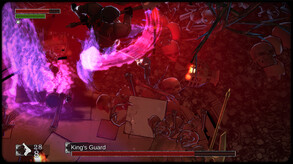
Gameplay systems outside of dialogue are intentionally uneven but conceptually interesting. Exploration involves moving through the ship’s many decks, cabins, and restricted areas, uncovering clues and triggering story events. There are also real-time combat encounters against distorted enemies during certain story arcs, though these sections feel secondary to the narrative focus. Combat is functional but rough, lacking the depth or responsiveness of dedicated action RPGs. Rather than being a core attraction, these sequences serve more as narrative punctuation, reinforcing danger and loss of control rather than offering mechanical mastery.
Visually, Whitestone adopts a stylized, cel-shaded presentation that helps unify its shifting tones. Everyday ship life is rendered with clean lines and muted colors, while horror sequences introduce harsher lighting, surreal distortions, and unsettling imagery. This contrast effectively mirrors the narrative’s descent from normalcy into nightmare. While animations and environmental detail can feel stiff at times, the art direction succeeds in supporting atmosphere and emotional beats rather than striving for technical spectacle.
Sound design further reinforces immersion. Music shifts subtly depending on narrative context, ranging from calm ambient tracks during social moments to oppressive, distorted soundscapes during horror segments. Voice acting is limited, but sound effects and environmental audio play a strong role in building tension, particularly during exploration-heavy or psychologically charged scenes. Silence is also used deliberately, allowing unease to linger during key moments.
One of the game’s defining features is its sheer number of possible outcomes. Multiple endings, alternate story routes, and radically different tonal conclusions await depending on player choices. Some paths emphasize cooperation, emotional healing, and mystery resolution, while others spiral into despair, isolation, and cosmic horror. This replayability is central to the game’s design, encouraging players to revisit the story with different priorities and relationship strategies to uncover content that may be completely inaccessible in a single playthrough.
That ambition does come with drawbacks. Technical roughness, uneven pacing, and underdeveloped combat can disrupt immersion, especially for players expecting a more traditionally polished RPG experience. The game also demands patience, as long stretches of dialogue and exploration may not appeal to those seeking constant action. However, these issues are often overshadowed by the game’s willingness to take risks and commit fully to its narrative vision.
Ultimately, Whitestone is a bold, imperfect, and deeply narrative-driven indie RPG that prioritizes story, character relationships, and player agency above all else. It is best suited for players who value complex writing, moral ambiguity, and branching outcomes over refined mechanics or fast-paced gameplay. For those willing to engage with its slow burn and embrace its rough edges, Whitestone offers a memorable and unusually personal journey into paranoia, connection, and the consequences of choice.
Rating: 6/10