Modeled estimate, not a reported figure. How we estimate →
Media

About


Stats
All-time low is the lowest price we've recorded for this game since we started tracking it.
Languages: English
Engagement
Reviews
Themes across 45 recent reviews and how positive each mention is. A keyword signal, not full sentiment analysis.
Reviews
A phantasmagorical treatment on the transmigration of a soul. The Buddhist Yamantaka swoops into the scene as the player assumes the body of a ghost orb traversing the realm of lesser lights. From there the player is wheeled into the placements of three conjunct creatures as they encounter a mysterious stranger. Your opponent is your future self whose rogue ego desires to possess the essence of all creation and its inhabitants in an inverted singularity. Like the demiurge of Gnosticism, it is a usurper god that wishes to replace each instance of individuality with itself. It has hitherto succeeded in absorbing everything but its past self and the story's focus: an alienated from everyone, mentally unstable, suicidal, jobless commoner(who hates others and especially hates the world). How can it absorb into itself what is diametrically opposed to itself? It can't and so it resorts to nudging the player into identifying with the world so they may be devoured. Like the Devil of classical Christianity, it manipulates towards this outcome through gifts, power and most of all; revenge. Gameplay blooms late as the game establishes its footing in a series of stylistically unique vignettes. Only by the third act does the extent of the environment become truly evident. In a throwback to early games, the difficulty is brutal at the onset. Players are encouraged to be conservative as imprudent violence can quickly escalate into a death sentence. Since most adversaries are passive until attacked the challenge is more psychological than literal. Menus are nearly entirely displayed in pictograms compounding the learning curve. Given the author's background in Surrealism and Dadaism and the game's many references to the Situationists this is most likely an ode to Lettrism. A French avant-grade movement Lettrism utilized "hypergraphics" in place of words to estrange communication from its controllers. Once learned, however, the player will quickly phase through the menus as if they were described in the words so commonplace in gaming. Nearly every portion of the game seems designed as an assault on the conventional. Shopkeepers offer "Abortions in a Bottle" for no small price, police are allied with satanic forces, the presidential building resides under a pyramid, talking worms are replacing vertebrates as the dominant life-form and student debt is an equipable item that will slowly devour your spirit. At no point did I feel I could predict what was next. Even among peculiar games this title is exceptionally strange. It is not only visually unusual it is unusual in all regards. This is not a game for casuals who will struggle to get through the first ten minutes let alone the game's 7+ hours. Rather I recommend this title to internet scholars of the RPG genre, students of comparative religion, metalheads, sexual offenders, freakshows, rocking sharks, the demon possessed, carnival operators, that quiet kid who will one day snap, revolutionaries, swine herders, folks who translate obscure NES titles into English over years or those who are fond of odd antiques.
Related
Related
Trends
Modeled estimate over time, reconstructed from Steam's monthly review histogram.
Hours played at review time, across 45 reviews with recorded playtime.
positive critical· bar length = how often the theme comes up
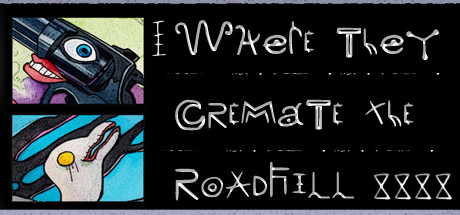
[b]Where They Cremate The Roadkill[/b] is a title that has beautiful and crazy coatings of surrealism but is definitely a hard one to swallow. You can easily immerse yourself in the craziness that is the hand drawn backdrops, the strange ambient music, the mind bending dialogue. However with this immersion it is also easy to lose yourself in pretty much everything in regards to typical game understandings. In the start menu you are given no clear explanation. There is a 0 and a +. The 0 starts a new game and the + loads. Once you start you traverse across screens using wasd or your controller; again no real clear indication but with an open mind to explore world you can pretty easily get through this. Eventually you reach a point to where you have whats known as a manual. The manual is essentially a menu to tell you everything. My gripe with the manual is that it doesn't tell you what anything is in it. You have symbols and you just have to click it and figure out what it leads to and remember that if you want to go back there. Some of them are somewhat clear such as the X to close the game. Others are not so clear. You really do have to be ready to play a "game" that throws most of the hand holding and understanding that the direction will always be clear out the window when stepping into this title. Where this title does excel and essentially the whole reason most people would want to buy into it is the art. The art is as if David Lynch in child form had a field day on some pages with whatever he could think of and get a hold of. There is plenty of visual juxtapositions and craziness going on to keep you entertained. If that doesn't entertain you than you probably scrolled through this game in your queue without stopping. This is one of those pretty niche market games that not everyone is going to enjoy. Some people need clear direction with a game. Some people want to explore without boundaries or help. For me it depends on the title. I can appreciate this in small chunks but can't really sit down and play it too long at any given time. I enjoy surrealism, but the loss of direction and help just makes this one difficult to enjoy. [h1]Pros[/h1] +Crazy surrealistic art +Interesting and strange dialogue +A lot to experience and explore [h1]Mix/Con?[/h1] ~/- Difficult to understand direction, menus, and goals. ~/- Not for everyone While not for everyone this title is most definitely an experience. There is tons of surrealism crafted into this title that you can't experience in most others on steam. If you enjoy surrealism I'd say pick it up during a sale. If surrelism isn't your thing I'd say pass on this one. To me, that is one of the big factors it boils down to.
游戏汉化已出: https://rpg.blue/thread-495099-1-1.html
I don't like giving games negative reviews, but I can't recommend this game to my friends, hence the negative. First, Windows would not allow me to play the game until I allowed it to auto-adjust for blurry apps. Best I can tell the native resolution is about 800x600, and the game will automatically stretch to fit your screen, making for some poor graphic quality. There are no options, but Alt+Enter will Window the app for you. The controls are non-intuitive. The graphics are interesting, but disturbing. I'm afraid that I didn't give it much of a chance, as it just made me feel disconcerted and gross. Let me add a SEIZURE WARNING here for those who have trouble with flashing lights. I would recommend this game only to those with a very open mind, and for those who want to experience what it would be like to have a psychedelic acid trip. A bad BAD acid trip! To everyone else, I'd say to steer clear.
Recommended on the fact games like this should be suported. This person is trying, and this is some serious expresion of art. This is hard work putting it into game form. That said there are a lot of problems common with games made like this. But there all problems that can be overlooked. Controls arn't explained right away and have to be guessed for a bit, then can't be changed left in okward places. There no sound/vedio controls. Hit boxes are weird comared to art some times, paticuarly at the start of the game trying to talk to people is really hard as the hit boxes are SUPER small. But that is all ok. This isn't about the game so much but the story and the art. It's a very post.... well post everything kinda existential trip. I wish I was doing better and it wasn't the holidays and could give this game more attention, maybe i'll come back to it. But this is one of the few games I wished the game play wasn't in the way of the art/story at times.
WARNING: The creator of this game has notoriously been known to respond to criticism disrespectfully and allegedly solicited a minor for nudes. The main reason for the negative review is because this game contains stolen music and sound effects, one of the most noticeable being a jingle from Capcom's "Okami." I love art games and I love creepy walking simulators. While the art and music is impressive, and the only thing bringing me back to this game every once in a while, this is more of a surreal RPG than anything with wordless "visual" menus that take some getting used to. There's a lot of reason to like this game as mentioned above, but it's just a little too chaotic with "deep" dialogue that every single NPC repetitively says and it all begins to feel a bit pretentious and numbing after a while.
turns out clowder is a big old creep
Just prior to closing my Steam review group, I've received a curator's code for Where They Cremate The Roadkill. The game has been on stand-by for some time, but I've managed to get an hour out of it before succumbing back to my usual daily routine. Mind I will play it again, but I am writing this review because it's long overdue. Stylistically, this is one of the most unique interactive experiments (see how I refuse to call it a game?) I've encountered. Part Dadaism, part LSD induced vaporwave nightmare, Where They Cremate The Roadkill will not stop surprising you with each next step. Accompanying the visuals are strange, vibrating sounds and omnious music that fits the idea perfectly. Storywise, it's a game that doesn't lend you a hand and continues earlier formed pattern of experiment. The narrative seems incoherent, but if you move back from the tree, you've might catch the glimpse of the forest... if you don't give up after suffering some of the worst gaming mechanics I've witnessed. WTCTR is intended to be an action RPG, yet it doesn't work. Controls are clumsy, menus are strange and impossible to understand unless you Google 'em. This part of the experiment should be more clear because at certain points, I was paying more attention to how to do something than to what is going on around. It's an experimental game, and just like that, it's designated to be played, consumed, experienced by niche audience, not by your typical gamer. I can understand that - just like everyone doesn't dig freestyle jazznoise, not everyone is destined to see the beautiful strangeness of Where They Cremate The Roadkill.
[h1] Before You Buy [/h1] Before you buy this game, it's important to know that it has two other non-steam games that are "prequels" to this one. The games are Middens and Gingiva and are available for free on GameJolt. Although they are not necessary to play this game, a lot of the greater plot will be confusing without it. Another reason to play these games is they can act as a litmus test on whether or not you should get this game. If I could give this game a mixed review I would. Like its predecessors, it is largely exploratory in nature and is the second most linear game of the three. The ending conditions have you kill specific npcs scattered throughout the world and trigger certain events with an item during the final encounter. It takes a much different approach to combat from the other two games by having it be in real time rather than turn-based. [h1] Pros [/h1] This game has some of the unique art I've seen in any game and a decent soundtrack. The world it takes place in is very interesting and was built up well with environmental story-telling. The combat is better than the other games, but it has its own problems that I'll tackle later. The story revolves around themes of absurdism, existentialism, and nihilism at times. Essentially the world is failing, and finding meaning in living is either pointless or selfish. On the technical side, this game pushes rpgmaker to levels I didn't think were possible at times. A lot of the combat is fairly unique and interesting (if it worked half the time). [h1] Cons [/h1] Like the creator's other games, the best word I can use to describe the story at times is "pretentious". While it was somewhat acceptable in Middens and done fairly well in Gingiva, this game takes it to an extreme by trying to have the best of both exploratory and linear aspects of the prior games. It feels like you're being force-fed garbage half the time that has almost no relation to the plot being put forward. I wouldn't have taken issue with this if the game was not longer than BOTH games combined. A good 3 or 4 hours could have been cut out and it would have been a much better game without it. A classic case of trying to have your cake and eating it too. On the technical side, this game has HUGE problems. Several areas were prone to massive frame drops and crashing was a genuine issue throughout the game. I highly recommend saving constantly as there are seriously points where you can get several crashes in a row. The combat while interesting, is ruined by terrible, and unchangeable, keybinds. Because of the performance issues inputs felt slow to respond and caused many deaths. Overall, everything in the game can be cheesed quite easily with proper use of items and abilities, allowing you to avoid further frustration. I only gave this a recommendation for people who like these types of games. If you're reading this, you'll more than likely have played games similar to it. Outside of that, play Middens and Gingiva first for a feel. If you don't like them, I strongly recommend that you do not get this game.
TL:DR WTCtR features spelling/grammar errors, underdeveloped gameplay, and basic scripting errors that will genuinely break your game. It's not only a pile of half-realized ideas built over an rpgmaker engine, but even with a team on this project (contrasted to Clowder working alone on his previous games), there are basic errors where I can accidentally sequence break the entire game due to coincidentally going back to a previous point. If you like atmospheric games with a flair for stressed angles, shuddering walls, and surrealist mish-mashes of old pop-art collages, you may like this game, but you'd likely prefer Middens instead. It's free, more functional, and less railroaded. When I say functional, I don't just mean the 'gameplay', which usually takes a backseat in walking sims or 'art games', but not Where They Cremate the Roadkill. This game is tightly bound to vague schizo-conspiratorial-core plot: of cycles of characters being groomed into serving demons, or lesser gods, or aliens. These cycles occur in the past, present, and future; where creativity and mental connection is a Neo-platonic projection given off by psychic, self-shaping beings. This can sound cool, but it goes by quick and without explanation or development. It flies by in a David Cage-ish (specifically Omikron) sense, where it doesn't mean much beyond some cool imagery and call-outs to the Illuminati worms living inside every pill. This could all be fine if a player had some breathing room. One could non-narratively or disjunctively explore a series of themes, but this implies there's a world to explore through these themes. There isn't. You are told there's a world and real cemeteries that fill with everyone you kill, but don't mistake this for an open-world game, or a game with decent pacing (between combat, exploration, and reprieve in towns). It isn't. The combat is smashing two keys and cycling between obtusely named items while getting hit until you pull out a middle finger and win. The plot and world are grandiose-seeming, but hollow. You are given aesthetic devices (a tamagotchi and smartphone used to explain objectives and act as a manual) with awful UI that sequence breaks your game. You're given 'cool' explanations of an elemental system that namedrops astrology and eastern esoterica, with enemy colors aligning with Saturn's rectal-spot. It's all gish-gallop. (This section is written with one of Clowder's other games - Middens - in context) It seems the further Clowder games stray from the origin of Middens, the more nonsensical and less functional his games become in terms of gameplay, writing, and atmosphere. Middens was a maze taking place at a junction between broken worlds. It had a habit of inconsistent pathways that eased off the moment I lost patience. It was clever and euphoric. The take-turn combat allowed one enough time to push through its name-swapped elemental system (the combat tic-tac-toe all rpgs follow). You were a man with a talking gun. You could kill others or not, and aside from a few confrontations on your actions, the story was unobtrusive. WTCtR is the opposite.
Momentum
Pace estimated from the game's recent review growth (our daily snapshots) at its own sales-per-review ratio — a momentum signal, not booked sales.
Audience
Estimated from the language of this game's reviews — a proxy for where players are, not official Steam demographics.
Related
| Conclave | $17.7K | 79 | 73% | $9.99 |
| Last Dream: World Unknown | $17.7K | 79 | 75% | $9.99 |
| Singularity 5 | $17.7K | 79 | 77% | $9.99 |
| Curse of Pirates | $17.7K | 69 | 84% | $9.99 |
| Borderwatch: Dark Armada | $17.7K | 66 | 79% | $9.99 |
| Rugrats: Adventures in Gameland | $17.7K | 77 | 84% | $19.99 |