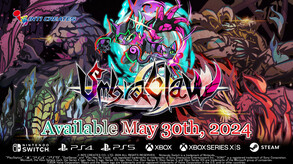
Umbraclaw tells the story of Kuon, a house cat who has died in the mortal world, after she awakens in the Soulplane, a realm of the dead. She must challenge the perilous underworld to return home to her owner in this 2D action adventure.
Modeled estimate, not a reported figure. How we estimate →
About
Stats
All-time low is the lowest price we've recorded for this game since we started tracking it.
Languages: English*, Simplified Chinese, Traditional Chinese, Japanese*, Korean, French, Italian, German, Spanish - Spain, Portuguese - Brazil*languages with full audio support
Engagement
Hours played at review time, across 40 reviews with recorded playtime.
Reviews
Themes across 40 recent reviews and how positive each mention is. A keyword signal, not full sentiment analysis.
positive critical· bar length = how often the theme comes up
Reviews
There's a lot I don't like about this game but a lot of intrigue. After finishing the game, it wasn't worth it. Most attacks (if you have any, its random at the end of the day) do pitiful damage so the best way (only way if you're going for the best ending) is to wait an eternity for the boss to do an attack you can farm energy off of until you get enough to Fatal Stomp. Most boss phases have 2 or 3 attacks, so you'll have to loop at least 5 times to kill. Hardly any story or characters either. I think dying on purpose to get skills is a really interesting mechanic but the fact that even if you choose how you die you can get the wrong skill downplays it as a choice. Also many skills are borderline useless. Moose got me killed twice. Chapters are too long to waste deaths on as well.
I have mixed feelings about this game, though I did like it. Took five hours to get the true ending because I knew about the gameplay mechanics and ending requirements from online pre-research. The demo does give an accurate experience of what the full game is like, if you're one the fence on buying the game. A lot of prior reviews have repeatedly mentioned good parts and bad parts of the game, and I agree with them: Good: Great hand drawn art direction, great English voice acting, sympathetic and adorable 2D action protagonist, interesting revival mechanic of power at a price (though both of Kuon's forms are adorable in different ways. Humanoid Kuon has huge, mismatched monster claws but she has cute voice grunts despite her quiet nature, her transformation even gives her a symbolic black and green hoodie because of the hoodie her beloved owner wears), and great English voice acting. On the easiest difficulty, you can reset Kuon's death counter for free after defeating chapter 1 bosses (returning her to feline form if she's in humanoid form), and by giving up all soul points after beating chapter 2 bosses, so she isn't permanently stuck in humanoid form and thus isn't locked out of the true ending of six endings. Bad parts: Level traversal, enemy combat and boss combat is designed around Kuon's basic feline form and Shadow Pass for level exploration and tackling bosses (the level design assumes no double jump, no bat hover, no empowered dash, so the general platforming is very basic and simplistic), so Kuon's humanoid form has a fun set of Gunvolt / Mega Man Zero style attacks to play around with and maul mobs with, but they're overkill for the mobs (cathartic but overkill), but it usually doesn't make the boss fights go by that much quicker unless you got lucky with getting the quill shooter ranged skill by random (humanoid Kuon can use it for fast damage to boss health bars), very tricky and convoluted ending unlock methods, late game boss and final boss difficulty can fluctuate wildly if you invested in red gem upgrades for feline Kuon's extra health, better Shadow Pass performance and the secret unlockables in the chapter 2 stages, one of them is a kibble bowl that spawns before bosses when unlocked and restores Kuon's health (if unlocked, the kibble bowl spawns multiple times in between rest points during the boss gauntlet). Either way, the final chapter (chapter 3) is a very tedious slog where you need to use Shadow Pass over and over to Fatal Stomp several reused bosses. The final boss's attack patterns are some of the simplistic and most forgiving in the game (easier than the chapter 2 bosses, who are easier than the chapter 1 bosses when you're starting out with no upgrades and learning the game mechanics), and the real challenge of the final boss is how long and tedious it is. Also, there's the fact that the green map upgrades are difficult to buy without replaying the chapter 1 hub crossroads over and over, and even with the much needed Chapter 2 maps, there's a trick to getting the secret unlockables such as the kibble bowl and the scratching couch: You need Kuon to be in humanoid form and not feline form, or the passages to the secret items are completely blocked off. The devs at Inti Creates thus created a situation that actively incentivizes the player to throw away Kuon's feline lives to turn her into humanoid form, which contradicts the stated main theme of valuing Kuon's lives and preserving her regular form instead of giving into the temptation of sin-induced power. This means that the 'good' ending is usually out of reach if you don't already know what you're looking for (YOU CAN REPLAY CHAPTER 1 LEVELS MINUS THE BOSSES, BUT YOU CANNOT REPLAY CHAPTER 2 LEVELS AFTER YOU COMPLETE THEM), and since you need the four secret unlockables for the good ending, a player that misses a secret collectable in chapter 2 is thus stuck between the true ending for feline Kuon, and the four bittersweet bad endings for humanoid Kuon. It's not as obscure as Gunvolt 1's true ending conditions if you know what those conditions are, but it's up there. Overall, I did enjoy the game, and I like how Inti Creates decided to take a big risk with the game design, but I'd prefer if the developers used existing negative criticism to refine the concept to keep making new and interesting games in the future. One of the devs (Satoru Nishizawa) did mention that they'd be interested in making a sequel to Umbraclaw, and I'd encourage that if they take the time and feedback to refine the gameplay concepts further.
Whether or not the game's worth buying is largely going to come down to whether or not you're the type of person that likes to finish games to 100% completion. A lot of the game's value comes from repeat playthroughs and much of the fun comes from finding secrets, upgrading Kuon, unlocking new skills through the Anima Revive system, and seeing all of the endings. For me it took about 4 hours to complete my 1st playthrough, Getting to 100%, however, took around 25. So if you're only interested in a one and done sort of deal then you probably won't be able to justify the price. Apart from that the game in general is pretty good. The controls are tight with just the right amount of weight to feel agile without being floaty. The cool factor is also very high here. They did a very good job with how Kuon looks and her animations, especially in human form. The power fantasy is also in abundance. You go from being a weak house cat that can't even take a single hit at the start and slowly become an indestructible force of nature that shreds everything in your path by the end game (particularly if you decide to stick to human form) The animal skills you get are mostly varied and interesting, although there is some overlap here and there. For example you can get a Crow skill that lets you double jump in cat form and do multiple jumps in human form, but you can also get a Bat skill that lets you freely fly for a few seconds. The bosses and enemies are decently fun to fight (or sneak past) although some attacks do feel a bit cheap with telegraphs that aren't clear or long enough. This isn't so much of an issue in this game as in others, though, since dying is part of the gameplay loop. If you die you unlock a (potentially) new animal skill and fill the game's monstropedia. If you complete the stage without dying you get nothing besides personal gratification. With that said there are 2 major issues that the game has. The voice acting and the writing: On the topic of voices, the female characters are OKish but the males are really poor. Most of the voices simply don't fit the characters, sounding way too high pitched and almost childish for what they're supposed to depict. They also lack any sort of gravitas and most of the time when emotion is called for it just sounds incredibly forced and fake. Now, there is also a Japanese voice over besides the English one, but as I don't speak Japanese I can't attest to its quality. As for the writing, the same sentiment permeates here too. It just feels too childish and on the nose to feel impactful most of the time. The villains are all one dimensional and lack any form of subtlety. If you play the free demo you'll see exactly what I mean when you get to the shark boss. At the same time, there are some moments that actually do feel serious and grounded with some genuine heartfelt emotion. Now you'd think that would be a good thing but in reality that just creates complete tonal whiplash. With that said there is way more good here than there is bad and I'd highly recommend giving Umbraclaw a shot if you're willing to spend some time to complete it.
Another cool indie game about a cat.
I both LOVE and HATE this game because the mechanics of the game are almost exactly how I imagined designing a game several years ago, I got super excited yet super salty that someone came up with it first. For that reason I recommend it, because it's not only beautiful, but an incredibly cool execution of awesome game mechanics. I don't want to spoil it but you get more powerful each time you die, which of course leads to Narrative Consequences in the game. This game is VERY punishing from the get go and does not hold your hand but I believe this is part of the intended design. One complaint is the lack of verticality in the movesets (hitting up and down) at the start of the game, which may change as I get more upgrades. Another is that I had some weird button glitches on my controller that can be annoying to work with and some powers are presented in a weird way, but after a weird teething period I was able to rebind the controls and all was fine. Honestly this game is ♥♥♥♥♥♥♥ awesome though. Also you hello the aesthetic? The character designs??
ネコチャンが生き返る為に足掻く2Dアクション。面白くなかった訳ではないけど、心はモヤモヤ。 ネコチャン形態では回避主体のステルスアクション、獣人形態ではいつものインティ式バトルアクションと、まったく別物の攻略が用意されてるのが面白い。また、残機が減ると新アクションを得て強くなれる「アニマリヴァイヴ」システムは得られる能力がランダムなのでローグライクらしさも取り入れてる点も良い。 ただ、大本のコンセプトにインティ節が合わさって非常に鬱々としたストーリー、ずらっと並ぶバッドエンド……この作品の方向性が私に合わなかったのは残念の限りです。 ひとつ言えるのは、敵の攻撃は大半が初見で避けるのが難しく、逆に知ってさえいれば避けるのはそれ程難しくないという事です。1周目のプレイで無理して残機を残そうとせず、ネコチャンの体力を強化で伸ばしてからベストエンドを目指すのがオススメかなと。
You can do so many cool cat things in this game mmrrrrooowww
i love the art style and the concept but it keeps crashing, couldn't survive 5 minutes without crashing, i haven't even reached any save points yet if there's any
Umbraclaw is a strikingly unconventional 2D action platformer that stands out not through spectacle or speed, but through vulnerability, atmosphere, and emotional intent. Developed and published by INTI CREATES, the game departs noticeably from the studio’s more traditionally fast-paced action titles, instead presenting a somber journey shaped by fragility and persistence. You play as Kuon, a house cat who has died and awakened in a hostile afterlife known as the Soulplane, driven by a quiet but powerful desire to return home. From the very beginning, the game frames its mechanics and presentation around this longing, creating an experience that feels intimate, melancholic, and deliberately uncomfortable in places. At the core of Umbraclaw is an unforgiving design choice: Kuon dies in a single hit. This constant vulnerability defines the tone of the entire experience, turning every jump, enemy encounter, and environmental hazard into a moment of tension. Unlike traditional action platformers that empower players through health bars and gradual damage, Umbraclaw forces careful movement and observation, encouraging patience over aggression. This fragility is not merely mechanical but thematic, reinforcing Kuon’s smallness in a world that is grotesque, cruel, and indifferent to her survival. What prevents this one-hit-death structure from becoming purely frustrating is the game’s Anima Revive system, which transforms death into a form of progression. Each time Kuon falls, she is reborn with a new ability inherited from the spirit of another animal. These abilities can affect movement, defense, or combat options, subtly altering how players approach subsequent attempts. Over time, Kuon grows more capable not by avoiding death entirely, but by enduring it repeatedly. This system gives failure narrative meaning, turning each loss into a step forward rather than a complete reset, and it encourages experimentation with different abilities and playstyles. The world of Umbraclaw is visually distinctive and deeply atmospheric. Its hand-drawn, stained-glass-like art style gives the Soulplane a haunting beauty, blending softness with grotesque imagery. Enemies are unsettling rather than flashy, environments feel oppressive without being visually noisy, and the color palette reinforces the sense of an afterlife that is neither peaceful nor entirely malevolent. The visual design does much of the storytelling work, communicating despair, isolation, and fleeting hope without relying heavily on dialogue or exposition. Sound design and music further elevate the experience. The soundtrack leans toward somber, orchestral tones that emphasize reflection rather than adrenaline, creating a mood closer to a dark fairy tale than a traditional action game. Voice acting, available in both Japanese and English, adds emotional texture to key moments, grounding the abstract themes in recognizable feeling. Silence is also used effectively, allowing tension to build naturally and making moments of sound or music feel more impactful. Structurally, the game initially suggests a Metroidvania-style openness, offering branching paths and a sense of exploration. As the journey progresses, however, the design becomes more linear, shifting toward discrete stages and set encounters. This change can feel slightly jarring, especially for players expecting a fully interconnected world, but it also allows the game to more tightly control pacing and difficulty. Boss encounters, in particular, benefit from this focus, presenting demanding tests that require pattern recognition, composure, and mastery of Kuon’s evolving abilities. Difficulty is one of Umbraclaw’s most divisive aspects. The combination of one-hit deaths, precise platforming, and occasionally long stretches between checkpoints can feel punishing, especially when progress is lost to a single mistake. While systems exist to mitigate this harshness over time, the game never fully abandons its demanding nature. This design will resonate strongly with players who appreciate tension and deliberate challenge, but it may alienate those who prefer smoother difficulty curves or more forgiving mechanics. Narratively, Umbraclaw is restrained but emotionally resonant. Themes of loss, attachment, and the will to move forward are explored quietly through imagery, brief interactions, and player choice. Multiple endings reflect how players engage with the game’s systems and sacrifices, reinforcing the idea that perseverance comes at a cost. The story does not aim to explain everything, instead trusting atmosphere and symbolism to carry its emotional weight. Overall, Umbraclaw is a deeply distinctive action platformer that prioritizes mood, theme, and meaning over conventional power fantasy. Its mechanics, art, and narrative are tightly interwoven, creating an experience where struggle feels purposeful and survival feels earned. While its difficulty and structural choices will not appeal to everyone, players drawn to atmospheric games that explore vulnerability and persistence will find Umbraclaw to be a haunting, memorable journey that lingers long after it ends. Rating: 8/10
Interesting game. You play as a little cat that died and she wants to find her owner and tries to escape death and find a way to the real world. You explore a world full with monsters and fight bosses. Every time you die, the cat becomes stronger and learns new abilities. If you play on easy mode, then you cannot even die what makes the game good for me, because I like cozy fighting games. There are also multiple endings in this game, depends on how you play and how many crystals you gather/use. You can also strenghten your abilities. This game is similar too a little metroidvania too.
Related
Related
Trends
Modeled estimate over time, reconstructed from Steam's monthly review histogram.
Momentum
Pace estimated from the game's recent review growth (our daily snapshots) at its own sales-per-review ratio — a momentum signal, not booked sales.
Audience
Estimated from the language of this game's reviews — a proxy for where players are, not official Steam demographics.
Related
| Will You Wheel? | $100.8K | 346 | 78% | $9.99 |
| Victory Road | $100.8K | 191 | 90% | $19.99 |
| Universal Combat CE | $100.7K | 266 | 42% | $9.99 |
| Global Farmer | $100.7K | 141 | 48% | $19.99 |
| Roots of Yggdrasil | $100.8K | 363 | 86% | $10.99 |
| A House of Many Doors | $100.7K | 434 | 83% | $10.99 |