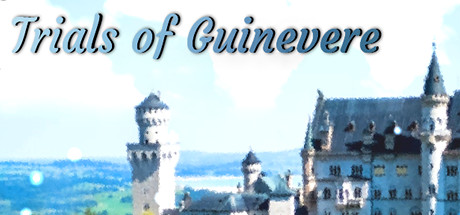
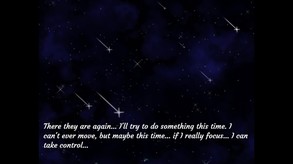
Trials of Guinevere combines strategic, turn-based combat with the emotional, character-focused storyline of a visual novel. In this high fantasy adventure, the heroes must band together to save their home, and their loved ones.
Modeled estimate, not a reported figure. How we estimate →
Media

About


Stats
All-time low is the lowest price we've recorded for this game since we started tracking it.
Languages: English**languages with full audio support
Engagement
Hours played at review time, across 31 reviews with recorded playtime.
Reviews
RECOMMENDED Ratings 7/10 (Choices Matters, Radically Different) Trials of Guinevere is a relatively short (3 Acts) but enjoyable RPG where choices matters. Throughout the 3 acts, you will be given various opportunities to make various decisions (like forgiving a traitor or enforcing justice on him, etc). The decisions that you make, and the people that you interact with in the first 2 Acts will all affect the final outcome of Act 3. Although this is a RPG Maker game, the author has gone through some effort to change the user interface so that it looks different from the default RPG Maker type games. The mechanics of this game is also very different from the traditional RPG. Let me elaborate. Unlike the traditional RPG where you level up and increase your stats, this game allows you to level up your characters twice. You start from Power Level 1, and then at certain point in the story, you go to Power Level 2 and Power Level 3. Each of the power levels will give your characters new skills and abilities This is also a game where everything is pre-designed and carefully balanced. There are no random encounters, no monster respawn, no grinding, no random equipment drops, no random stats increases, etc. Except choices, everything else in this game is deterministic. This is a radically different design than the traditional RPGs that i am used to playing. In the past, when fights are too hard, I will grind and find more random drops. However, you cannot do that in this game. You just have to use the right strategy, cast the right spell and make all the right moves so that you can win. This game is actually very hard on normal difficulty. You have to play it cautiously and will usually win by a very narrow margin. This game will also do away with the traditional "rest till fully healed option". No camping or sleeping is needed as your team will be fully refreshed at the beginning of the next battle if you survived that last battle. This game encourage very careful exploration of the environment. Since choices matters, you might have to try different choices to get all the different achievements. Since there are no random drops, and many of the better equipment are hidden, you will have to explore every corner and pry into every container if you want to get all the best gears. Furthermore, you need to speak to every person that you meet if you want to get achievements like those that unlock every character bios. There are also achievements for collecting all Eldyrian tomes or reading all ancient journals that you might miss if you do not do a careful exploration. For replaybility, you might want to do multiple playthrough to get all the different achievements. Since the game mechanics of this game is quite radical, you might want to start with Easy or Normal and only advance to Hard difficulty after you understand the game better. So far I have only complete this game on Easy difficulty, and might replay it at a harder difficulty later. The story of this game is quite interesting and engaging. I would recommend this game to old school rpg games who are willing to try something very different. I am also looking forward to a sequel. Right at the end of this game, a certain new events came up which suggest to me that the developer is planning either a sequel or another DLC to add more story content. I am excited and waiting.
Some of the first things I want to say about Trials of Guinevere might sound bad to some people, and might sound amazing to others, but I'm gonna just get into it! ============ TLDR? Overall, I highly enjoyed my time with Trials of Guinevere! It is a tactical game, that focuses on dialogue and world lore, and I completed this game by a "game time" of just under 16 hours. A little bit of that time was spent reading or watching something out of game, but I do feel the developer's estimate of 14-15 hours is pretty spot on. I had more time in game from reloading, or making a save and going back and replaying a particular part to see if I could pick something different. I do want to say the combat is not easy! It is not meant to be an easy stroll to some credits at the end. The dialogue is plentiful and it is pretty good. =================== First off Trials of Guinevere is a fairly wordy game. The introduction begins with a scene of a fight between a group of people in a throne room that is scripted and sets the stage for future elements of the game. Then we skip about 18 years into the future where the main character is having a recurring dream he's been having for a little while, followed by quite a bit of running around and talking to a lot of people in the school you begin in. Followed by finally talking to your instructor, and then.. talking to a few more people, and then finally getting onto the first 'dungeon'. All of the dialogue is there to set up characters for the rest of the story tho, and all of this initial front loading of information really does a good job of telling you about the world Vitaria. There are Cor Anaran mages to the south, in their harsh political structure trying everything they can to one up one another and get more power, or the country of Hinode known for it's mining and scholarly research. The lore is rich here, and isn't just some stuff that gets mentioned once and not really thought about later, the game remains true to it throughout the length of the game. There are 3 difficulties in the game that can be selected at the beginning, and the game warns you cannot change this setting once you make it, so choose carefully. I played the game on normal so this review will look at the combat based on that. Where Trials really shined for me was the combat. This game really does not have random encounters, but rather all enemies can be seen from the game maps. T.o.G. breaks from other rpgs here, and has a unique system focusing on strategy. Gone are the hundreds or thousands of hit points, and hundreds or thousands of damage, but you get a tight system that leaves you little room to make errors but is very rewarding once you start getting it. You don't get experience points at the end of combat, but you will get some items whether it be stuff to sell in town or a healing salve here and there from the more humanoid creatures. Combat can be intense, and do not be shocked if you are dying from time to time, it is meant to be tough. You cannot just hold attack down and pull out a victory, you have to look and see what each move can do, and try them out when it makes sense to. Every character really is different in terms of what they bring to the table, one mage can put up protective barriers that put a little heal on you as well as absorb some damage for a short time. You do not have to worry about ending a fight with 1 person left standing and having like no mp and a few hp, as at the end of each fight everyone is brought back to full health and mp, which might seem odd reading that, but it fits and the game stays upbeat in this way. Character progression is not typical. You can't go 'grind' and get another level if you're having a hard time somewhere, but there are optional super encounters that reward you with upgrades to your armor or weapons. These fights can be like Japanese game-show level intense, and will really push what you've been learning in the dungeons you encounter them in. At set points tho, usually after a dungeon or two, your characters will receive a power level up. You will be pulled to another group of characters after getting your first level up which did shock me at first, but this works out. It was strange for me after switching to a completely different group of characters, you had the inventory items the other party had just before you switched over, and these 2 parties literally had no previous connection that I'm aware of. Music is pretty good, with a few tracks that felt so good for the scenes they are used in. The only track that I didn't like after hearing it a few times was the victory fanfare after a fight. Artwork seems to be a mixture here. The face portraits are in a hand drawn fashion, and are in a style that is somewhere between anime and medieval fantasy stuff. Some characters seem to have better quality than others as well. These portraits also didn't seem to match up with the sprites used for battlers, but this is a minor complaint. The sprite work used for the characters on the map are good, and these did a better job of matching up. There are a lot of graphical effects used and overall for good effect. The sun rays can be a little over the top at times, but this really didn't detract from the experience for me. Character development is handled very well. Characters have goals, and personal issues. You get choices at times and you have to choose something! These choices sort of mold and sculpt the dialogue and many of them have an effect on the ending you receive. Each character gets a little time in the lime light as well, which is good, because no one in your party comes off as one dimensional I'm only here for the ride types. There are non-party characters that kind of just seem to be tossed in there for reasons.. um.. yea. Stuff! Gear, money and items might be a slight issue, as I never felt like I had oodles of money to buy up all the latest and greatest items, but that's ok! It just forces you to make choices. You do want to make sure you have a few healing items at all times tho, so don't go spend your last crown on an armor or something and not have anything left over to get a healing salve or some other kind of recovery items. You don't need tons of them, just make sure to have a few. Things can go south quickly, but you can turn it around. Overall, I highly enjoyed my time with Trials of Guinevere! It is a tactical game, that focuses on dialogue and world lore, and I completed this game by a "game time" of just under 16 hours. A little bit of that time was spent reading or watching something out of game, but I do feel the developer's estimate of 14-15 hours is pretty spot on. I had more time in game from reloading, or making a save and going back and replaying a particular part to see if I could pick something different. I do want to say the combat is not easy! It is not meant to be an easy stroll to some credits at the end. The dialogue is plentiful and it is pretty good.
[quote]Visit SaveOrQuit.com for detailed game reviews, posted daily![/quote] Trials of Guinevere is an old-school style JRPG. It features turn-based party combat and a narrative focus. It starts out as what might seem like a stereotypical fantasy JRPG plot, but as we make progress, more and more of the game's own personality starts to shine through. The game is mainly broken down into 3 acts, with the first act following the events at the magic academy, the second one following one of the royal guardians, and the third one joins the characters from both and leads to the main climax. The pacing of the story is done really well for the most part. Each scene flows nicely into the next with virtually no filler content. There are twists and turns and even new takes on the all too familiar high fantasy concepts. Perhaps only the early parts of the game might seem a bit slow to kick-off and could put some people off before they get to the good parts. There is a great number of memorable characters here, all having their own personality, motivations, and backstory. Even most of the minor characters have distinct personalities and can be memorable. The lore of the in-game’s world has also been developed up to finer details and has had a lot of thought put into. The game removes some of the standard tropes of JRPGs: there's no traditional levelling up and no random encounters, and hence also no grinding. Every encounter can be seen on the map and levelling up happens only at certain points in the story. There’s also no world map, so the game stays close to its central plot and does not deviate into side quests, and everything happens within the confines of the specific locations where the story takes place. To me it feels more believable and better paced this way. Turn-based combat feels very strategic and every ability that each character has feels useful. Some abilities are treated as free actions and do not cause the turn to be used up. Deciding when to use them adds an extra layer of strategy. The characters get fully healed after each fight, so we have to make the best use of all abilities we've got. The choices during the dialogues and during action scenes all help to shape up the outcomes later in the game. They might not alter the main story too much, but they change the fate of each character in the end. There are occasional puzzles in places too, such as finding a switch for a door or navigating a maze. Some require us to use our knowledge of the game's lore (though there is a glossary we can access in main menu in case we forget some of it). The visuals are fairly simple and standard to the 2D JRPG genre. The music is heroic and epic most of the time and fits each scene and location nicely. In general, it's a worthy game to look into if you like JRPGs or anything remotely similar to them. For the full review, check here: https://saveorquit.com/2020/02/18/review-trials-of-guinevere/
[quote][url=https://store.steampowered.com/curator/6142328/][b]Like this Review? Follow The Cpt Froggy Club Curator Page for plenty more![/b][/url][/quote] “Eighteen years ago, Guinevere was on the brink of destruction. Aided by his army, one powerful man nearly conquered the city for himself …” Guinevere has been attacked; King Leorus III has been killed by The Warlord who seeks to rule Guinevere and its people. However, there are still some who oppose The Warlord and his cruel murdering army and will do anything to protect Guinevere. Uriel, Lowangen, Kei and Vhalidir make a final stand against The Warlord, finally defeating him. He accepts that he’s lost this fight, but states that he will return. For now, though, Guinevere is safe. It’s now the present day, eighteen years later, and the people of Guinevere have lived in peace and prosperity since The Warlord was defeated. It’s here that your story begins. You play as Lane (you can change name of the characters if you wish) who has been having these weird dreams lately. Lane is hoping that tonight something more will happen in his dream so that he can try and understand what it means. Light and Darkness now begins, after a short introduction you’re woken up by Amber, a friend of yours, as you had just dropped to the floor asleep in class. You need to join the rest of the class down in the courtyard, so you head off to join the rest of the class. Lane explains to Amber about his weird dream on the way to the courtyard. As you make your way to the courtyard, you can interact with other students and characters who may give you some information on the history of Guinevere, Guinevere's Academy of Magic, and its people. When interacting with some characters you may have options to choose from, such as encouraging them or staying quiet. You can also find more information in the Academy’s library which will help you learn about things such as Allies, Elements, The Eldyrians, Professions. Check the Glossary for information, which can be found in the menu. Unlike some games of this genre, battles are not random; you can see your enemy. Moving to them and selecting the A button (on gamepad) will take you into battle mode with the enemy. Your characters will be on the right-hand side of the screen with the enemy on the left. Your characters are divided into two rows; the back row is ideal for those who are of more use in a support role, while the front row is for those who use more physical attacks. Each character in your group will take turns in any actions you give them to proceed with. Once you have defeated the enemy, you may be rewarded with Experience Points, Gold and Dropped Items. As you make your way through the game, you’ll uncover new areas and dungeons. To move through these areas, you may have to solve puzzles to progress. There are some places which don’t have any effect on the story, but they may have some lovely unique loot should you be able to progress in those areas. These areas consist of tougher encounters compared to other areas, so it’s up to you whether you take on the challenge and see what lies beyond. Loot is usually found in chests, but you can also find things scattered around rooms on tables etcetera. New characters will join and leave your group of characters as you progress through the game. They all have their own abilities; some can use magic while others are more melee fighters at the frontline of battle. All characters will need to work together as they battle enemies. In the game’s settings you’ll find All, General, Audio, Visual and Controls. All is where you’ll find all the settings under one category. In General, there’s options for Always Dash and Command Remember On/Off. Audio shows settings for Master, Background Music, Background Sounds, Music Effects and Sound Effects. In Visual you’ll find Window Tone Red, Green and Blue which will allow you to customise the colour tone of the games window. In Controls there’s Gamepad and Keyboard Configs where you can configure your gamepad or keyboard keys to your own preference. You can also Reset to Default should you wish to go back to the standard configuration. Starting a new game, you’ll have the choice of four game difficulties: Storyteller, Student, Journeyman and Wind Adept. I am a sucker for these types of games, especially when they’re well-made, as Trials of Guinevere is. The graphics and sounds are very good, the story is excellent, and there’s plenty of interaction with the characters of Guinevere. There’s also plenty of information about the region of Guinevere. The battles are easy to learn, and they aren’t too hard or overly complicated. Overall, I’m loving the game so far and would certainly recommend it, especially if you like these types of games. THUMBS UP!!! Positives + Good graphics, music and sounds + Excellent storyline + Enjoyable to play Negatives - No cards currently It’s eighteen years after The Warlord attacked Guinevere and the death of King Leorus III. Lead Lane and other students from the Guinevere's Academy of Magic against The Warlord as he returns to claim Guinevere as his own. 8/10 [quote]Key provided by developer/publisher for review purposes via THE CPT FROGGY CLUB! Any opinions expressed are entirely my own! [/quote] [quote]For more reviews, great game giveaways and much more. Come join us @ www.Zeepond.Com and [url=https://steamcommunity.com/groups/thecptfroggyclub]The Cpt Froggy Club[/url] Steam Group[/quote]
Short review... This game was made by a friend who put in hours upon hours to make it great, With that being said I've played a small amount and from what I've played I have enjoyed. I will update this in the future and encourage anyone who reads this to support the small developer games like this, It could turn into a great thing that everyone enjoys and the developer listens to all feedback and makes changes as needed to improve the experience.
Recommendation: Play this game on the easiest setting Reason: You will be level 1 for the entire first "dungeon" with no means to level up. Enemies WILL kill you and your entire party because of poison, swift double hits, and lack of healing/damage output. You should see this game as a visual novel more than a classic jrpg because there is a LOT of reading to do, and if you skip through it, you may miss out on plot clues. It's not a classic RPG in the sense where you storm in, and start bashing monsters within the first two minutes of the game. The NPCs especially in the first town are very vocal, and the protagonist actually encourages them to chat some more. If you get stuck, press escape and select the "chat" option to get a clue on where to go next. - Achievements work. - Sound is fine, no comments. - Art is mostly RPGMaker's default asset pack, with various modifications. Personally I don't really mind as it's a good clean asset set that is intended to be expanded upon - and that's exactly what they did for this game. - Characters appear to be are custom in a somewhat strange cringy mix of euro-anime with flat noses. Morgan scares me more than the monsters. - Bloom, light, sparkles, multicolor - may feel a bit over the top - but keep in mind you ARE in a magic school. Back to the dungeon - the game is designed with a very strict difficulty in mind. Your party will be level 1, with a very limited (none) set of growth and equipment available. This means the first dungeon is basically a party of 3, with 8-10 hp, fighting 3-4 monsters that can deal 2-6 damage in a single turn. It is hard - even on normal mode, and won't get any easier as you go in deeper. Which is a shame, because most rpgs are built with that in mind - if it's too hard, just grind a little and you'll have a better chance at beating whatever bossfight you couldn't pass earlier. Granted, you can go deeper into the dungeon, get an extra party member later and go back. But, you'll quickly find some of the optional fights are now blocked off by rockslides. Final verdict: - 4/10: Needs work. Room for improvement: - Character style - NPC dialogue - Shorter tutorial - Character growth or Initial dungeon difficulty tweaking
All right first time I played the game I was expecting playing something edgy and emotionally challenging as the trial of King Arthur's wife who wasn't really faithful to him because of her indiscretion with Sir Lancelot. I was crushed to be baited into some sort of Harry Potter game in a world called Guinevre under attack (trial). Like all games made in its kind, the controls are the arrows buttons Enter and Escape for action or cancellation. You can also point and click. The right click being your cancellation button, but in some maps. For some reason, sometimes the mouse is unresponsive entering in some maps and and on my side I've learned the hard way that the left click on some lore statues might be not working so I suggest once a while when in decisive maps still using keyboard functions. I seemed to had failed also to located the Exit to Desktop command. The assets are well used on the sound part in peculiar. There was also self made ones from the developer in the faceset department giving the game its own personal touch. Lotsa blinding pixi js animation and darkness filters, but in the Hud and Gui it is really pretty. The option menu and the starter battle menu are quite extensive and offer (battlewise) lots of difficulties if you are more interested on the story or being more tactical on your experience. I admit I should had gotten on the tactical bit rather than storytelling as it seems the better aspect of the game for me than the perpetual lore scholarship I've been assaulted by especially in its flood on first chapter. (Granted it was optional and, even if extensive, all the lore is in the glossary. But exam tests and world building made it really feel like I was studying and not playing a game. But I guess it is what gaming has gotten up to.) Prologue cutscene gives the tone of the whole story. (Don't forget to save shortly after! It'd be rather useful later on if you are curious to try the 4 battle difficulty modes on since that option is before that whole prologue. So yeah, you'll have to do a bit of work to know what you'll be more comphy with rather than restarting all the intro per difficulty testings.) Chapter1 is a wee bit of an optional data dump although you can get something in the library for your studying efforts and character personalities are hammered down in there and so fighting basics. This is where you should see if prior Prologue you made the right fighting level choice. If 2/3 of the magic logic makes sense, it is of its own world and there is that 1/3rd with me that makes no sense "religious' wise, symbolic wise and logic wise. But again, this is game mechanic that reflects its creator's grasp and vision and game world. There is a cool puzzle dungeon exploration and simili-politic bit in there that is worth playing. Chapter II is where I felt more free in gaming, and discover in a more fluid way that world and its character in a less artificial basis. The action truly start there and some choices have consequences for later on in the game. Although some plot point seems not very effective/useful if you started to get acquainted with some characters and telegraph right ahead how Chapter III will eventually end. ChapterIII This is the cumulation of the game plots, Some resolves well, others not so much and there is a pretty puzzle game mixed with lore in there and it took me some talk outside the game to read the twin story in the lore glossary. Also, the little spaces to enter a name isn't corresponding with the length of the name in case like me, you are searching for a 8 letters name rather than a 6 letters one. I admit that chapter comes to an epic name even if some bits of the plot seems quite useless by now. Epilogue is where someone we discovered (if we haven't guessed before reveal.) makes her princess speech and my game crashed and corrupted all my saves. But by then I got all the essentials for this critique. So have fun with that game if wizardry school and coming of age story in an ultra-pantheistic epic fantasy world is your thing.
This is quite possibly the most detailed world I've seen in an RPG Maker game. Seemingly every character has a face and something to say, and every screen has been crafted with loving care. Despite the engine, Trials of Guinevere uses tons of custom assets and utilizes very clever battle system mechanics. The plot seems quite lengthy, and is well-written, too - there's multiple difficulties if you'd just rather enjoy the writing. Overall extremely solid for the entry price.
So, Trials of Guinevere. Let me start by saying this game is amazing and very well done. A key to most games or any form of media is the ability to keep you interested in what comes next and this is definitely one of ToG's strongpoints. SPOILERS AHEAD!! To summarize, the game consists of 3 arcs centralizing on a major plot and the perspective of that plot from a diverse cast. Split amidst arc 1 and 2. where both arcs play basically at the same time from a certain point. Arc 3 kind of marries the two together and completes the story in a very satisfying finish. The two "main characters" from arc 1 and 2 respectively are Lane and Rowena and both basically serve as your narrator through their respective stories. The story revolves around 2 crystals and the godlike entities contained within them attempting to either ensure or save Guinevere from being conquered. It is up to the friends to rest the crystals and unify them so that the city can be saved. The game is beautifully done in terms of storytelling. Character personalities are in-depth and distinct as well as have perspectives and motives to their actions. The concept of character development, given the windows of opportunity to build it in game, is very well established and feels complete enough to give the characters a decent length in story. The perspective on the main story is really cool as it gives just that; perspective and angle, enabling you to see different points of view and offer options in developing your own opinion on the events that transpire. Though relatively linear, the diversity in the character plots really make the game well rounded. Also, and this is so well done, the sense of mystery and curiosity presented in the game plays a pivotal role in the overall presentation of the story/world. There are classic Anime troupes in it that actually play to this and juxtapose with the actuality of what happens. The plot keeps you guessing and in a gaming world where developers are hell bent on babying you through everything, it’s refreshing to discover things on your own in this game as the story is intended. In terms of the art, majority of the game is custom. The portraits (which is one of TD game's specialties) are all custom works and truly bring out the uniqueness of the game and personality of each individual. The presentation of the world is diverse but with an overall impression of bright positivity and good. Environments evoke atmosphere though and the underlining style of the game is a signature, not something overpowering. In fact, at one point, the game entirely flips this concept and serves as just another way to keep you unsure of what to expect. It’s a unique style to a game even given its classic nature. Another major strong point is the MUSIC. The music is incredible and I eagerly await the OST release. It truly captures the moods of the story and enhances the character driven focus of the game. Its beautifully done and well executed. There is no bleed over or weird cuts, the game flows. Overall very professional. Next are the game mechanics. I played using my keyboard on PC so I can’t speak much on the mouse or console but the game is very well developed in making it user friendly. From the beginning it literally forces you to keep or customize your controls and it’s pretty simply controls at that. The best mechanic is the battle system. Reminiscent of games like Baten Kaitos or Golden Sun the game is turn based and very heavy on strategy. Each ability/spell is essential. There are no filler spells or pointless actions. The game states this but it is literally true and greatly beneficial. It also makes the game super fun I think as you actually are confident your spells will land and that debuffs and buffs are actually effective and pivotal. And they are! Strategy is essential to victory and you have to be smart about how you execute your attacks. TD did a really good job on building this and it was definitely my second favorite part of the game. There are 4 difficulty levels so the diversity in challenge is great and offers good flexibility for player preference. Though the game itself does not lead you by the hand, the game has a very generous amount of mechanic support, offering places to save so as to avoid doing things over, informing you about the mechanics of the game, or allowing explanations on things in case you are not sure. Also, there’s a good amount of achievements and they are fare in terms of attaining them. There’s a lot of side things in the game and it really makes the indepthness of the game rewarding. There are so many "choices" in the game which really effect the overall story so completing a 100 playthrough is tricky but very fulfilling. Last, I want to discuss my critiques/comments: This is a Visual Novel so expect a lot of reading if you want to go for the 100 playthrough. Some of the dialogue can be a bit redundant sometimes though and for those eager to move the story along it can feel a bit daunting at times. I understand it is a visual novel but perhaps making more of the dialogue essential to the story or making reoccurring substories would make the task of interacting with everything not feel so detracting from the urge to see what happens next in the main plot. And a personal thing of mine, I love how custom the game is but there are some things that are not and it leaves you kind of in a state of 'what if.' I am hoping perhaps for the next installment there is even more customization as it would really define the world of ToG as an independent franchise and bring an already immersive and intriguing world that much more into a space of distinction. All in all, Trials of Guinevere is a fantastic game. Interesting storyline, good characters, fun battle system, and overall wonderful execution. Last thing to say is the perspective of the game. Like I said, there are some classic Anime troupes but the game is not what it seems and the opinions and choices it provides are actually incredibly mature and, to go out of the norm for a steam game, educational towards emotional conflict and reasoning. A very unique game that holds more than meets the eye. I absolutely love it and, should you choose to play it, if you like character driven plots and battle strategy, you will too. Can't wait for the next chapter in TD Games!
A big thumb up!! Let me say first that i played most of the old Final Fantasy games back in the days so you know a bit of my background. I was first impressed by the way Trials of Guinevere introduce you with its settings, this type of "holding hand" way is very comforting for me. The spell effects are really well made and i want to see more of it. I can tell, right off the bat, that time and love has been put into the ToG. We can interact with relatively anything in the world, witch is awesome and help with the immersion. What's very important is the story and it seems very good so far. Those are my first impressions and makes me want to see more, will update once i finish the game. Update: Amazing story that got me in the feels, literally played it non-stop the last 2 days and finished it, just get it, its totally worth the price.
Related
Related
Trends
Modeled estimate over time, reconstructed from Steam's monthly review histogram.
Momentum
Pace estimated from the game's recent review growth (our daily snapshots) at its own sales-per-review ratio — a momentum signal, not booked sales.
Audience
Estimated from the language of this game's reviews — a proxy for where players are, not official Steam demographics.
Related
| Tex Murphy: Martian Memorandum | $6.7K | 59 | 69% | $5.99 |
| Aliens Go Home Run | $6.7K | 83 | 87% | $3.99 |
| Dinosaur Hunt Puzzle | $6.7K | 446 | 74% | $0.99 |
| aMAZE ABC | $6.7K | 111 | 45% | $1.99 |
| aMAZE Christmas | $6.7K | 111 | 81% | $1.99 |
| CryptoMoneya | $6.7K | 222 | 68% | $1.99 |