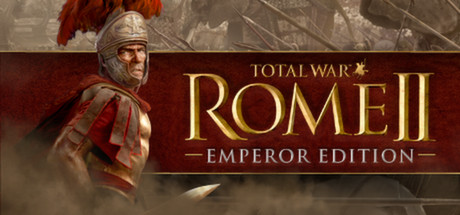
Emperor Edition is the definitive edition of ROME II, featuring an improved politics system, overhauled building chains, rebalanced battles and improved visuals in both campaign and battleEmperor Edition contains all free feature updates since its release in 2013, which includes bug fixes, balancing, Twitch.
Modeled estimate, not a reported figure. How we estimate →
Media

About
Genres
Stats
All-time low is the lowest price we've recorded for this game since we started tracking it.
Add-ons
Each DLC is estimated with the same model as a game, then summed — a modeled figure, not reported DLC sales.
Updates
Build ids and update times come straight from Steam's PICS — the same source SteamDB reads. Patch history grows as we record new builds.
Engagement
Hours played at review time, across 608 reviews with recorded playtime.
Reviews
Themes across 604 recent reviews and how positive each mention is. A keyword signal, not full sentiment analysis.
positive critical· bar length = how often the theme comes up
Reviews
这都多久了中文版都没有 繁体也没有 官方太傲慢了
[h1]Why Rome II Lost the Magic of the Original Rome: Total War[/h1] As someone who spent countless hours playing the original Rome: Total War, I didn't dislike Rome II because it was different. I disliked it because it constantly interrupted the strategy with unnecessary interface friction. The original Rome: Total War had an interface that almost disappeared. You thought about empires, armies and battles—not menus. Rome II, on the other hand, frequently makes the player fight the interface instead of the enemy. [h3]A UI That Increases Cognitive Load[/h3] Many simple actions require unnecessary effort. Take appointing a general. Clicking "Replace General" opens a small panel filled with helmeted portraits. There are no visible names, no meaningful information, and no easy way to identify the person you're looking for. Instead, the player must hover over each portrait, wait for a tooltip to appear, discover it isn't the correct person, move to the next portrait, then repeat the process through multiple pages. A task that should take two seconds becomes a small scavenger hunt. Good UI reduces thinking about the interface. Rome II often does the opposite. [h3]Campaign Navigation Is Surprisingly Slow[/h3] Moving around the campaign map feels sluggish. Simply checking another frontier or sending an agent across the empire takes far longer than it should because camera movement is slow. The common advice to "hold Shift to scroll faster" highlights the issue rather than solving it. Basic navigation should feel effortless. In the original Rome: Total War, the camera never became something the player consciously thought about. In Rome II, it often does. [h3]Provinces Remove the Identity of Cities[/h3] The province system reduces the importance of individual settlements. In Rome: Total War every city developed its own identity. Athens might become your economic powerhouse. Capua your military recruitment center. Memphis your eastern fortress. Each settlement had its own story. In Rome II, several cities become abstracted into a province. Instead of remembering cities, you're managing administrative regions. While this reduces micromanagement, it also removes much of the emotional attachment to individual places. [h3]No Love to Characters [/h3] With six months passing every turn, characters age rapidly. A promising young general quickly becomes an old man before the player has had enough time to become attached to him. One of the joys of older Total War games was watching a commander rise from obscurity, win famous battles, govern provinces, and become part of your empire's history over many campaigns. Rome II compresses that journey so much that characters often feel temporary rather than memorable. [h3]Interruptions During End Turn[/h3] Rome II frequently interrupts the player's turn with repetitive proposals: * Non-aggression pacts. * Military access. * Join this war. * Defensive alliances. The issue isn't that these options exist. The issue is how frequently they appear and how little strategic value many of them provide. The player finishes making decisions, clicks "End Turn," then spends the next minute repeatedly clicking "No" to offers that rarely matter. The game demands attention without providing useful interaction. Good strategy games respect the player's attention. [h3]Diplomacy Hurts Immersion[/h3] Rome II's diplomacy is very frustrating and irritating. This topic alone deserves an essay. Imagine invading a nation, burning its cities, crushing its armies and forcing it into subjugation. You then open diplomacy to offer a simple trade agreement. Instead of speaking like a defeated nation that depends on your goodwill, it lectures you, bargains with you and talks as though the war never happened. The diplomacy system behaves as if nothing has changed, completely ignoring the reality on the campaign map. Moments like these are not just immersion-breaking—they are deeply frustrating because they constantly remind you that you're negotiating with a scripted system rather than intelligent factions. After enough campaigns, diplomacy stops feeling like statecraft and starts feeling like an irritating obstacle that you tolerate rather than enjoy. [h3]Trade Mechanics Ignore Common Sense[/h3] A faction without a coastal city cannot conduct trade. This means two neighbouring inland kingdoms sharing roads and borders are somehow incapable of trading simply because neither owns a port. Historically, this makes little sense. Ancient commerce relied heavily on roads, caravans and river routes, not just maritime trade. It feels like an arbitrary gameplay restriction rather than a believable simulation of the ancient world. [h3]City Development Feels Artificially Limited[/h3] One of the joys of the original Rome: Total War was shaping cities into thriving military, economic or cultural centres over decades. In Rome II, major cities are restricted to only a handful of building slots. Looking at an important provincial capital and realizing that only three or four major buildings can exist feels arbitrary rather than strategic. Instead of asking, "How do I want this city to develop?", the game asks, "Which of these few options do I sacrifice?" The restriction doesn't deepen strategy—it simply limits player freedom. [h3]The Real Problem[/h3] None of these criticisms are about graphics. They're not about historical accuracy. They're not even about game mechanics. They're about interaction cost. Every unnecessary hover. Every unnecessary popup. Every unnecessary click. Every slow camera movement. Every repeated diplomatic interruption. Individually, each issue seems small. Together, they constantly pull the player away from strategy. The original Rome: Total War let players think like generals and emperors. Rome II too often makes them think like users navigating software. That is why, despite its larger scale and additional systems, Rome II never recaptured the magic of the original.
its good for people who enjoy the historical context like me, but compared to older total war games the gameplay is mediocre at best, especially in battles. Also why tf do i need to pay money to enable blood in battles??? I like this game alot but I cant recommend it next to some of the older games. It is still better than alot of newer total war games atleast
Julius Caesar had to conquer Europe just to stop the Gauls sending letters asking for non-aggression pacts and 10k denarii
в эту игру годами играю и каждый раз кайфую как в первый раз))) привет всем из Азербайджана)!
Для тех кто решил вновь окунуться в этот шедевр, но ловит фризы на мощном железе - в файлике с настройками следующие строки должны иметь значения: gfx_video_memory -1; gfx_unlimited_video_memory true; gfx_alpha_blend 2; gfx_shadow_quality 5; number_of_threads 6; gfx_device_type 1; write_preferences_at_exit false; В числе потоков пишите половину от того что на вашем ЦП, файлик лежит в скриптах и после внесения изменений обязательно поставить в его свойствах режим только чтение. ??? Наслаждайтесь! Взял отсюда https://steamcommunity.com/sharedfiles/filedetails/?id=3654098158
多少年了连个中文都没有,翻译MOD也不能正常使用,很多事件窗口缺字,严重影响游戏体验,弹出一个窗口完全不知道是干啥的,玩到后期越来越失望,一点都玩不下去了
算是全面战争系列的老玩家了,小学二年级接触到第一部《罗马:全面战争》,当时直接被震住了——从来没想过游戏能做到这样,指挥整支军队排兵布阵、一步步扩张版图,那种运筹帷幄的感觉,直到现在都忘不掉。 当年在北非的沙漠里跟迦太基的象兵死磕,在美索不达米亚的土地上复刻亚历山大大帝的远征;后来陆续入坑《中世纪:全面战争》与《帝国:全面战争》,又在不同的时代里沉浸了许久。在中世纪的欧陆领着骑士团冲锋、围着石制城堡攻坚,在宗教与领地的博弈里体味封建时代的厚重;到了火器初兴的帝国时代,又迷上了线列步兵齐射的规整感,第一次体验到全战里的远洋海战,看着风帆战舰在海面上对轰,又是一种全新的震撼。 再后来玩《幕府2》,又在日本列岛循着信长的脚步逐鹿群雄,尝试天下布武。玩的时候总忍不住把自己彻底代入进去,跟着势力的起落心绪起伏,也正是因为这系列游戏,我慢慢爱上了历史。 如今补票罗2,熟悉的宏大战场、扎实的策略玩法,还是记忆里那个让人沉迷的全战味道。一晃这么多年过去,这个系列陪我走过了很长一段时光,留下了太多珍贵的回忆。很感谢能遇到这样的游戏,承载了我这么多美好的少年时光。 不过该说CA真的狗。。。。。。
If you love ancient history, you'll love this game. If you love Total War games, then you might like this game. It scratches an itch for those who like Roman history and is a decent game in its own right, but veterans of other Total War games might find it lacking. The base game is fun for a time, but with the Divide Et Impera mod, it becomes one of the best military strategy games ever. No matter what games I play, I always find myself back in Rome II DEI. Vae Victis.
로마 군단병 뽕, 켈트 서약병 뽕, 디아도코이 팔랑크스 뽕, 파르티아 카타프락토이 뽕... 고대 전쟁사 뽕에 미쳐있는 인간들에겐 아직까지 이만한 만족감을 안겨주는 타이틀은 없을 것이다. 심지어 저 위에 써놓은 뽕들을 즐기는데 DLC가 단 하나도 필요 없다는 점을 생각하면, 오래된 게임이라 생기는 특유의 '이찬은 늙었어' 스타일의 악평들을 감수하더라도 본편 찍먹은 한번쯤 시도해보길 간곡히 권한다. 오래된 게임은 세일 할때마다 할인율도 센 편이고. 이 게임은 들크가 하나도 없더라도 한 번쯤 고대전쟁사 덕질하는 사람들에겐 해볼만한 가치가 충분한 게임이다. 병종 같은 거 많이 돌려 쓰는 것 같다고? 병종 다양성은 즈-옆집 가서 판해머 시리즈에서 찾으시고요. 솔직히 햄탈워도 해봤지만, 느긋하게 방진들끼리 부대끼고 칼부림 나는 상황과, 기병들이 적 중보병 뒤통수에다가 퓨리어스 차징을 클린히트 시키는 광경을 흐뭇하게 감상할 여유 같은 건 햄탈워에 없다. 그렇다. 이 게임은 토탈워 시리즈들 중 관상용으로 가장 적합한 게임이다. 빠르고 정신없고 내가 게임을 하는지 비행기 조종을 하는 중인지 모를 만큼 컨트롤 요소가 많고 정신 없진 않지만, 묵직한 중보병들이 역시나 묵직하게 마갑 빵빵하게 챙겨입은 카타프락토이들과 함께 전진하는 광경을 관조하면서 느긋하게 고대 전쟁사 뽕을 채우는 건 이 게임 만한 게 없다.
Related
Related
Trends
Modeled estimate over time, reconstructed from Steam's monthly review histogram.
Engagement
DAU/MAU are modeled from peak concurrent players (≈×8 and ×28) — Steam publishes no active-user counts, so treat these as rough estimates, not reported figures.
Audience
Audience
Languages: English*, German*, French*, Italian, Spanish - Spain, Russian, Polish, Czech, Turkish*languages with full audio support
Estimated from the language of this game's reviews — a proxy for where players are, not official Steam demographics.
Games most often reviewed by the same players — an audience-affinity signal from our review sample, not full ownership data.
Related
| Total War: ATTILA | $57.7M | 37.5K | 82% | $44.99 |
| Total War: NAPOLEON – Definitive Edition | $23.6M | 27.3K | 92% | $24.99 |
| Rome: Total War™ - Collection | — | 16.7K | 95% | — |
| Sid Meier’s Civilization® VI | $580.3M | 376.5K | 86% | $59.99 |
| Total War: THREE KINGDOMS | $86.9M | 93.3K | 82% | $39.99 |
| Total War: SHOGUN 2 | $57.2M | 67.3K | 92% | $29.99 |
Related
| Terraria | $187.5M | 1.5M | 97% | $9.99 |
| Sea of Thieves: 2026 Edition | $177.9M | 371.5K | 89% | $39.99 |
| Dying Light 2 Stay Human: Reloaded Edition | $189.9M | 217K | 79% | $59.99 |
| Total War: WARHAMMER II | $190.4M | 121.4K | 93% | $59.99 |
| Resident Evil Requiem | $191.6M | 103.8K | 96% | $55.99 |
| Assassin's Creed® Odyssey | $194.1M | 185.7K | 89% | $59.99 |