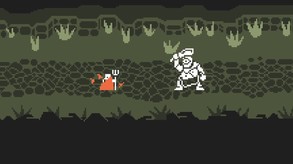
Train your folks, defeat monsters and upgrade your town!
Modeled estimate, not a reported figure. How we estimate →
Media
About


Genres
Stats
All-time low is the lowest price we've recorded for this game since we started tracking it.
Languages: English*, French*, Spanish - Spain*, Simplified Chinese**languages with full audio support
Engagement
Reviews
Themes across 43 recent reviews and how positive each mention is. A keyword signal, not full sentiment analysis.
Reviews
I'm conflicted about not recommending this one. I love practically everything about Tinyfolks. The aesthetics, from the monsters to the music, are all cozy. I just can't recommend it because the difficulty/progression is just way too punishing. I chalk up the “very positive” score this game has to its low price point and reviewers who either never or only finished their first easy/normal run. Easy mode was challenging, normal difficulty was hard, and hard is a nightmare. The problem compounds because this game scales vertically; with the new unlocks being the challenge modes. Unfortunately the damage your Tinyfolk can do won't keep pace, the artifacts and upgrades won’t provide enough boosts, and, even if they could, resources are based on combat and your adventuring is hamstrung by a hard limit to the number of days left to immediate game over. I'd like to think I grasped the strategies of the town & combat well enough and I did get pretty far along across my different runs, but I can see the wall clearly and slamming my head against it just doesn't look like fun. Rebalancing is really the only thing I think would fix this for me and that would mean a complete overhaul. It's just too central to the game to do anything about without modding and by that point what is even the point? I don't regret getting Tinyfolks and I may reinstall it again someday, but it's a treadmill to hell.
Related
Related
Trends
Concurrent players on Steam, sampled daily since tracking started.
Hours played at review time, across 43 reviews with recorded playtime.
positive critical· bar length = how often the theme comes up
I bought this over 3 and a half years ago, played for 5 minutes, seemed pretty cool but figured I'd get to it later, and into the deadly backlog it went. Over 3.5 years later, I decided to go through my library sorted by by install date, starting at the beginning. I really started growing my backlog when I bought my Steam Deck and this was one of my earliest games, so I decided to actually give it a go, and I'm really enjoying it! Definitely worth the very low price of $3.99, there's quite a bit of depth for such a cheap game. I can't really say "I wish I/should have gotten to this earlier", as my backlog is undefeatable and filled with hundreds and hundreds of games now and there are tons of great games suffering this same fate, and unfortunately I will die with probably hundreds of great unplayed games. That said, I can definitely recommend it and I'm glad I went back to it. The music is pretty snazzy too
A short, distilled, light-RPG, that is designed to be played in short bursts. You build your town, recruit heroes, train, upgrade and equip them (with an artifact only) in order to progress through the areas to reach the big baddie. The combat is the “line combat” style made popular by Darkest Dungeon, but again much simpler. A large portion of the fun comes from building your heroes. At it’s most basic, you recruit a peasant, and then train him at a building (basically fighter, priest, mage, hunter, rogue). There is a little more to it with a defense specialist and a bard type of character but they have special requirements. This gives you a basic role, but from there you can train them again in any of these roles making them into a more specialized class with new abilities. Fighter / fighter becomes a berserker who is very offensively specialized, a fighter / rogue becomes a thug who is a solid fighter with a stun option and some other dirty tricks. Each of these is unique with its own set of abilities (with some overlap), so there is a lot of variety here. There is also your special king character too, which works the same way so can become a king/fighter, king/mage, etc. You can also upgrade each character’s weapon and armor (if they have them, some don’t) giving you boosts to damage, hps, power usage or healing depending on what their base weapon/armor type is. All the training, upgrading and building takes resources, which you get from fighting, with certain areas giving more specialized resources. The areas you progress through are just a series of 3-5 battles (on normal), with the last being a boss on the first pass through. The rules are simple, with your first character attacking first, followed by the first enemy, then 2nd friendly, 2nd enemy, etc. Order matters in this sense, and also matters for which enemies (and friendlies) can be hit as each ability has its own reach but you can always use all your abilities no matter where you are in the line, unlike some other games. That’s about it really. There is no story beyond a few sentences, no puzzles, no exploration, etc, just a series of combats followed by time back in town building, training and recuperating. There are a few modes, some which restrict what classes / buildings you can access, and some which change up the game entirely (alien / baby / zombie mode) so there is some variety and challenge after beating the regular game, which really isn’t too difficult once you get your bearings. This is a really solid, kind of casual, time waster kind of game. Not to say that playing it is wasting your time, but it is a great game to play for 30 minutes when you don’t feel like doing anything else. There are enough challenges and options to keep you engaged, but it is simple enough to still be relaxing. It has good enemy variety and mostly good boss design (some are a little annoying). It is well made, with no bugs (well one menu thing did pop up here and there but was easily bypassed) and nice music. The main negative would be that while the different game modes could be fun, I didn’t like that most were locked, with some of the more interesting ones requiring you to beat 2 or 3 other modes to unlock (zombie mode for example). I enjoyed the game, but not enough to play that much, especially in restrictive modes where you can only bring fighters or something. The other negative would have to be the graphics, that are about as basic as you can possibly get. Also, not so sure about the balance of each of the classes. Some just seem better or feel borderline required (like an early priest). And the game could give you a bit more info on what to expect in terms of enemies and loot in different areas. It’s a bit too easy to take a bleed specialist into an area where most enemies are completely immune to bleed for instance. If you are looking for a short, fun game to play in small doses, this is a good one if you like Darkest Dungeon combat (very simplified) and experimenting with different party builds. Most will only get 5-10 hours out of it before moving on, unless you really want to complete all modes and get all the achievement unlocks which will take considerably longer.
Just great, cost nothing and has addictive music.
Very, very good game. And for that price? A steal. Buy it.
It's a cheap homage to Darkest Dungeon, the quality is what you pay for. Not a big fan of the fact that bosses will make an action every time one of your units acts. This system penalizes you for having a full party of five. The music is repetitive, and there is no way to turn off the green dots that show up in the base camp user interface when you can upgrade a building but don't want to upgrade a building.
COOOL :-)
Developed by Pierre Vandermaesen and published by VANDERMAESEN GAMES, Tinyfolks is a compact strategy RPG that proves impressive depth does not require massive worlds, elaborate graphics, or hundreds of hours of content. Combining town management, squad building, roguelite progression, and turn-based combat, the game delivers a focused experience that consistently rewards thoughtful decision-making. Its minimalist presentation may initially suggest a simple indie project, but beneath the charming pixel-art exterior lies a surprisingly engaging blend of tactical gameplay and long-term progression. The premise is straightforward yet effective. Players take control of a small settlement threatened by a powerful dark force and must recruit villagers, train heroes, upgrade facilities, and assemble a capable team strong enough to confront the growing dangers ahead. Rather than relying heavily on story-driven sequences, Tinyfolks allows its gameplay systems to take center stage. The narrative exists primarily to provide context for the player's actions, keeping the focus on building a stronger town and developing an increasingly powerful roster of adventurers. One of the game's strongest features is its class progression system. Recruits begin as humble villagers but can evolve into a wide variety of specialized professions. Each class possesses unique strengths, weaknesses, and abilities, encouraging players to experiment with different combinations. Building an effective party involves more than simply recruiting the strongest units available. Success often depends on creating balanced teams that can support one another during difficult encounters. This emphasis on synergy adds meaningful depth to every recruitment decision. Combat is accessible yet strategically satisfying. Battles unfold through a turn-based system that rewards planning rather than quick reflexes. Players must carefully consider attacks, abilities, equipment, and positioning while adapting to the strengths of different enemy types. The mechanics are easy to understand, but mastering them requires thoughtful preparation and efficient resource management. Every victory feels earned because success usually stems from smart planning rather than overwhelming numerical advantages. The variety of enemy encounters helps maintain engagement throughout the adventure. Different monsters require different approaches, preventing battles from becoming repetitive. As players progress into new regions, stronger opponents introduce additional challenges that encourage constant refinement of party composition and tactics. This gradual increase in complexity creates a satisfying learning curve that keeps combat interesting over time. Town development serves as the foundation for long-term progression. Between expeditions, players return to their village where they can construct and improve various buildings. Each structure unlocks new opportunities, whether through recruitment, crafting, research, or economic growth. Deciding which facilities deserve priority becomes an important strategic consideration because resources are limited. The town management system creates a rewarding sense of ownership, as every upgrade visibly contributes to future success. Resource management plays an equally important role. Gold, materials, and other valuable assets must be allocated carefully to ensure steady progress. Players constantly face decisions regarding whether to invest in new heroes, improve existing facilities, purchase equipment, or save resources for future opportunities. These choices create meaningful trade-offs that prevent progression from feeling automatic. The equipment system further enhances customization. Weapons, artifacts, and various upgrades can dramatically alter the effectiveness of individual characters. Finding powerful gear often opens new tactical possibilities and encourages experimentation with different builds. Because equipment can significantly influence performance, acquiring valuable items remains exciting throughout the game. One of Tinyfolks' most appealing qualities is its pacing. The game respects the player's time by delivering meaningful progress at a steady rate. Battles are concise, upgrades feel impactful, and new opportunities appear regularly. Even short play sessions can result in noticeable advancement, making the game particularly enjoyable for players who appreciate strategy experiences that avoid unnecessary padding. The roguelite influences help strengthen replayability. While each run offers familiar objectives, random elements ensure that no two journeys unfold exactly the same way. Different recruit options, item discoveries, and progression choices encourage players to adapt their strategies rather than relying on a single solution. This unpredictability helps keep the experience fresh even after multiple playthroughs. Visually, the game embraces simplicity without sacrificing charm. The pixel-art presentation is clean, colorful, and easy to read. Character designs may be minimalist, but they possess enough personality to make different classes immediately recognizable. The interface is equally effective, presenting important information clearly while maintaining a compact and approachable appearance. The soundtrack complements the gameplay well. The music creates a relaxed yet adventurous atmosphere that supports both exploration and town management. While the audio presentation is not particularly elaborate, it succeeds in reinforcing the game's cozy and strategic tone. Sound effects are equally functional, providing satisfying feedback during combat and progression. Despite its many strengths, Tinyfolks is not without limitations. Players seeking extensive narrative content may find the story somewhat underdeveloped. The game focuses heavily on systems and progression rather than character development or world-building. While this design choice keeps the pacing brisk, it may leave some players wanting a stronger narrative framework. The relatively small scale of the adventure can also be viewed as both a strength and a weakness. The game avoids unnecessary complexity, but some players may eventually wish for additional environments, classes, or advanced mechanics. Compared to larger strategy RPGs, the overall scope remains modest despite the impressive depth packed into its systems. Certain aspects of progression can occasionally feel dependent on experimentation. While discovering effective strategies is part of the appeal, newer players may encounter moments where optimal decisions are not immediately obvious. Fortunately, the game's forgiving structure encourages learning through experience rather than punishing mistakes too severely. What ultimately makes Tinyfolks stand out is how effectively it balances accessibility with strategic depth. It introduces mechanics gradually, keeps systems understandable, and consistently rewards thoughtful play. Every feature serves a clear purpose, creating an experience that feels remarkably polished and focused. The game never tries to overwhelm players with unnecessary complexity, yet it offers enough meaningful choices to remain engaging throughout. Tinyfolks is a testament to the idea that great strategy games do not need enormous budgets or massive worlds to succeed. Its combination of town building, tactical combat, class progression, and resource management creates an addictive gameplay loop that is easy to learn but difficult to put down. While its limited scope and light storytelling may prevent it from appealing to every RPG fan, its clever design, satisfying progression, and charming presentation make it one of the more memorable indie strategy RPGs in recent years. Rating: 9/10
Poor man's Darkest Dungeon. ~5hs of content for one normal play through. It was okay for the sale price.
中规中矩的作品。因为饰品和技能太少,而且没有战斗中的随机性,达不到暗黑地牢的游玩时长。通关一次应该就吃灰了。不过18块,还要啥自行车()
Momentum
Pace estimated from the game's recent review growth (our daily snapshots) at its own sales-per-review ratio — a momentum signal, not booked sales.
Audience
Estimated from the language of this game's reviews — a proxy for where players are, not official Steam demographics.
Related
| 7 Days to Die | $425.3M | 403.5K | 87% | $44.99 |
| Mount & Blade II: Bannerlord | $309.8M | 293.9K | 88% | $49.99 |
| Don't Starve Together | $164.6M | 539.5K | 95% | $14.99 |
| Warhammer 40,000: Rogue Trader | $48.8M | 46.4K | 88% | $49.99 |
| The Scroll of Taiwu : Beyond The Dome | $62.2M | 69.6K | 66% | $29.99 |
| Mewgenics | $56.1M | 47.8K | 90% | $29.99 |
Related
| A Sinful Camp | $89.2K | 287 | 72% | $9.99 |
| Taffy Tales Redux : The Morning After | $89.2K | 185 | 52% | $24.99 |
| Dark Nights with Poe and Munro | $89.2K | 489 | 75% | $12.99 |
| Rail of Möbius | $89.2K | 490 | 95% | $5.19 |
| Depraved Awakening | $89.2K | 615 | 92% | $9.99 |
| Pawperty Damage | $89.2K | 509 | 93% | $8.99 |