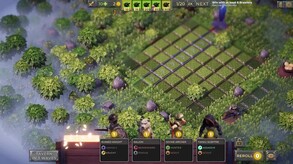
Tiny Tactics is a Tower Defense game with a heavy focus on mazing, with mechanics inspired by the Auto Chess genre.
Modeled estimate, not a reported figure. How we estimate →
Media
About

Stats
All-time low is the lowest price we've recorded for this game since we started tracking it.
Languages: English**languages with full audio support
Engagement
Reviews
Themes across 40 recent reviews and how positive each mention is. A keyword signal, not full sentiment analysis.
Reviews
Tiny Tactics is a strategy-focused tower defense game developed and published by Tiny Forge Gaming that attempts to refresh the classic tower defense formula by blending it with elements of auto-battlers and tactical maze construction. At first glance the game appears modest in scale, with simple visuals and a straightforward interface, but beneath that minimal presentation lies a surprisingly intricate system built around strategic placement, unit combinations, and the manipulation of enemy movement. Rather than relying purely on raw tower power or repetitive upgrade systems, Tiny Tactics encourages players to think carefully about positioning, path design, and how different units interact with one another. The core premise follows the familiar structure of defending against waves of incoming enemies, but Tiny Tactics introduces an important twist in how the battlefield functions. Instead of simply placing towers along a predetermined route, players have a large degree of control over the path enemies will take. By placing towers and structures in strategic positions, it becomes possible to reshape the route enemies must travel, forcing them to take longer paths through carefully designed mazes. This mechanic, often referred to as “mazing,” transforms each level into a spatial puzzle where the layout of defenses can significantly affect the outcome of each wave. A well-constructed maze can dramatically increase the amount of time enemies remain under fire, while poor placement can allow them to slip through defenses far too quickly. Gameplay unfolds through a series of increasingly challenging stages where waves of enemies march toward the player’s base. Each wave introduces new threats, forcing players to continually adjust their strategies. Early levels serve as a gentle introduction to the mechanics, allowing players to experiment with tower placement and basic path manipulation. As the campaign progresses, however, enemies become faster, more resilient, and sometimes capable of bypassing certain defenses altogether. This steady escalation in difficulty ensures that players must constantly refine their tactics rather than relying on a single solution for every stage. One of the most interesting systems in Tiny Tactics is the unit merging mechanic inspired by auto-chess games. Instead of upgrading towers through traditional upgrade trees, the game allows players to combine duplicate units to create stronger versions with improved capabilities. This merging system adds an extra layer of strategic decision making, as players must choose between spreading their resources across multiple towers or consolidating them into fewer but more powerful units. A highly upgraded tower can dominate certain sections of the maze, but relying too heavily on a small number of strong units may leave other areas vulnerable. The game features a large roster of towers and abilities, each with its own unique function on the battlefield. Some towers specialize in dealing direct damage, while others slow enemies, apply status effects, or provide supportive buffs to nearby units. These towers are often grouped into classes that generate additional bonuses when used together, encouraging players to experiment with different combinations to discover effective synergies. This system gives the game a strong sense of strategic variety, as different tower compositions can lead to entirely different defensive approaches. Enemy design also plays an important role in keeping the gameplay engaging. As players advance through the campaign, they encounter enemies with specialized behaviors that challenge their maze layouts. Some enemies move extremely quickly, requiring carefully timed damage output to eliminate them before they slip through defenses. Others possess high durability or special abilities that force players to rethink how their towers are positioned. The gradual introduction of these new enemy types prevents the gameplay from becoming stagnant and ensures that each level presents a fresh tactical challenge. The campaign mode contains dozens of stages set across different environments, each with unique layouts and terrain features. Certain maps introduce special tiles that enhance the effectiveness of towers placed on them, rewarding players who pay close attention to map design when constructing their mazes. In addition to the main campaign, the game includes additional challenge modes that push players to master its mechanics under more difficult conditions. These modes offer increased enemy difficulty and stricter strategic constraints, providing additional content for players who enjoy testing their tactical skills. Visually, Tiny Tactics adopts a colorful and minimalist style that prioritizes clarity over visual complexity. The bright graphics make it easy to identify towers, enemy units, and attack effects during hectic moments when multiple waves are active simultaneously. Although the art style is relatively simple, it serves the gameplay well by ensuring that players can quickly understand what is happening on the battlefield at all times. The clean interface also helps keep the focus on strategic decision making rather than unnecessary visual clutter. The sound design follows a similar philosophy of simplicity and functionality. The game features an energetic soundtrack that maintains a steady rhythm during gameplay, reinforcing the sense of progression as waves of enemies approach. Sound effects for attacks, abilities, and enemy movement provide useful feedback without becoming overwhelming. While the audio presentation is not particularly elaborate, it complements the fast-paced defensive gameplay and helps maintain the overall flow of each stage. One of the strongest aspects of Tiny Tactics is its replayability. Because tower combinations, enemy waves, and resource management can vary from one playthrough to another, players are encouraged to experiment with different strategies. The variety of available units and the flexibility of maze construction mean that there is rarely a single “correct” solution to a level. Instead, players can approach each stage in multiple ways, discovering new strategies as they become more familiar with the game’s mechanics. However, the game does have a few limitations that may affect some players’ enjoyment. The large number of towers and synergy systems can initially feel overwhelming, particularly for newcomers to strategy games with complex interactions. The tutorial provides a basic introduction, but much of the deeper strategy is learned through experimentation and trial and error. Additionally, because the core gameplay loop revolves around defending against waves of enemies, extended play sessions may begin to feel repetitive for players who prefer greater narrative or mechanical variety. In the end, Tiny Tactics proves that innovation in the tower defense genre does not always require massive production values. By focusing on clever mechanics and strategic flexibility, the game delivers a thoughtful and challenging experience that encourages experimentation and tactical creativity. Players who enjoy designing complex defensive layouts and discovering powerful unit combinations will likely find the game highly satisfying, while those looking for a more narrative-driven experience may find its focus purely mechanical. Nevertheless, as a strategic puzzle built around defense and resource management, Tiny Tactics succeeds in offering a rewarding and surprisingly deep gameplay experience. Rating: 8/10
Related
Related
Trends
Concurrent players on Steam, sampled daily since tracking started.
Hours played at review time, across 40 reviews with recorded playtime.
positive critical· bar length = how often the theme comes up
Das Spiel ist unterhaltsam und ideal für zwischendurch. Es ist ein gutes Maze Runner Spiel, was die Möglichkeit gibt, ein individuelles Play-Build zu gestalten. Für den Preis bekommt man viel Spielzeit geboten!
Actual junk.
I think the game is great, but in 2026 there are significantly better TD games out there that have continual updates and support from their devs. From what I can tell, this game or is more less dead as the last update was in 2023. I would suggest looking elsewhere.
Changing my review to a single thumb up. I am having fun with it, but it is not for every, has a steep learning curve, and minimal guidance along the way. For those who like mazing, this game is based on the concept, but so far the maps have yet to allow much creativity in that direction. The towers are plentiful, each tower having a unique two trait combination. Having multiples of trait usually gives you a bonus. In addition towers can be upgraded twice, but only by the luck of finding more of the same in the store. Learning how to mix and match these traits is the cruz, so far, of building better mazes. Between waves you can move any and all towers anywhere you want, as long as a path is open of course when you hit start. The various towers abilities might make them better at the start of the path or the end. For example I keep moving my bounty hunters back tot he part of the path where units are dying, to try and get a few more coins. The game has no tactical options, once you hit go, there is nothing to do, which kind of sux. There is a small collection of strategic upgrades, nothing fancy. There are a variety of foes, though most look like mochi balls, but there is no index explaining what they are and do, which is also irritating. Personal pet peeve, no fluff, I know this means nothing to most people, like the mention it anyway. The UI is awkward, if you click on a unit, a stat box pops up blocking almost a quarter of the screen and it can't be moved. Really a pain. Also you can't really move the map around to see things, which is often irritating as the maps are really tight and some spots can get hard to see. A few things seem broken. The tavern button gets wonky if you are not really careful. I seemed to be able to give a certain upgrade stone out twice, which I am pretty sure is wrong. Late in the game, there is no reason to buy new tower types most of time, leaving you with nothing really to do but hit re-roll over and over (a major game component, as you will learn if you play this) to try and find a unit that will upgrade something. I have hit re-roll over ten times in a row and not gotten anything sometimes. More in the late games, the towers that can show up increases at the game progresses. A longer intro period where things are explained more completely would be nice. A gradual introduction of the various tower types. Better maps, I suspect, the game feels very cramped. And there is simply too much time where the player has nothing to do! Never a good thing. I would say only on a good sale? So as I said, one thumb up, if you like to work at understanding things you might get hooked, if you just want a fun and easy TD game to play, you might give this a pass. ADDENDUM: In the long run, twenty one hours in, I find it kind of repetitive, full of odd bugs, and very much reliant on luck, not my favorite traits in a game. Still, that's a pretty decent amount of time, so still one thumb up. ADDENDUM: Still playing. A lot of little odd things I think are bugs. For example the dragons fire is stated as 100% my attack, the damage shows on the screen and it's only half. Also the maps never seem to get larger than 7X7, and sometimes smaller, and it's always only twenty waves.
um dos melhores TDs já feito
This is probably my favorite tower defense game. The auto battler mechanics for the units are a good fit. There's lots of dimensions on which to compare the units; different factions, different attack types and ranges, and different special abilities. You'll pick some units just for the faction bonus, but over time you learn which ones you can build your strategy around; some units combo well in ways that have nothing to do with factions. If you play long enough (and unlock enough tavern and reroll boosts) you'll eventually find some combos that can basically always win. The game encourages you to try different units by giving bonuses for completing a level with a specific faction. I try to lean into this and max out the faction when I can, otherwise it can get a bit samey, but if you're stuck on a level you can always get the bonus by just hitting the minimum. The mazing aspect is pretty good; the game varies it up a little by putting obstacles and special tiles in different places. It's usually clear what the "best" path is, but you might have to decide between a longer path and a shorter one that lets you fit in all the units you want. Usually, you'll have to think carefully about where to place your best units, but a bunch of the worse ones will be basically interchangeable and just there as walls. If I have any gripe with the game, it's that I sometimes have to "make my own fun" and deliberately avoid using the same strategy repeatedly or else it gets boring. Also, clicking on bounty hunter coins and moving scouts standing on tall pillars can get a bit buggy sometimes, though it's never caused me real trouble.
There's a good game under the hood here. For a tower defence the graphics are good, the character models are nice. However let's be honest, this is a game about building the highest damage output maze you can with the RNG you get. This is where it falls down. There are a LOT of characters. You start of with cheap ones which makes sense. As the rounds progress you get more and more options. I get there's some risk-vs-reward theory in here, the execution is poor. Using the free reroll is mandatory and locking if something useful actually appears. It comes down to either having an outstanding memory for each unit and class type which if you play enough sure you'll remember, but if you don't you're spamming the class bonuses. See that damage list? That character with the name? No idea which one it is. Click through every unit on the board, oooh it's that one. Why not click on the damage list to take you to it?! So you might think ah I'll try to get this one levelled a bit more. Extremely unlikely you'll rarely see even one copy of it, let alone multiple. You can spam rerolls but you just waste coin. You can sell characters and shorten your maze if you wanted. It's very unsatisfying. The UI is also terrible, the DPS meter overlaps with the left most character choice for example. Half the time you can't collect bounties no matter where you click. You have to press space to see the sale bag. You can't move the camera around. The UI hides what you actually want to see. Terribly unsatisfying game but the premise is good. It would have been better giving more coin to balance the RNG, forcing a filled maze quicker, buffing the enemies due to this, and then forcing the player to sell up and create something that harmonises. As it stands by the time you're getting a good setup its over. Very unsatisfying.
A different approach to tower defense. It's definitely fun. Personally i think they made a few bad choices when it comes to UI and color design cause at times it's hard to see some elements clearly due to color choices, ui design/size of some elements or perspective/distance/overlapping. Overall an enjoyable game with room for improvement.
Macht sehr viel Spaß zieht bisschen viel Prozessorleistung. Die meisten Level sind gut machbar.
Momentum
Pace estimated from the game's recent review growth (our daily snapshots) at its own sales-per-review ratio — a momentum signal, not booked sales.
Audience
Estimated from the language of this game's reviews — a proxy for where players are, not official Steam demographics.
Related
| Tiny Brains | $154K | 549 | 78% | $9.99 |
| The Mooseman | $154K | 1.2K | 89% | $7.99 |
| Project LUX | $154K | 389 | 90% | $24.99 |
| [Chilla's Art] Aka Manto | 赤マント | $154.1K | 1.2K | 88% | $4.99 |
| Legendary Hoplite | $153.9K | 382 | 64% | $14.99 |
| CyberCorp | $153.9K | 431 | 79% | $14.99 |