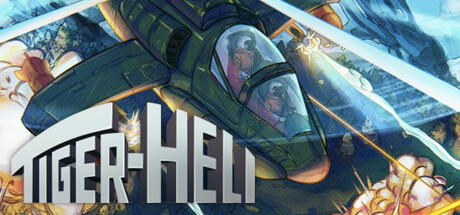
Tiger Heli is a classic vertical-scrolling shooter that marked the debut of Toaplan as one of the defining forces in the shoot-’em-up genre. Revived and modernized by Bitwave Games and published by Clear River Games, this re-release offers a faithful recreation of the 1985 arcade original, enhanced with optional quality-of-life features designed for modern audiences. At its core, however, Tiger Heli remains a game from an era when simplicity, challenge, and reflexes defined the player experience. It’s a brief but intense journey through fast-paced action, punishing difficulty, and the unmistakable style that laid the groundwork for many shooters that followed.
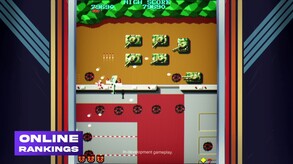
The premise is simple: you pilot the titular attack helicopter through a series of vertically scrolling battlefields filled with enemy tanks, artillery, and aircraft, blasting everything that crosses your path. The game operates on precision and survival rather than narrative; every second is about reacting to the constant flood of enemies and projectiles while keeping your aim steady. The control scheme is straightforward, yet the responsiveness and sense of weight behind the helicopter make every movement feel deliberate. Power-ups appear as small icons that grant extra bombs or side units—miniature helicopters that add to your firepower and defense. Managing these limited enhancements becomes a vital part of the experience, as one mistake or missed pickup can make the difference between victory and a fiery crash.
Tiger Heli’s greatest legacy lies in its introduction of the bomb mechanic, which would go on to become a staple feature in many shooters, especially within Toaplan’s later catalog. The bomb acts as both an offensive and defensive tool—clearing the screen of enemies and projectiles in a single blast while giving the player a brief moment to breathe. It’s a design choice that balances empowerment with restraint, as bombs are limited and must be used strategically. This innovation helped distinguish Tiger Heli from its contemporaries, adding a layer of tactical decision-making that elevated it beyond simple reflex-based gameplay. In hindsight, it was an early glimpse into the more complex design philosophies that would shape Toaplan’s later hits and influence the evolution of the bullet-hell genre.
Visually, the game retains its crisp pixel art and distinct 1980s aesthetic. The environments scroll smoothly beneath the player, shifting between cities, industrial complexes, and open battlefields. The graphics may seem primitive by modern standards, but their clarity and design are impressive for their time, ensuring that gameplay readability never suffers even during chaotic moments. The explosions, though modest in scale, are satisfying in their sharpness, and the steady stream of enemy fire creates a tense, visually engaging atmosphere. The soundtrack complements this energy with a driving electronic score typical of mid-’80s arcades—minimalistic yet propulsive, lending every encounter a sense of urgency.
The modern port by Bitwave Games stays true to the arcade original while incorporating several valuable improvements. Players can now take advantage of save states, adjustable difficulty options, leaderboards, and rewind features, all of which make the game more approachable without compromising its hardcore roots. The addition of achievements and online rankings gives long-time fans new incentives to master the game, while newcomers can experiment freely without fear of losing all progress after one mistake. These updates transform the punishing arcade experience into something more accessible and sustainable for contemporary play sessions. Still, the developers have taken care not to tamper with the game’s identity—its pacing, physics, and structure remain exactly as they were nearly four decades ago.
That said, Tiger Heli’s age inevitably shows. The game is short, with only four main stages before looping back at a higher difficulty. Enemy variety is limited, and the absence of modern visual flair or progression systems means that the experience can feel repetitive after several playthroughs. Its difficulty, though iconic, can be brutal to those unfamiliar with the one-hit-death design philosophy of early arcade shooters. Precision and memorization are key, and the margin for error is virtually nonexistent. However, for players who thrive on that old-school challenge, this relentless simplicity is exactly what makes it rewarding. Each cleared level feels earned, and each new high score becomes a testament to skill rather than luck.
As a historical artifact, Tiger Heli is fascinating. It represents the early experimentation that gave rise to an entire generation of arcade shooters. Its emphasis on strategic use of bombs, risk-reward mechanics, and methodical enemy placement foreshadows the more sophisticated designs that Toaplan and later studios like Cave would develop. Playing it today is less about spectacle and more about appreciating where modern shoot-’em-ups came from. The Steam version, with its improved accessibility and preservationist fidelity, offers a convenient way for players to experience that legacy without the hardware limitations or difficulty barriers of the original cabinets.
In the end, Tiger Heli is a product of its time, yet it remains enjoyable for those who can appreciate its straightforward design and intense gameplay loop. It may not dazzle with modern graphics or complex mechanics, but it continues to shine as a piece of gaming history—a tight, disciplined arcade experience that values skill and timing above all else. The Bitwave port ensures that this classic remains playable and relevant, giving new life to one of the foundational titles in shoot-’em-up history. For fans of retro action or anyone interested in tracing the roots of a genre, Tiger Heli stands as both a challenge and a celebration of where it all began.
Rating: 6/10