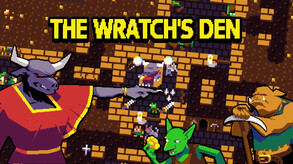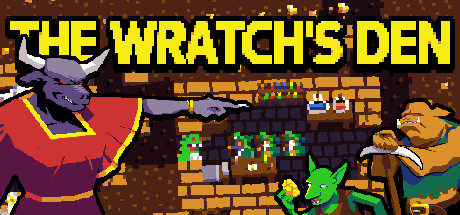
A byte-sized Dungeon Keeping roguelike: dig out your lair, populate it with monsters and protect the Wratch from heroes come for easy prestige.
Modeled estimate, not a reported figure. How we estimate →
Media

About
Genres
Stats
All-time low is the lowest price we've recorded for this game since we started tracking it.
Languages: English
Engagement
Hours played at review time, across 41 reviews with recorded playtime.
Reviews
Themes across 41 recent reviews and how positive each mention is. A keyword signal, not full sentiment analysis.
positive critical· bar length = how often the theme comes up
Reviews
While the presentation and "chunkiness" are great, and the semi-random structure of the dungeon is fun to play around, the game just drags on past the early-mid game, especially as certain rooms are opened (don't ever get the tavern), and heroes drop all of their items, more or less requiring you to pick them up to avoid being overwhelmed, which takes a lot of time. Certain actions and events take a lot of cumulative time, so that the late game becomes a drudge. Don't get it if you want something that will last longer than a couple hours, or offer a lot of longer-term engagement.
Una especie de Dungeon Keeper roguelike, en el que tenemos que excavar en busca de 3 orbes de poder mientras mantenemos a raya héroes que intentan invadir nuestra mazmorra. La idea es original y la ejecución correcta, aunque la mecánica de turnos roguelike (1 casilla - 1 turno) y el hecho de que tengamos que controlar a los minions de uno en uno (más o menos...), lo hace un poco menos dinámico de lo que me gustaría. Además, los turnos van justos y los héroes en ocasiones nos bloquean las rutas de excavación, lo que complica las cosas bastante. Pero bueno, es parte de la gracia del juego. Creo que hubiese sido más interesante si el desarrollo fuese un poco más lento, pero quién sabe.
Fun little arcade title that I could see myself sinking a lot more time into if the endless mode had a more engaging late game.
Got this game from a friend as birthday gift. Got hooked up pretty quickly. The game is pretty easy (despite seemingly 4 difficulties and 2 game modes). You start with 2 units and a den master. One orc to mine, one goblin to collect gold. Every around 40 steps, a new wave of heroes spawn, after another ~40 steps, your den master can use special ability, starting with research potion, healing minions or resurrecting them and destroying hero leftovers. Sounds exciting? That's most of it. After digging some tiles, You have to build one of few special rooms granting something. Sadly, You cannot build anything yourself and You can only repair existing walls or destroy them. Can't build new ones. If You play on nightmare or endless, after 20-45 minutes, game becomes a chore and annoyance. Very slow. Pros: + Strategic + Requires some brain power + Several unit types Cons: - Miner evolution of orc is worthless, wolf tamer for goblin as well - Big units are purely defensive - The longer game takes, the worse it gets in all aspects - I created uber miner / fighter goblin and it was not enough Problem with nightmare and endless is that You can control only one unit a time and enemy can spawn almost everywhere but at the center. As long as You have maybe 8 units, it's okay, but the moment You start have 20 of them and enemy spawn similar in number, turns take long time and on top of that, if You allow casters to throw fireballs or entire group enter tavern... It just takes too long. Especially if You need to relocate your fighting force. Achievement for points is also... bad. You can't see your score and it only counts mined tiles (+1 for mined, +2 for walls and pavement, +5 for furniture), so your army, wealth and status means nothing. Heck in my both endless runs at some point I just left my army in HQ and used one or two units to mine around. if not for casters, I wouldn't even need to pay attention to defense at all. Just heal/resurrect units was enough to keep them away for 2 hours. I spend 3 hours on finishing all difficulties, 2h for 1st endless run and the rest for 2nd endless, only for the 3k achievement. I'm thankful for Jrose11 poke runs or I would be bored during endless and nightmare run.
cities skylines for insane people
Fun and challenging puzzle to solve. Surprisingly deep strategy and great music, worth the price and more. Lots of negative reviews from accounts with less than an hour of gameplay. RNG forces a tailored play style each time. Room choices, and game decisions have to adapt. Could it be less reliant on RNG? Yes, but it would be a different game. It's 6 dollars and has given me hours of enjoyment and I'll get more out of it. Fan of pixel graphics, puzzles and Rogue-like? go for it.
The Wratch’s Den, developed and published by PUNKCAKE Delicieux, is a compact dungeon-management strategy game that distills the essence of base-building and roguelike design into a tightly structured, run-based experience. Instead of sprawling campaigns or complex long-term systems, it focuses on short, self-contained sessions where every decision carries immediate consequences. The result is a game that feels both approachable and demanding, offering a steady stream of strategic choices within a deliberately constrained framework. You take on the role of managing an underground lair for the Wratch, a fallen overlord attempting to rebuild power from beneath the surface. Gameplay unfolds in turns, giving you time to think through each move as you expand your dungeon by digging tunnels, collecting resources, and constructing rooms. These rooms serve a variety of functions, from training your creatures to improving their equipment or unlocking new capabilities. The structure encourages careful planning, as space is limited and every tile you carve out contributes to the efficiency—or vulnerability—of your growing base. What makes the experience engaging is the constant tension between development and defense. As your dungeon expands, waves of enemy adventurers begin to invade, forcing you to defend your territory using both your minions and the layout of your base. Placement becomes crucial; a poorly designed corridor or mismanaged room can quickly turn into a liability when enemies start pushing deeper into your domain. This interplay between building and defending creates a satisfying loop where success depends not just on growth, but on how well your systems work together under pressure. The game’s roguelike structure ensures that each run feels slightly different. As you dig deeper, you unlock new rooms and opportunities, often in unpredictable ways that require you to adapt your strategy on the fly. Resource management plays a central role, as everything—from recruiting units to constructing defenses—depends on what you can gather. This creates a natural progression within each run, where early decisions shape the direction of your dungeon and influence how you handle later challenges. While the core mechanics remain consistent, the variability in available options keeps the experience from feeling entirely repetitive. Despite its relatively small scale, the game manages to inject a sense of personality through its presentation. The pixel-art visuals are simple but expressive, clearly communicating the state of your dungeon while maintaining a light, slightly humorous tone. The idea of running a chaotic underground operation, complete with improvised training facilities and unconventional room types, adds a layer of charm that helps offset the tension of the gameplay. The audio design is understated but effective, supporting the experience without drawing too much attention away from the strategic elements. However, the game’s minimalist approach also introduces some challenges, particularly for new players. There is very little in the way of guidance, and understanding how its various systems interact can take time. Early runs may feel confusing or even punishing, as the game expects you to learn through experimentation rather than structured tutorials. This can be rewarding for players who enjoy discovering mechanics on their own, but it may be frustrating for those who prefer a more guided introduction. As runs progress, another limitation becomes more apparent. While the early stages are tense and engaging, the later portions can shift toward a more repetitive rhythm, where managing a larger dungeon involves increasingly routine actions. The core systems remain solid, but they do not expand significantly, which can make extended play sessions feel less dynamic. Replayability largely comes from refining strategies and improving efficiency rather than uncovering new layers of gameplay. Ultimately, The Wratch’s Den succeeds as a focused and cleverly designed strategy experience that blends dungeon management with roguelike sensibilities. It offers a satisfying loop of building, defending, and adapting, all within a format that respects the player’s time. While it may lack the depth and polish of larger titles, it delivers a strong sense of identity and a rewarding challenge for those willing to engage with its systems. Rating: 7/10
Fun and just complex enough! I just wish it had a save function, especially for Expansion mode.
Fun Stuff.
The fun is figuring out the game, to be honest. Still I had a really good time. The game is pretty short with limited replayability, but I enjoyed every second and it has been a delight!
Related
Related
Trends
Modeled estimate over time, reconstructed from Steam's monthly review histogram.
Audience
Estimated from the language of this game's reviews — a proxy for where players are, not official Steam demographics.
Related
| Aristocunts II Re:ERECTION | $13.2K | 142 | 85% | $5.99 |
| TROUBLE JUICE | $13.2K | 143 | 94% | $0.79 |
| Horatio Goes Snowboarding | $13.2K | 118 | 83% | $5.99 |
| Alien Scumbags | $13.2K | 118 | 97% | $5.99 |
| Tile Cities 2 | $13.2K | 68 | 93% | $5.99 |
| The Cable Guy | $13.2K | 51 | 90% | $7.99 |