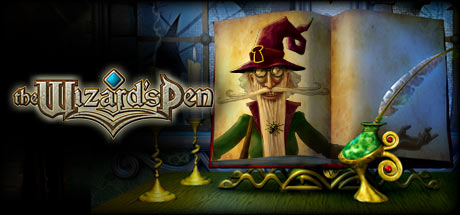
The Wizard’s Pen is a creative casual puzzle game that takes the traditional hidden-object formula and reshapes it into a more interactive and imaginative experience. Developed by PopCap Games, the title blends fantasy themes, image recognition puzzles, and light hidden-object mechanics into a relaxing adventure built around observation and deduction rather than fast reflexes or difficult challenges. Even years after its original release, the game still stands out because of how cleverly it reinvents familiar puzzle concepts while maintaining the accessible and family-friendly design style that defined many classic PopCap titles.
The premise is simple but charming. A mysterious wizard has vanished, leaving behind magical books filled with incomplete drawings and hidden secrets. Guided by an enchanted pen, players travel through these books solving puzzles and uncovering clues tied to the wizard’s disappearance. The story mainly serves as a framework connecting the different puzzle sequences together, but the magical setting gives the game personality and helps maintain a whimsical atmosphere throughout the adventure.
What truly separates The Wizard’s Pen from standard hidden-object games is its core mechanic. Instead of searching cluttered scenes for tiny objects, players are shown drawings that slowly appear stroke by stroke. The challenge is to correctly identify the object before the image becomes fully visible. The less of the drawing revealed before guessing correctly, the higher the score earned. This creates a satisfying balance between confidence and caution because players constantly decide whether to risk an early guess or wait for more details to appear.
The system works remarkably well because it rewards observation and visual recognition in a way that feels intuitive and surprisingly addictive. Some objects become obvious after only a few lines, while others remain difficult to identify until most of the image has been revealed. The game consistently keeps players engaged by encouraging quick thinking without creating overwhelming pressure. Even simple objects can become surprisingly tricky when only fragments of the illustration are visible.
One of the game’s best design choices is its forgiving answer system. Players are not punished harshly for small spelling mistakes or alternate object names, which helps maintain the game’s relaxing pace. The focus always remains on recognizing the image itself rather than struggling with strict text input requirements. This accessibility makes the experience approachable for players of all ages and skill levels.
The hidden-object sections introduce additional variety by reversing the usual structure of the genre. Instead of locating visible objects within scenes, players often need to determine which item is missing from the environment and identify where it belongs. These puzzles require careful observation and memory while still maintaining the game’s casual tone. The scenes are filled with colorful details and fantasy-themed objects that fit naturally within the magical setting.
Additional mini-games and unlockable sketchbooks help expand the gameplay loop beyond the main image-guessing mechanic. Players gradually unlock new books, bonus challenges, and magical potions that provide hints or alter gameplay in small ways. Some potions reveal extra parts of a drawing, while others offer subtle clues about upcoming puzzles. These additions provide a small sense of progression without overcomplicating the experience.
Visually, The Wizard’s Pen reflects the era of late-2000s casual PC games with static fantasy environments, colorful illustrations, and simple interface design. Although the graphics now feel dated compared to modern puzzle games, the presentation still carries a certain nostalgic charm. The magical books, fantasy-themed objects, and whimsical atmosphere help give the game a warm and inviting identity that remains pleasant even years later.
The soundtrack complements the relaxed pacing nicely. Soft fantasy music and subtle magical sound effects create a calm environment that encourages slow and thoughtful puzzle-solving. The audio never becomes intrusive or distracting, instead supporting the cozy atmosphere that defines the entire experience. Combined with the forgiving gameplay systems, the soundtrack helps make the game feel especially relaxing during longer sessions.
Accessibility is easily one of the game’s greatest strengths. The Wizard’s Pen is easy to understand almost immediately, making it ideal for casual players, younger audiences, or anyone looking for a low-stress puzzle experience. The gradual difficulty curve allows players to improve naturally without feeling punished for mistakes. Unlike more demanding puzzle games built around intense challenge, this game focuses entirely on comfort and light mental engagement.
However, the simplicity that makes the game approachable can also lead to repetition over time. While the image-revealing mechanic is creative, the overall structure changes very little throughout the adventure. Some puzzle types and hidden-object scenes begin to feel repetitive after extended play sessions, especially once players become familiar with the game’s patterns and environments.
The overall scope is also relatively modest compared to larger modern puzzle collections. While there are numerous puzzles and unlockable books, the experience remains fairly lightweight and casual by design. Players seeking highly complex puzzle mechanics or deeper narrative development may eventually find the game too limited to remain engaging for very long periods.
Despite these limitations, The Wizard’s Pen remains one of the more inventive casual puzzle games from PopCap’s library. It successfully transforms hidden-object gameplay into something more interactive and creative while maintaining the relaxed accessibility that made casual PC puzzle games so popular during that era. Its combination of magical presentation, image recognition mechanics, and cozy pacing still gives it a unique identity among puzzle games today.
For players who enjoy light fantasy themes, hidden-object puzzles, and relaxing casual gameplay, The Wizard’s Pen offers a charming and enjoyable experience filled with creativity and nostalgia. While its age and repetitive structure occasionally show, the originality of its puzzle mechanics and its welcoming atmosphere make it an easy game to appreciate even years after release.
Rating: 7/10