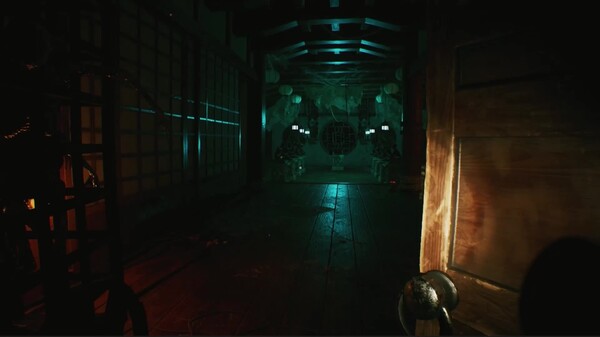
A Japanese survival horror game full of tension, drama, and violence. If you like psychological horror games with exploration, puzzles, and limited resources, you'll enjoy an intense experience where every decision can mean the difference between finding Sayuri or getting lost in the forest forever.
Modeled estimate, not a reported figure. How we estimate →
Media

About
Find Sayuri… or lose yourself in The Sinking Forest – 沈む森.
The forest whispers.
The village remembers.
And not everything wants you to leave.

You play as a young man searching for his sister in a remote Japanese village surrounded by ruined temples, flooded passageways, and fog-covered paths. What begins as a simple family search slowly turns into a nightmare filled with tension, violence, and painful discoveries.
Inspired by Japanese psychological survival horror, The Sinking Forest combines exploration, challenging puzzles, and survival combat with limited resources, where Japanese folklore becomes pure horror.
Built in Unreal Engine 5, the game invites you to explore abandoned houses, shrines overgrown with weeds, and withered cherry trees. An oppressive atmosphere surrounds you, as haunting taiko drums and tense string compositions echo through the fog and follow your every step.
The experience unfolds over approximately two hours and includes an autosave system to support your journey.
This is a tragic story about family, loss, and the things that refuse to be forgotten.
Stats
All-time low is the lowest price we've recorded for this game since we started tracking it.
Languages: English, Spanish - Spain, Japanese, Simplified Chinese, French, German, Portuguese - Portugal, Russian
Engagement
Hours played at review time, across 40 reviews with recorded playtime.
Reviews
Themes across 40 recent reviews and how positive each mention is. A keyword signal, not full sentiment analysis.
positive critical· bar length = how often the theme comes up
Reviews
ㅤ
The Sinking Forest – 沈んだ森 – is an indie psychological survival horror game developed by @TonyDevGame and published by indie.io that immerses players in a dark and mysterious rural setting shaped by tragedy, supernatural folklore, and personal loss. The game follows the journey of a young man searching for his missing sister in a remote village surrounded by a vast forest that appears to conceal disturbing secrets. What begins as a desperate attempt to locate a loved one gradually turns into a deeply unsettling experience as the protagonist uncovers fragments of a haunting story tied to the village and the ominous forest that surrounds it. By blending exploration, puzzle solving, and survival elements, the game attempts to create a tense atmosphere reminiscent of classic Japanese horror storytelling. The narrative opens with the protagonist arriving in a secluded mountain region after losing contact with his sister, Sayuri. Concerned for her safety, he travels to the area where she was last seen, hoping to find answers about her disappearance. However, from the moment he steps into the village, it becomes clear that something is terribly wrong. The settlement appears abandoned, with empty houses, neglected shrines, and an eerie silence hanging over the landscape. As the player explores the area, subtle hints suggest that the village was once the site of a tragedy that continues to linger in the surrounding forest. The search for Sayuri soon evolves into an investigation into the dark history of the place and the mysterious forces that may still inhabit it. Gameplay primarily revolves around exploring the forest and the nearby village structures while searching for clues that will reveal what happened in the past. Players move through narrow paths winding between tall trees, abandoned homes filled with dust and decay, and forgotten shrines that hint at old rituals and beliefs. The environment itself plays a significant role in the storytelling, as many pieces of information about the past are discovered through objects left behind by former residents. Letters, personal belongings, and environmental details slowly build a picture of the events that led to the village’s downfall. Puzzle solving is a key part of the experience, and the game frequently challenges players to interpret clues scattered throughout the environment. Some puzzles involve locating specific items or unlocking doors that block progress, while others require analyzing symbols or patterns hidden within the surroundings. These puzzles are not simply obstacles but are designed to encourage players to pay attention to small details within the world. The process of solving them often reveals new pieces of the narrative, making exploration feel meaningful and rewarding. In addition to exploration and puzzles, the game introduces survival elements that add tension to the journey. The forest is not entirely empty, and players occasionally encounter hostile entities that appear connected to the village’s tragic past. These encounters require players to manage limited resources and decide whether to confront the threat or attempt to avoid it. Combat mechanics exist but are intentionally restrained, reinforcing the feeling that the protagonist is not a trained fighter but an ordinary person trapped in a terrifying situation. This vulnerability enhances the horror atmosphere and encourages careful decision-making. The forest environment itself serves as one of the game’s most powerful storytelling tools. Dense fog often obscures the player’s vision, and the twisting paths between the trees create a sense of disorientation. The deeper the player travels into the forest, the more unsettling the surroundings become. Broken torii gates, abandoned lanterns, and weathered statues appear along the paths, suggesting that the area once held cultural and spiritual significance. These elements help create a setting that feels rooted in Japanese folklore and rural mythology. Visually, the game makes use of modern graphical technology to bring the forest and village to life. Built using Unreal Engine 5, the environments feature detailed textures, dynamic lighting, and realistic vegetation that contribute to the immersive atmosphere. The interplay between light and shadow is particularly effective in creating tension. Dark corridors inside abandoned buildings contrast with faint moonlight filtering through the trees outside, constantly making players feel as though something could emerge from the darkness at any moment. Sound design plays an equally important role in shaping the mood of the game. Instead of relying heavily on sudden jump scares, the developers focus on subtle ambient sounds to create unease. The rustling of leaves, distant echoes within empty buildings, and faint whispers carried by the wind all contribute to the sense that the forest is alive with unseen presence. Traditional Japanese musical elements occasionally appear in the soundtrack, adding emotional depth and reinforcing the cultural tone of the setting. The pacing of the game emphasizes tension and gradual discovery rather than fast-paced action. Players spend much of their time moving slowly through the environment, carefully examining each location for clues that might reveal more about the village’s history. This deliberate pace allows the atmosphere to build naturally, making moments of danger feel more impactful when they occur. The story itself unfolds gradually as players piece together information from various sources scattered throughout the world. The narrative explores themes of loss, guilt, and unresolved tragedy. As the protagonist learns more about what happened in the village, the connection between the past events and the supernatural forces within the forest becomes clearer. The search for Sayuri ultimately becomes intertwined with a much larger mystery involving the fate of the village and the spirits that may still haunt it. Despite the depth of its atmosphere and narrative themes, the overall experience is relatively short compared to many modern horror games. The game is designed to be completed in a single playthrough lasting only a few hours. This concise length allows the story to remain focused and avoids unnecessary filler content, though some players may wish the world had been expanded further. The game’s straightforward structure means that most players will follow a fairly linear path through the story. While there are moments of exploration that reveal optional details, the main progression remains guided by the narrative. However, the environmental storytelling encourages players to explore thoroughly, as hidden details can deepen their understanding of the tragic events that occurred in the village. Overall, The Sinking Forest – 沈んだ森 – offers a compact but haunting survival horror experience that blends psychological tension with environmental storytelling. Its focus on exploration, atmospheric design, and gradual narrative discovery creates a memorable journey through a forest haunted by its past. While its relatively short length and simple mechanics may limit its scope, the game succeeds in delivering an immersive and unsettling adventure that captures the spirit of traditional Japanese horror in an interactive form. Rating: 7/10
Great Asian Horror Theme, love the horror game. Could use some more help with explosives since i walked around missed this. A note would be great. But overall the game is great, graphics and theme is there, audio is there, AI are creepy, and simple puzzles make for a great experience. If you love Asian Horror games do support this guys work.
Quick Summary 7.5/10 A Decent, afternoon horror game which has fatal frame atmosphere mixed with budget horror vibes. It's not the greatest, but for the price and a 1.5 hours. Why the hell not? I hope the dev keeps growing and increasing they're strengths cause I like where they're going. Graphics 7/10 The game has atmosphere I'll give it that. Assets flips in a few places like other games by the developer, but the overall feel of the game comes through. The Asian inspired village, the large forest and even a small apartment all stand decent enough. Sound/Music: 5/10 Really, nothing stood out. The music I couldn't remember a single track, which is a shame as his latest game Scarlet harvest had some pretty good vibes to it. The overall sound effects were nothing horrible and fit the overall game, along with the game using Japanese voice acting to pull you in more, nut nothing truly caught me here. Story: 7/10 You're a brother looking for his sister. Though due to a grammatical error at the very beginning it seemed confusing if it was a brother or a sister. You start by exploring her apartment, than quickly shoot off on a forest romp that leads you to a hidden village with a dark history. I don't want to spoil to much cause the overall idea of the story is actually pretty good. Would make for a decent horror story or film if it's not already. Though the execution gets a little muddled. It's a decent early 2000's Japanese style horror film I would say. Good for the time length, just don't go into it for detail. Gameplay: 7/10 Walking simulator with a camera and flashlight. The camera is mostly used for achievements and some story tidbits here and there. You do get a throwing option later on with the oil style grenades used to take out enemies that isn't anything to write home about. Yet, the game still was decently done. The boss fight at the end felt a bit better than the more recent "Scarlet Harvest" even if it used some mechanics in theory similarly. It's going to keep you entertained enough if you're into the indie horror scene.
Un juego japones hecho por un equipo de España, en el cual debes buscar a tu hermana perdida en una aldea oculta en las montañas de japón y descubrir los secretos que escoden este lugar. 7/10
EXTREMELY HARD PASS. Nothing about this game is scary, good, or even well made. It's cheap horrible attempts at everything. Any chance at horror or suspense is ruined in the first 15 minutes. Horrible story, no voice acting, muddy graphics/textures, not scary or fun. The loading screen is just a cut to a black screen with no images or texts. It's just really bad all around.
[h1] Points positifs : [/h1] - Traduction française - Durée de vie courte (environ 4 heures)... [h1] Points négatifs : [/h1] - ...Je n'ai pas eu envie d'aller jusqu'au bout de l'aventure ! - Jumpscares ratés - Histoire soporifique - Pas très beau graphiquement - La bande-sonore c'est une blague ? - Je me suis perdu plein de fois... [h1] En conclusion... [/h1] Je n'ai véritablement pas aimé du tout l'expérience qui m'a beaucoup ennuyé. Très rapidement, j'ai voulu mettre fin à mon calvaire. Au bout d'une heure et demie j'ai dis stop car franchement c'était insupportable ! L'histoire était trop convenue, la bande-sonore une vaste arnaque et les graphismes sont ratés. Le coup des mannequins, c'est du vu et revu. J'ai réussi à me perdre, peut-être à cause de mon intérêt pour le jeu qui s'étiolait à grande vitesse... Je n'ai pas eu peur une seule fois, les jumpscares sont ratés et j'avais juste envie de mettre fin à ma souffrance une bonne fois pour toute ! Tant pis pour moi ! Remboursement demandé >> 03/20
Breve pero buen juego del género survival horror.
Story 10/10 - Game Horror 10/10
妹を探しに日本の秘境『犬鳴村』に行き生きたマネキンを逃げたり討伐したりするアクション寄りのステルスゲー🐑 生きたままシームレスにミイラ化する即身仏をモチーフにしたテーマがあり話が面白い、ビジュアル重視の日本観も視ていて奥ゆかしさがある。 ルナティックに巨大な月が見える村はロマンチックな景色で、終盤にかけて戦闘が多くなりホラーゲームにしては倒せるラスボス戦も用意されており、エンタメ寄りのバトルになっていくのが気分をアゲてくれる🐑
Related
Related
Trends
Concurrent players on Steam, sampled daily since tracking started.
Audience
Estimated from the language of this game's reviews — a proxy for where players are, not official Steam demographics.
Related
| Puzzle Dating | $2.2K | 72 | 64% | $0.99 |
| House of Evil | $2.2K | 108 | 39% | $0.99 |
| The Life of One Dog | $2.2K | 144 | 43% | $0.99 |
| Put in | $2.2K | 157 | 76% | $0.99 |
| Пацанский цитатник / Russian Test | $2.2K | 118 | 69% | $0.99 |
| That's Mahjong! | $2.2K | 171 | 70% | $0.99 |