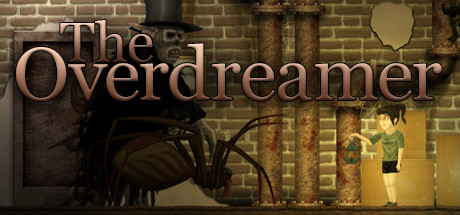
The Overdreamer, developed and published by Hars, is a haunting and imaginative indie horror adventure that combines side-scrolling exploration, puzzle solving, and surreal atmosphere into a dreamlike journey of fear and discovery. The game follows Niki, a young girl trapped in a mysterious nightmare world where nothing feels entirely real and danger lurks behind every shadow. There is no clear explanation for how she arrived in this realm or why it twists between familiar and grotesque environments, but from the opening moments, it is clear that escape will require intelligence, caution, and courage. The Overdreamer immediately sets a mood of unease that deepens as the player moves through dimly lit corridors, warped landscapes, and unsettling encounters, all underscored by a sense of fragile vulnerability.
At its core, The Overdreamer is a 2D side-scrolling adventure that thrives on tension and exploration rather than combat. Niki is not a traditional action hero—she is fragile and can be killed in a single blow by most enemies, forcing the player to think carefully and rely on stealth, problem solving, and quick reflexes rather than brute strength. The game’s design encourages observation and experimentation: every room hides items that can be collected and combined, puzzles that must be solved to progress, and secrets that help explain the strange rules of the dream world. The item-combination system, though simple in presentation, becomes one of the game’s most important tools, giving players the freedom to find creative ways to overcome obstacles. This system, combined with the sense of vulnerability that permeates the experience, gives the game a slow, deliberate rhythm where survival feels earned rather than granted.
The Overdreamer’s strongest quality lies in its art direction and atmosphere. Each environment feels like a nightmare painted in motion—a fusion of surrealism and dark fantasy rendered in muted colors and sharp contrasts. The backgrounds often shift from eerie stillness to pulsating, grotesque imagery, making it difficult to tell where reality ends and imagination begins. Monsters and creatures appear distorted, almost symbolic, as though they represent fragments of Niki’s psyche rather than literal beings. The sound design enhances this uneasy feeling: faint whispers, echoing footsteps, and strange mechanical noises blend together with a minimalist score that heightens tension without overwhelming the player. Every corner feels unsafe, and every silence feels temporary. The visual and auditory design work hand in hand to make the world both repulsive and mesmerizing, urging the player to keep moving forward despite the instinct to turn away.
As Niki ventures deeper into the nightmare, The Overdreamer introduces new mechanics and abilities that keep the gameplay fresh. Among them is the ability to transform into a fly, a bizarre but ingenious mechanic that opens up new forms of traversal and problem solving. This transformation allows players to explore tight spaces, avoid enemies, and reach areas that were previously inaccessible, turning what first seemed like a simple 2D horror game into something more complex and layered. The game continues to add wrinkles to its mechanics, such as using light to repel certain creatures or manipulating the environment to outsmart enemies. Despite its relatively short runtime—averaging around four to five hours—the game maintains a steady sense of progression that keeps players engaged until the end.
While The Overdreamer is rich in mood and concept, it is not without flaws. The controls can feel stiff at times, especially during precise platforming segments where a mistimed jump can mean instant death. The frequent one-hit kills, while contributing to tension, can also lead to frustration when combined with the game’s occasionally awkward movement physics. Some puzzles suffer from unclear logic or poor visual distinction, making it easy to overlook key items or interactive elements hidden in the scenery. There are moments when trial and error replaces genuine problem solving, and repetition can dull the impact of the otherwise suspenseful pacing. Despite these shortcomings, the game’s core design remains compelling, largely because it understands how to balance challenge with discovery.
Narratively, The Overdreamer leans into ambiguity, telling its story through environmental clues, fragmented text, and unsettling imagery rather than direct exposition. Niki’s journey feels personal and metaphorical, hinting at deeper psychological themes of guilt, trauma, and self-confrontation. The dreamlike logic of the world mirrors the subconscious—shifting between beauty and horror, calm and chaos—without ever offering clear answers. Some players may find this lack of resolution unsatisfying, especially since the ending feels abrupt and leaves more questions than it answers, but for others, that open-endedness is part of the appeal. The story, much like a real dream, lingers in the mind precisely because it refuses to explain itself.
Despite its imperfections, The Overdreamer succeeds in crafting an experience that is deeply atmospheric and emotionally charged. It doesn’t rely on jump scares or shock tactics; instead, its horror emerges from tension, curiosity, and the slow realization that you are lost in a world governed by irrational fears. The combination of eerie visuals, haunting soundscapes, and thoughtful pacing gives it an identity that stands out in the crowded indie horror landscape. It may be small in scale, but it carries a sense of artistic purpose rarely found in similar games.
Ultimately, The Overdreamer is a haunting meditation on fear and survival that rewards patience and imagination. It is not a game that everyone will love—its pacing, cryptic storytelling, and unforgiving mechanics demand a specific mindset—but for those who appreciate atmosphere and experimentation, it offers an experience that feels both intimate and nightmarish. Its world is one that invites you to look closer, to search for meaning in its strangeness, and to embrace the uncertainty that defines dreams themselves. In the end, The Overdreamer is not just about escaping a nightmare—it’s about exploring one, piece by piece, until it feels almost rea
Rating: 8/10