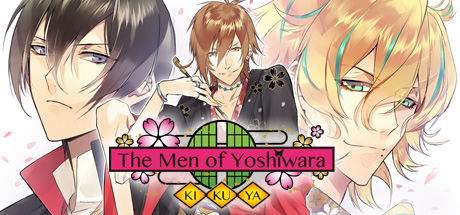
The Men of Yoshiwara: Kikuya is a romance-driven otome visual novel that combines historical fantasy, emotional drama, and mature romantic themes within a fictionalized version of Edo-era Japan. Developed by Dogenzaka Lab, the game presents a world where men are exceptionally rare, leading to the creation of a reversed Yoshiwara district populated by male courtesans who entertain women seeking affection and companionship. This unusual setting immediately separates the game from more traditional otome stories, creating a romantic atmosphere built around emotional loneliness, desire, and the fragile line between genuine love and carefully performed affection.
The story follows Misao, a young woman whose life changes after she becomes drawn into the glamorous but emotionally complicated world of Kikuya, one of the district’s famous establishments. There she encounters several courtesans, each carrying different emotional burdens and personal insecurities beneath their polished appearances. While the premise initially appears focused purely on romantic fantasy, the narrative gradually reveals a more melancholic tone as it explores the emotional consequences of living inside a system where affection is treated as both performance and profession. Many of the characters struggle to separate their public personas from their genuine emotions, giving the romance routes more emotional complexity than players might initially expect.
One of the strongest aspects of the game is its atmosphere. The world of Yoshiwara feels elegant, isolated, and quietly tragic at the same time. Lantern-lit streets, traditional architecture, elaborate kimonos, and luxurious interiors create a romanticized version of Edo-era Japan that constantly balances beauty with emotional sadness. Beneath the glamorous surface, there is an ongoing sense of loneliness surrounding both the heroine and the courtesans themselves. This bittersweet atmosphere becomes one of the game’s most memorable qualities because it gives emotional weight to even the quieter romantic scenes.
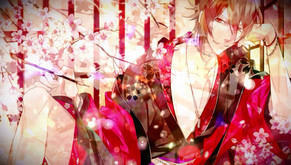
The character artwork is especially impressive and remains one of the game’s biggest strengths. Every love interest is visually distinct, with detailed clothing, expressive facial designs, and beautifully illustrated CG scenes that enhance emotional moments throughout the story. The courtesans are intentionally designed to appear graceful and desirable, but the artwork also succeeds at portraying vulnerability and emotional exhaustion during key scenes. Several romantic moments become significantly more impactful because of how effectively the visual presentation captures emotional intimacy.
Each romance route offers a different emotional experience depending on the chosen character. Some characters initially appear flirtatious and confident while secretly hiding insecurity and emotional pain, while others are more reserved, emotionally distant, or burdened by past trauma. Although many of the personalities follow familiar otome archetypes, the emotional struggles connected to their roles as courtesans help distinguish the routes from more conventional romance stories. Themes involving sacrifice, loneliness, emotional isolation, and the search for genuine affection appear frequently throughout the narrative.
The writing occasionally handles emotional vulnerability surprisingly well. Since many of the male characters spend their lives pretending to love clients as part of their profession, several routes explore the conflict between artificial affection and authentic emotional attachment. This emotional uncertainty becomes one of the game’s most interesting narrative elements because the characters themselves often struggle to understand whether they are capable of experiencing real love. Certain routes lean heavily into this emotional tension and become significantly more memorable because of it.
The game also includes additional side stories and post-ending content that expand on the relationships after the main routes conclude. These extra scenes help strengthen attachment to the characters and give players more emotional closure after completing specific endings. Fans who enjoy replaying visual novels to fully explore every romance route will likely appreciate the amount of relationship-focused content available.
However, the game suffers from several major flaws that limit its overall impact. One of the most noticeable problems is the lack of voice acting in the Steam version. Emotional scenes occasionally feel less powerful because conversations rely entirely on text and static artwork without vocal performances to strengthen dramatic moments. Considering how heavily the game depends on emotional intimacy, the absence of voice acting noticeably hurts immersion during important scenes.
The translation quality is another weakness. Awkward phrasing, grammatical mistakes, typos, and inconsistent dialogue appear regularly throughout the story. While the general meaning remains understandable most of the time, the localization occasionally disrupts emotional scenes or creates unintentionally awkward conversations. Certain lines feel unnatural enough to weaken character interactions, especially during dramatic moments that require emotional subtlety.
The pacing can also become repetitive during longer sessions. Much of the gameplay revolves around conversations, romantic tension, and emotional discussions inside the courtesan district with relatively little external conflict or major plot escalation. Players looking for more dramatic story progression or larger historical events may find parts of the narrative too slow-moving or repetitive over time.
Misao herself is another mixed aspect of the experience. While she functions adequately as a self-insert heroine for romance-focused storytelling, her personality often feels passive compared to stronger protagonists in more narrative-heavy otome games. Many important emotional developments are driven primarily by the male characters rather than Misao actively shaping the relationships herself.
Gameplay depth is also fairly limited. Choices exist throughout the story, but the branching structure remains relatively simple compared to larger visual novels with more complex route systems. The experience depends almost entirely on the player’s emotional attachment to the characters rather than interactive mechanics or strategic decision-making.
Despite these flaws, The Men of Yoshiwara: Kikuya remains memorable because of its unusual premise, emotional atmosphere, and attractive cast of characters. The game successfully combines romantic fantasy with themes of emotional isolation and hidden vulnerability, creating a softer but more melancholic tone than many lighter otome titles. While the technical shortcomings and uneven localization prevent it from reaching the highest level of visual novels, the emotional sincerity found within several routes helps the experience stand out.
For fans of otome games centered around romance, emotional drama, and historical fantasy settings, The Men of Yoshiwara: Kikuya offers a visually appealing and emotionally engaging experience. Its slower pacing and limited gameplay may not appeal to everyone, but the bittersweet atmosphere, memorable romance routes, and strong visual presentation make it a worthwhile title for players interested in character-driven romantic storytelling.
Rating: 7/10