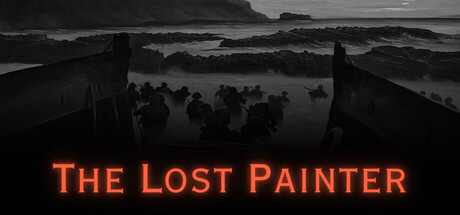
Welcome to The Lost Painter, A single player, first person, atmospheric walking simulator exploring liminal spaces. Enter your Paintings and explore a world full of mystery and Horror. Storm the beaches of Normandy, Get lost in the Backroooms and Survive the Devils Labyrinth.
Modeled estimate, not a reported figure. How we estimate →
Media

About

A single player, first person, atmospheric, walking simulator exploring liminal spaces.
Enter your Paintings and explore a world full of mystery and Horror.
Storm the beaches of Normandy, get lost in the Backrooms and Survive the Devils Labyrinth.
You play as an Artist who is suffering from memory loss.
As your condition begins to deteriorate, you must search past memories, dreams and nightmares to save your most treasured memories and your family.
The Game features many different linear and unique Liminal levels with some Survival, Puzzles and Escape areas.
The Beaches of Normandy during WW2
1970 England
1990 England
The Backrooms
HELL
From your Grandparents memories of WW2 to your most treasured nostalgic memories of your childhood and teenage years.
You will also explore dreams and nightmares and watch how your minds' art gallery changes as you make progress.
The Game is heavily inspired by the Nostalgic experiences of Liminal Spaces and The Backrooms Phenomena.
The game has a level selection page in the menu if you struggle to overcome a certain memory.
Many thanks to anyone who supports my game development and Horror Youtube channel Ravenhome Gamer.
Genres
Stats
All-time low is the lowest price we've recorded for this game since we started tracking it.
Languages: English**languages with full audio support
Engagement
Hours played at review time, across 23 reviews with recorded playtime.
Reviews
This was a fantastic experience! This game took me through so many cool locations and I really felt like I was playing through a real person's memories. Fantastic music too. If you like liminal space games with a story then this is 100% for you. I eagerly await Ravenhome Studios's next game, The Lost Painter and Liminal Lane have been fantastic!
W Game! So many good things to say about it. Amazing graphics, beautiful touching story and so many cool places you go: backrooms with a giant tarantula, liminal spaces and you even visit hell and have to swim with a megalodon shark and solve "The Devils Labrynth" So cool. Highly recommend.
like other game. it's good! walking, liminal, fun rewriting the review: This is a good liminal game. This is a linear experience thats focused on the life of a person: This time it is a painter going through their memories to put things back into order. A liminal game that has a simple narrative? that isnt "youre now in this liminal maze. maybe youll escape". This game is trying to look liminally through the life of a person trying to remember each chapter. Another short game, worth the low price point
I played the other game by Ravenhome Studios Liminal Lane. I played that a time in my life where atmospheric games and liminal space games called out to me. After playing that game and seeing the art work I was amazed. Fast forward and I see that there is another game with the same vibe and art. I instantly got it no questions asked. Just being in the moment with the art, the atmosphere, the story telling without many words. Thanks AK. Keep it up.
Traverse the liminal spaces to recover the memories of "The Lost Painter", a haunting and surreal journey accompanied by pleasant music.
The Lost Painter, developed and published by Ravenhome Studios, is a narrative-focused first-person exploration game that places atmosphere and psychological introspection at the center of its design. Rather than delivering combat-heavy gameplay or complex systemic mechanics, it positions itself firmly within the realm of walking simulators and story-driven adventures. The core premise is both simple and evocative: you are an artist who has lost his memory, wandering through an art gallery that represents the fractured landscape of your own mind. Each painting hanging on the walls serves as a portal into a different memory, dream, or psychological fragment, turning the act of stepping into artwork into a literal journey through identity. The structure of the game revolves around exploring these distinct painted worlds, each with its own thematic tone and environmental storytelling. As you enter different canvases, the environments shift dramatically. One moment you may find yourself in a wartime landscape reminiscent of historical battlefields, the next in urban streetscapes echoing past decades, or even in surreal and unsettling spaces inspired by liminal horror aesthetics. These transitions are not merely aesthetic changes but symbolic expressions of memory and emotion. The variety of settings reinforces the idea that the protagonist’s psyche is layered and fragmented, with each painting representing a significant moment or buried trauma. Gameplay is primarily built around exploration, environmental puzzles, and light survival elements. Progression is linear but thoughtfully paced, guiding players from one painting to another while allowing time to absorb visual details and subtle narrative cues. Puzzles tend to rely on observation and spatial awareness rather than intricate logic chains. In some sections, tension is heightened through disorienting environments or ominous sound design, encouraging careful navigation rather than reckless movement. The absence of traditional combat reinforces the introspective focus; the challenge lies in understanding the environment rather than overcoming enemies through force. One of the strongest aspects of The Lost Painter is its atmosphere. The game leans heavily into the concept of liminal spaces—locations that feel both familiar and unnerving. Empty corridors, echoing halls, vast open areas, and surreal distortions create a persistent sense of unease. This aesthetic choice complements the narrative theme of memory loss, as the environments feel like half-remembered places reconstructed imperfectly by the mind. Lighting and sound design play crucial roles in sustaining this mood, with subtle ambient effects often doing more to build tension than overt scares. Thematically, the game explores identity, legacy, and the weight of memory. The protagonist’s journey through the paintings is not simply about discovering what happened in the past but about reconciling with it. Some environments evoke nostalgia, others discomfort or dread. By blending personal history with cultural and historical imagery, the game suggests that memory is shaped not only by individual experience but also by the broader contexts in which we live. This layering of personal and collective memory gives the narrative an emotional dimension that extends beyond surface-level mystery. Visually, the game adopts a realistic yet stylized presentation that supports its psychological tone. Environments are detailed enough to feel immersive but not overly cluttered, ensuring that players can navigate and interpret spaces without frustration. The transitions between the gallery hub and the painted worlds are especially effective, reinforcing the metaphor of stepping into one’s own creative and emotional landscapes. While the graphical fidelity may not rival large-scale productions, the cohesive art direction ensures that each environment feels purposeful and thematically consistent. The Lost Painter’s runtime is relatively concise, which works in its favor. The experience does not overextend its premise or introduce unnecessary filler. Instead, it delivers a tightly curated journey that prioritizes emotional resonance over sheer length. Its linear progression may limit replayability, but the focused storytelling ensures that the experience remains impactful from beginning to end. The game is best approached as an interactive narrative piece rather than a sandbox or mechanics-driven title. Ultimately, The Lost Painter succeeds by committing fully to its artistic vision. It offers a contemplative exploration of memory and identity through atmospheric world design and understated storytelling. Players seeking high-intensity action or deep mechanical systems may find it minimalistic, but those who appreciate immersive environments and introspective narratives will likely find it memorable. As a small-scale indie project, it demonstrates how focused design and thematic cohesion can create a compelling experience without relying on conventional gameplay formulas. Rating: 6/10
Really short but a touching story. Loved the concept of gaining back your memories after death. The liminal aspect is really solid. There's just enough here that I recommend it. High 3 out of 5.
Despite the fact that the game has a few drawbacks, for example, some moments are too dragged out, also at the final scene I had to close game via the Task Manager, it has one major plus. And that plus is the story itself, which touched me to tears. Perhaps because some of the moments here really speak to my heart. And the ending moved me beyond words. So, despite the technical issues, this game will still have a special place in my heart.
Another gem, thank you Alex Kerr Not a fan of this movement system or speed, but I understand not allowing strafe running in your visuals-based walking sim. The blood river shark was very effective, not a fan. Felt a little like we were padding for time with all the massive ladders and open spaces and such, I would prefer a tight 25 minutes over a drawn out 45 minutes. The airport was the absolute highlight, felt wonderful new emotions which were heightened by the sense of speed - a wonderful use of the videogame medium for art. needs more babes.
Пожалуй, это тот пример, когда очень слабенькую технически, давайте будем честны, игру вытягивает какое-то авторское чувство стиля и вкуса. Соответственно: - Настройки плохенькие, довольно заметные технические (не геймплейные - и на том спасибо) баги и косяки, типа разрешения экрана и очень уж архаичной модели смены уровней. НО! + Довольно симпатично, красиво, понравился местный геймплейный сторителлинг. В общем, с поправкой на корявость, рекомендую. Ближайшая ассоциация, конечно же - «Layers of Fear», только без особого "fear" и попроще, скорее "cozy".
Related
Related
Trends
Concurrent players on Steam, sampled daily since tracking started.
Audience
Estimated from the language of this game's reviews — a proxy for where players are, not official Steam demographics.
Related
| Sexy Sniper | $1.2K | 95 | 78% | $0.49 |
| Turn on all the lights | $1.2K | 94 | 93% | $0.99 |
| The Wolf's Girl | $1.2K | 94 | 64% | $0.99 |
| Sweet and Hot | $1.2K | 94 | 81% | $0.99 |
| Nyanco | $1.2K | 64 | 77% | $1.99 |
| DOZA 2 - NOVOGODNIY PEREDOZ | $1.2K | 64 | 77% | $0.99 |