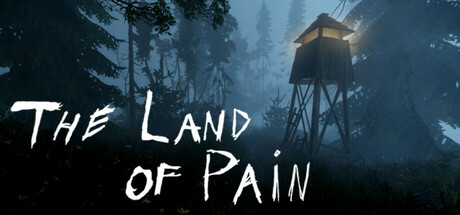
The Land of Pain, developed and published by Alessandro Guzzo, is a first-person psychological horror adventure that embraces cosmic horror themes through atmosphere, exploration, and slow-building tension. Rather than following traditional survival horror formulas built around combat and resource management, the game focuses heavily on isolation, environmental storytelling, and the unsettling fear of confronting forces beyond human understanding. Inspired by classic Lovecraftian horror concepts, it creates an experience designed to make players feel vulnerable not through overwhelming action, but through uncertainty and growing dread.
The story begins with a quiet and seemingly harmless situation. The protagonist finds themselves in a remote natural environment surrounded by forests and open wilderness, only for reality to slowly distort into something deeply disturbing. Strange events begin unfolding without explanation, ordinary locations become increasingly hostile, and what initially feels like peaceful isolation transforms into a desperate fight for survival against forces that remain difficult to fully comprehend.
One of the strongest aspects of The Land of Pain is how effectively it handles atmosphere. Horror works best when players feel uncomfortable long before danger appears directly, and the game consistently succeeds at creating that emotional pressure. Dense forests, abandoned structures, caves, hidden paths, and forgotten environments establish a world that feels both beautiful and deeply unsettling. Exploration rarely feels safe because even quieter moments carry tension.
The environment becomes one of the primary storytelling tools throughout progression. Instead of relying heavily on lengthy dialogue or direct exposition, the game encourages players to investigate surroundings and piece together information naturally. Strange discoveries scattered across the world slowly reveal larger mysteries while maintaining uncertainty. The experience consistently rewards observation and curiosity.
Visual presentation contributes significantly toward immersion. Natural environments feel detailed and convincing, creating a strong contrast between realism and supernatural horror. Forests appear inviting during one moment and deeply threatening the next. Lighting effects and environmental detail help strengthen the emotional impact of exploration because unsettling moments feel grounded inside believable surroundings.
The visual design also supports one of the game's central strengths: isolation. The world often feels enormous and empty in ways that reinforce vulnerability. Players spend long periods navigating unfamiliar locations without comfort or reassurance. That loneliness becomes a major source of tension because danger often feels invisible until it suddenly becomes unavoidable.
Gameplay emphasizes exploration and survival rather than combat. Players are not empowered through large weapon systems or direct confrontation mechanics. Survival frequently depends on movement, awareness, and understanding environmental threats rather than overpowering enemies directly. This design choice strengthens fear because danger feels more threatening when players cannot simply eliminate obstacles through force.
Puzzle-solving mechanics add additional structure to progression without disrupting atmosphere. Environmental clues and careful observation become important tools for moving forward. The puzzles generally avoid feeling disconnected from the world itself, instead functioning naturally alongside exploration and narrative progression.
The pacing favors slower psychological tension over immediate intensity. Rather than overwhelming players with nonstop encounters, The Land of Pain allows fear to develop gradually. Long periods of exploration create uncertainty that makes dangerous moments significantly more effective. Quiet spaces often become just as unsettling as direct threats because players begin expecting something terrible to happen even when nothing immediately appears.
Audio design plays an equally important role in maintaining tension. Environmental sounds constantly reinforce atmosphere through distant noises, weather effects, unsettling disturbances, and carefully used silence. Horror frequently depends on anticipation, and the sound design consistently contributes toward building that emotional pressure.
The cosmic horror influences become increasingly noticeable as progression continues. Fear emerges less from traditional monsters and more from confronting mysteries that feel impossible to fully understand. The game embraces uncertainty effectively, allowing imagination to strengthen fear rather than explaining every detail directly.
As an independent project, certain limitations occasionally become visible. Some systems feel simpler than larger horror productions, and players expecting faster pacing or more mechanically complex gameplay may initially struggle with its slower structure. The experience commits heavily to atmosphere and exploration, which naturally creates a more deliberate pace.
However, Alessandro Guzzo succeeds remarkably well at understanding what makes psychological horror effective. The game rarely relies on excessive spectacle or constant action. Instead, it builds discomfort patiently and trusts atmosphere to carry much of the experience.
What ultimately separates The Land of Pain from more conventional horror games is its understanding of vulnerability and uncertainty. The fear comes not from fighting enemies but from realizing how little control players truly have over the increasingly strange world surrounding them.
Players who appreciate atmospheric horror, exploration-driven storytelling, psychological tension, and Lovecraft-inspired themes will likely discover an experience worth remembering. The Land of Pain succeeds by creating fear through isolation and mystery rather than overwhelming players with constant danger.
A haunting psychological horror experience that combines strong environmental storytelling, immersive atmosphere, and cosmic horror influences into a memorable adventure built around mystery, isolation, and slow-burning tension.
Rating: 7/10