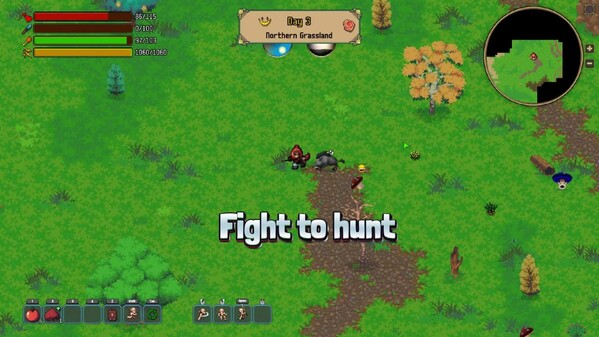
A pixel-graphics open world survival craft RPG, where player is locked in a deep dream world, survive in this elusive world, forage, hunt, mine, and build up shelters. Find a way to escape.
Modeled estimate, not a reported figure. How we estimate →
Media

About
This is a pixel open world survival craft ARPG. It is not a casual style farming simulator. It needs more actions in combat. The game has a linear progress with free world exploration. It needs 30-40 hours to finish the full game.
Building Base
Farming and Crafting
Hunting
Fighting
Nightmares comes at regular intervals, dark monsters will attack the base, its challenging fights and players must prepare well and use everything to survive.
Stats
All-time low is the lowest price we've recorded for this game since we started tracking it.
Languages: English, Simplified Chinese, French, German, Portuguese - Brazil, Spanish - Spain, Japanese, Korean, Russian, Traditional Chinese
Engagement
Hours played at review time, across 40 reviews with recorded playtime.
Reviews
Themes across 40 recent reviews and how positive each mention is. A keyword signal, not full sentiment analysis.
positive critical· bar length = how often the theme comes up
Reviews
Compared to other similar top-down games of the same genre, this doesn't have the same level of polish. A lot of the game play feels very clunky including combat, moving items between your inventory in chest, inventory space, etc. Combat in particular is a sticking point for me with the limited 4 directional attacks and brief pause between attacks or blocks. I'm not sure why there was a design choice to switch between gather and combat mode either - just about every other games allow you to do both simultaneously and it feels much better.
会有联机吗,一个人玩太孤独了。 游戏内容很丰富,玩法也很合理,非常棒的游戏。唯一缺点就是游戏音乐太过简陋
食べ物の種類がいっぱいあって、料理の種類もいっぱいあるとこは気に入ってます。 最初は「いっぱい食べるぞー!」って、とてもわくわくした。 でも、とにかく戦闘が楽しくない。 操作性が悪すぎて、楽しいと思うところまで継続できないよこれは。 ドット絵ゲーと見せかけてキャラ、アイテム、背景のドットサイズがバラバラで、ほとんどの敵が初代リネージュから来たような3Dモデル感の強いなんちゃってドット絵なのも痛い。 続きませんでした。
Мне понравилось, механика игры интересна по прокачке статов. Так же стоит отметить как автор придумал концепцию развития сюжета, просто так не проскочишь. Душновато конечно с гриндом еды и утомляет сама посадка ресурсов, есть конечно улучшение в виде небольшой автоматизации, но с запросами разнообразия еды и других ресурсов садить всеравно придётся ручками, что конкретно утомляет, считаю что тут надо сделать выбор что садить и чтоб персонаж сам стал уже сажать это поле. Драки интересные местами сложные и от этого иногда будет жопа гореть! И что мне непонятно это ♥♥♥♥ орёл, он вообще непонятно как летает и иногда ты просто не понимаешь куда бить , зато он тебе неплохо так нанесёт урона, перед тем как ты его перья в жопу ему же напихаешь! Тема с ночью и кошмарами прикольна. Но вот музыка в игре утомляет и она какая-то психоделика, давит в итоге на психику. Когда уже не в могу-то лучше её убавить на ноль и включить свою, но уже очарование от игры немного пропадает. В общем игру стоит попробовать, она местами сложна, требует гринда, по сюжету тебя ведут, но так и лучше весь контент узнаешь и прокачаешь своего перса. Если не наскучит раньше).
The Dream Within by Roaming of Little Hammer is a deliberately abstract, atmosphere-driven experience that positions itself closer to interactive art than to a traditional game. It invites players into a layered, dreamlike space where logic is fluid and meaning is something to be discovered rather than explained. From the outset, it becomes clear that the title is less concerned with structured objectives and more focused on evoking a mood—one that oscillates between calm introspection and subtle unease. The core of the experience revolves around exploration within shifting environments that often feel disconnected from reality. Movement is simple, interactions are minimal, and the game resists the urge to guide the player with explicit instructions. Instead, it encourages quiet observation, letting players piece together how the world functions through visual cues and environmental changes. This approach creates a sense of immersion that can feel deeply personal, as each player’s interpretation of the space and its meaning may differ significantly. At times, it feels like wandering through fragments of memory or subconscious thought, with each area presenting a slightly altered perspective on the same underlying theme. Mechanically, the game is intentionally restrained. There are moments that resemble puzzles, but they rarely follow conventional design patterns. Rather than presenting clear problems with defined solutions, the game leans on intuition and pattern recognition. Progression often depends on noticing subtle shifts in the environment or understanding symbolic relationships between objects. This design can be rewarding for players who enjoy slow, contemplative gameplay, but it can also lead to moments of uncertainty where the lack of feedback makes it difficult to tell whether progress is being made. The audiovisual presentation carries much of the experience. Visually, the environments blend surreal imagery with minimalistic design, creating spaces that feel both familiar and alien at the same time. Transitions between areas are often seamless and disorienting, reinforcing the dreamlike quality that the game aims to capture. Sound design plays an equally important role, with ambient audio and understated musical cues shaping the emotional tone. Rather than directing the player, the soundscape subtly nudges them, enhancing the sense of immersion without breaking the illusion of being inside an abstract mental space. Narrative elements are present, but they are fragmented and open to interpretation. The game communicates through imagery, symbolism, and environmental storytelling rather than dialogue or text. Themes such as identity, perception, and the nature of reality are suggested rather than stated, allowing players to construct their own understanding of what they are experiencing. This ambiguity is one of the game’s defining characteristics—it invites reflection, but it also risks feeling too vague for those who prefer clearer storytelling. As the experience unfolds, its limitations become more apparent. The lack of mechanical depth means that once the player has acclimated to its style, there are few new systems introduced to sustain long-term engagement. The pacing remains consistent, but without significant variation, which can make the latter portions feel less impactful than the initial moments of discovery. Additionally, the absence of structured goals or progression systems may leave some players feeling directionless, particularly if they are accustomed to more traditional gameplay loops. Even with these drawbacks, The Dream Within succeeds in delivering a cohesive and memorable artistic experience. It commits fully to its vision, offering a space for quiet exploration and personal interpretation rather than challenge or competition. Its strength lies in how effectively it creates a mood and maintains it, drawing players into a reflective state that lingers even after the game is finished. Ultimately, this is a title that will resonate most with players who appreciate experimental design and are willing to engage with it on its own terms. It may not offer the depth, replayability, or clarity of more conventional games, but it provides something different—a contemplative journey through abstract spaces that prioritizes feeling over function. For the right audience, that can be more than enough. Rating: 8/10
好玩,但戰鬥不平衡和單調是硬傷,怪堆很多,靈活又會格檔、霸體、控制,手還長,hitbox也怪怪的,走位距離不是很好把控。
目前玩不下去,战斗手感太怪了
好玩,推荐
全体的に不親切 やりたい事はお前で調べろ!を地で行くゲーム 次は何をするのかこそは左に表示されているが 何処でそれを採取・討伐・作成するかについては一切ガイドされない 何とかそれを達成したときに何かをご褒美を得ているのだろうか? 一切表示されないから分からない 良かった点 ・不自由さを楽しめる (M気質の人にはお勧めだ) ・新規素材を集める楽しさはある (カバン容量が足を引っ張り楽しめないが) 悪かった点 ・動作が絶望的にとろくさい (武器を構えて無ければ若干足は速くなるが、それでも絶望的に遅い) ・HPゲージ、MPゲージ、腹減りゲージに加えて、エナジーゲージまである (ゲージが増える程面白いだろ?と思っている開発者は,神の雷に焼かれるべきだ) ・戦闘面でガードはあるが、ガードするとエナジーがとんでもない量減ってしまう (やればやるほどエナジーが枯渇し不利に、絶望的状況になる、この仕様は意味不明だ) ・戦闘面で、敵の遠距離攻撃のエイム能力と速度が異常 (彼らの前世はシモヘイヘかゴルゴ13だったのだろう、確実に主人公の現在地を打ち抜いてくる) ・探索面で敵モブの追尾距離があまりにも長すぎる(1.5画面分くらい) (序盤の問題点1、主人公の速度は敵とほぼ等倍で非常に長い距離を走り切らないと振り切れない) ・探索面で、敵が主人公を発見した時に叫び声をあげる周辺の敵全てがリンクする (序盤の問題点2、平気で10匹とかリンクする。そうなると攻撃力も耐久力も10倍だ) ・探索面で敵モブの現在地がずっと記録されたまま。次の日もその次の日もだ。 (序盤の最大の問題点3、逃走時に大群に終われマップ移動で振り切ってもそのまま彼らはそこに居座る) ・探索面でカバン容量が少なすぎる (拡張できるかは関係ない。初期からもう15個はもてるようにするべきだ) ・素材を入れる棚が種類ごとに複数個に分かれそれぞれ距離がめちゃくちゃ離れてている (必要のないこだわり。メンドクサイだけでメリットが一切ない) ・畑の管理がメンドクサイ (種くらい一気に撒く機能つくりなさいよ) なんでこんなゲームをしてしまったのだろう GWで暇だからだが、さてどこまでやって打ち切るか・・。
需要給手動的種田區一鍵播種、一鍵收成,小精靈種田是不錯但太少了>.<
Related
Related
Trends
Concurrent players on Steam, sampled daily since tracking started.
Audience
Estimated from the language of this game's reviews — a proxy for where players are, not official Steam demographics.
Related
| EDENGATE: The Edge of Life | $23.8K | 233 | 71% | $6.99 |
| SUSHI SOUL UNIVERSE | $23.8K | 204 | 94% | $5.99 |
| Evo Explores | $23.8K | 350 | 94% | $3.99 |
| Bride into the Cave | $23.8K | 230 | 40% | $4.99 |
| At Tony's | $23.8K | 204 | 78% | $3.99 |
| Warlords Battle Simulator | $23.8K | 69 | 72% | $9.99 |