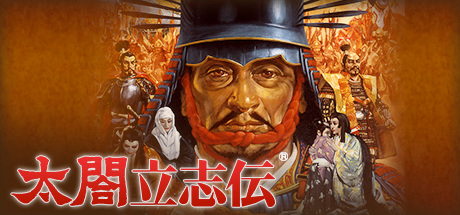
*Taiko Risshiden*, developed and published by KOEI TECMO GAMES CO., LTD., stands apart from many of the studio’s historical strategy titles by shifting the focus away from large-scale conquest and toward the personal journey of a single individual navigating the chaos of the Sengoku era. Instead of placing players in the role of a daimyo overseeing vast territories, it invites them to begin at the bottom of the social hierarchy and work their way upward, capturing the spirit of ambition and transformation that defined the period. This grounded perspective gives the game a more intimate and role-driven identity, making it feel less like a traditional strategy title and more like a historical life simulation.
The experience begins with the player assuming the role of a low-ranking retainer—most famously modeled after Toyotomi Hideyoshi—serving under a powerful lord. From there, progression is shaped by effort, decision-making, and social maneuvering rather than immediate authority. Advancement requires completing assignments, building trust with superiors, and gradually increasing one’s standing within the clan. This structure creates a sense of earned progression that feels organic, as every promotion or new responsibility reflects time invested and relationships cultivated. The game places significant emphasis on reputation, making interactions with other characters just as important as completing objectives.
Gameplay unfolds through a combination of travel, skill development, and event participation. Players move between locations, meet historical figures, and engage in activities that improve their character’s abilities. These attributes—ranging from combat proficiency to intelligence and charisma—play a direct role in determining success across various situations, whether in battle, negotiation, or strategic planning. The interplay between these systems encourages a balanced approach to growth, as neglecting one area can limit opportunities in another. Over time, the player’s increasing competence opens up new paths, reinforcing the sense of a life gradually taking shape within a dynamic world.
A notable strength of *Taiko Risshiden* is its flexible approach to historical events. While it draws from real-world developments of the Sengoku period, it does not rigidly enforce them. Instead, events unfold in response to player actions and the shifting state of the world, allowing for alternate outcomes and varied playthroughs. This open-ended design gives players a degree of agency that was uncommon for its time, encouraging experimentation and personal storytelling. The result is a game that feels less like a scripted narrative and more like a framework for emergent experiences.
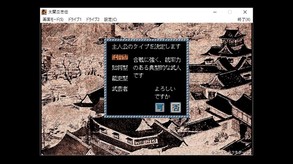
However, the same qualities that make the game unique also contribute to its difficulty for modern audiences. The interface is dated and often unintuitive, requiring patience to navigate effectively. Instructions are minimal, leaving players to discover mechanics through trial and error. The pacing can also feel slow, particularly in the early stages when progress is incremental and influence is limited. These factors can make the game feel inaccessible, especially for those accustomed to more guided and streamlined experiences.
Visually, the game reflects its early 1990s origins, relying on simple graphics and text-heavy presentation. While functional, it lacks the visual flair or polish of more contemporary titles. Yet this simplicity also underscores the game’s priorities, directing attention toward its systems and interactions rather than aesthetic spectacle. For players willing to look past its dated appearance, the depth of its design becomes the primary draw.
What ultimately makes *Taiko Risshiden* compelling is its sense of freedom within a structured historical setting. It allows players to define their own path, whether that involves rising to prominence through loyalty, pursuing power through strategic maneuvering, or simply experiencing life within the era at their own pace. This flexibility, combined with its focus on personal growth and relationships, gives the game a distinctive identity that still resonates despite its age.
In the end, *Taiko Risshiden* is a thoughtful and ambitious simulation that prioritizes immersion and character-driven progression over accessibility and visual presentation. It may demand patience and a willingness to adapt to older design conventions, but for those who engage with its systems, it offers a rewarding and uniquely personal take on historical strategy.
Rating: 7/10