Dungeon Divers is a dungeon-themed roguelike puzzle game about clearing derelict dungeons. As the newest employee of Dungeon Divers Inc., you must advance through multiple levels, use your wits, and tools you acquire along the way to get to the core to defuse it and bring home the cash.
Modeled estimate, not a reported figure. How we estimate →
Media

About
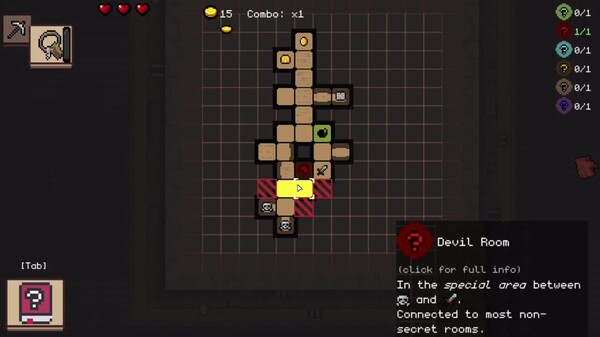
It's your first day on the job as the newest employee of Dungeon Divers Incorporated. You are tasked with clearing out derelict dungeons to make it safe for adventurers. Armed with your wits and some trusty items clear out all of the booby traps in this roguelike Minesweeper inspired puzzle game.
With nearly a dozen different types of rooms to disarm each with their own conditions, quirks, and logic to solve what starts off as a simple task will become increasingly complex and difficult to decipher. Choose carefully as you only have a finite number of tries before your mission is deemed a failure.
As you progress through the dungeon you're clearing, objects of power may be uncovered to assist in your journey. Some simply help you survive mistakes, other may grant you the ability to uncover vital clues for your efforts, and some grant you extra riches. Choose wisely as you can only carry so many artifacts at once.
No two dungeons share the same layout. Procedural generation means that every delve is different providing countless hours of entertainment as you clear level after level.
Stats
All-time low is the lowest price we've recorded for this game since we started tracking it.
Languages: English, Russian, Japanese, Simplified Chinese, German, Portuguese - Brazil, Spanish - Spain
Engagement
Hours played at review time, across 41 reviews with recorded playtime.
Reviews
Themes across 41 recent reviews and how positive each mention is. A keyword signal, not full sentiment analysis.
positive critical· bar length = how often the theme comes up
Reviews
If you're looking at all the negative reviews: Please keep in mind that the 50/50's have been (mostly) fixed and I dont recall the last time I ran into one, as the new generation tries its hardest to avoid them. This game is genuinely so simple yet so fun and I'm obsessed. Can't wait for more updates, hopefully with a new room and new items! I really don't see any flaws in this game, you're buying a $5 minesweeper remake, you're getting a $5 minesweeper remake. If that's not your jam, don't buy, otherwise, 10/10! Also very beginner friendly if you haven't played BoI, which this game takes inspiration from, as my friends have also borrowed this game from me and they've been enjoying it as well.
This game calls itself a puzzle game, but most of the "puzzles" end up being a coin-flip. You're left with multiple choices that are equally possible, but the vast majority of the time you have no tools or other possible options other than taking a 50-50 chance (or worse). That coin flip decides whether you win or lose the entire run. This isn't a puzzle game, it's a gambling game with a false pretense.
Сама по себе игра довольно прикольная, с неплохим пиксель-артом в стиле Айзека. И на первый взгляд, вначале играть в этот рогаликовый пазл достаточно интересно, разгадывая местоположение разных секретных комнат. Секреток достаточно много, у каждой своя особенность. [h3]Чёрный рынок и Посторонняя комната[/h3] Проблемы у игры начинаются немного позже, когда ты начинаешь прохождение игры на повышенно-средней сложности. И проблемы эти связаны с определением местоположения некоторых типов секретных комнат. Например: [u]Чёрный рынок[/u], или [u]Посторонняя комната[/u]. Игра говорит тебе, что эти комнаты ближе всего/дальше всего от конкретных типов комнат. [list] [*][b]Во-первых[/b], не совсем понятно, что это вообще значит. Игра это никак дополнительно не поясняет. Что значит "находится ближе всего к таким-то комнатам"? Имеется в виду среднее расстояние, минимальная сумма расстояний от конкретных типов комнат? В общем, неясно – сам я до сих пор в этой неоднозначной механике не разобрался. Но, допустим, для дальнейших рассуждений под этим подразумевается то, что я предположил выше. [*][b]Во-вторых[/b], игра говорит, что это расстояние определяется напрямую, игнорируя общую планировку и фактуру двумерной сетки уровня. То есть, нельзя просто посчитать клеточки, руководствуясь так называемым "манхэттенским расстоянием" (расстоянием городских кварталов). Нужно считать именно НАПРЯМУЮ. Но КАК это делать? Игра показывает визуальный пример в справке, где расстояния выделены линиями. Но как считать расстояние в игре самостоятельно – игра не говорит тебе, и самое главное – не даёт тебе никаких инструментов для этого. ВООБЩЕ. Что мне пришло в голову – взять реальную физическую линейку своими руками, и прикладывать её к монитору, что делать ооочень неудобно. Я уже молчу о том, что линейки у тебя может не оказаться под рукой. Короче, очень колхозно. [/list] В результате, могу сказать, что находить эти две секретки доставляет наибольший дискомфорт. Ты буквально не получаешь никакого удовольствия, которое должен получать, составляя этот пазл. Чтобы найти Чёрный рынок или Постороннюю комнату, ты просто долго (особенно, если уровень большой) перебираешь разные варианты, сидя с линейкой в руке, и считая расстояния. Это капец как утомляет. И что самое ироничное – ответ далеко не всегда может быть правильным или однозначным. Кажется, ты всё более-менее правильно посчитал, ан-нет – секретная комната, оказывается, находится не там, где ты думал! И даже не во втором и не в третьем месте. Это всё крайне неочевидно. По итогу, часто бывает так, что буквально несколько минут назад у тебя было максимальное ХП и ты успешно угадывал секретные комнаты, а уже сейчас – потерял все попытки и проиграл, потому что так и не смог понять логически месторасположение конкретной секретки... [h3]Комната Отшельник[/h3] Помимо Чёрного рынка и Посторонней комнаты, мне также не нравится находить [u]Комнату отшельника[/u] (или "Комната Отшельник"). Находится она на максимально возможном большом удалении от стартовой комнаты (и также расположена около всего одной комнаты). И, блин, считать каждый раз на больших уровнях расстояния по клеточкам ВРУЧНУЮ – крайне утомительно. Ты считаешь путь в одну сторону, в другую, в третью... считаешь, считаешь, считаешь, и как же это надоедает. Поиск Комнаты отшельника не доставляет абсолютно никакого удовольствия. Искать её банально не интересно, в с сравнении с процессом поиска других секретных комнат. [h3]Нормальные/Хорошие комнаты[/h3] Хотя и с другими комнатами иногда, время от времени возникают проблемы (ситуации типа 50% / 50%, где ты логически никак не можешь точно сказать, где конкретно располагается секретка, в виду присутствия нескольких равновозможных вариантов для этого, не исключающих появления друг друга), тем не менее, искать их явно поинтереснее, чем те комнаты, которые я упоминал выше. [list] [*]Обычная секретная комната, Баррикадная комната, Комната Ангела, Дьявола, Комната Валуна, Портала – вот тут всё хорошо. Для определения их местонахождения ты руководствуешься в основном лишь визуальным поиском, пробегая своими глазами по экрану и зрительно ища потенциальные варианты, возможные клетки, в которых, скорее всего, секретная комната и находится. Это вполне занимательно и интересно. [*]Гостевая комната, хотя она так же, как и Комната отшельника, использует механику расстояний от старта, которое нужно считать по клеточкам вручную, тем не менее, не так плоха. В отличие от Комнаты отшельника, считать нужно минимальное (кратчайшее от старта) расстояние, а не максимальное (длиннейшее), что хотя бы не так утомляет и не отнимает много времени. [*]Красная комната и Комната-ошибка: тут немного неоднозначно. Хотя и найти их может быть достаточно сложно, тем не менее, они уникальны в своей механике, и процесс их поиска отличается от остальных секретов, что необычно и прикольно. Хотя также и не исключает возможных проблем. [/list] [h3]Итог[/h3] Подводя итог – у игры отличный потенциал, однако, к сожалению, в настоящее время у неё имеются проблемы, которые достаточно сильно портят ощущения и впечатления, и которые отбивают желание продолжать играть. Если игра даст более удобные инструменты, если в ней будут более понятные объяснения, и если, самое главное, сам процесс этого рогаликового пазла по разгадыванию и поиску комнат будет интересным – то будет просто замечательно! Тогда я вернусь в игру, чтобы сыграть в неё ещё раз, и скорее всего, даже пройти целиком.
全実績解除+ウィークリーランキング世界1位になる程度にこのゲームをやりこみました 間違いなく全レビュワーの中で一番やり込んだ自負があります。 まずこのゲームは高難易度はランダム要素が強いです、所詮マインスイーパーですし ただ本家マインスイーパーの超高難易度と比較したら児戯みたいなものです。 ミス無し、アイテム無しでクリアしろとか色々お題は出ますがどんなに厳しくても1/4程度の運ゲーで済みます まぁ運ゲーで失敗すると普通にミスするより悔しい気持ちになるのは分かります。 後ゲーム内で一切説明がありませんが、隠し部屋には優先権の強弱があり、実際には条件を満たしている部屋が他の優先権が強い隠し部屋の”隣に隠し部屋は並ばない”等の制約や場所被りで別の場所に生成される事があり、これは初見殺しと言わざるを得ません。気付くまでは理不尽にストレスで抜ける髪が無い頭でも金髪の怒髪天になること請け合いです。 でもまぁ慣れてくると全実績解放は出来るかと思います。実際実績の解除率はそこそこ高めですしね。 困難を乗り越えた時の達成感は結構強いと思います。 ただゲームは気軽にストレスフリーに、運要素は嫌いって人には向きません。 どちらかと言うとゲームに困難はつきもの、縛りプレイなんて言われなくても進んでやっちゃうみたいな修行僧みたいな精神をお持ちの方にピッタリじゃないですかね あと最高難易度でも精々1周30分から1時間程度で終わるのである程度短い時間で終わるゲームが好きって人にも向いていると思います。
Pretty fun game based on the Isaac map layouts, had my fun with it Could use some more QoL: * decent controller/Deck support, controls seem pretty buggy from time to time * better explanations on the room rules, the black market for example is very unintuitive, some UI similar to devil/angel room hints would be good to learn * really boring challenges with fun items locked behind them * unfun 50/50 chances, especially in the challenges making them a grind
I'm a little ashamed not to write a review earlier, but I'm very lazy in making reviews. But this gem deserves it and generally way more attention. For me Dungeon Divers is THE MOST ADDICTIVE game of 2024. More than the game with poker cards and bing bing bing, which I too played a lot. I have 100% of the achievements. All of them are fun challenges to go for. You have to be smart and ambitious to beat everything the game has to offer. Consequently I'm not surprised it hasn't 95% positive reviews, but for me personally it is exactly that. And finally please take a look at the price and give it a shot now. Kudos to the devs. Your game is a banger.
First few hours of gameplay may be fun for you if you enjoy logic puzzles and that kind of thing, but the game has many problems that become especially annoying when dealing with the more difficult challenges and modes. There are relatively few required guesses, but a lot of the generation is quite unintuitive, and there are many subtle quirks that aren't explained in the tutorial or notebook but that can still cost you a run. The tutorial was also not the best, as it has no pacing and explains quite a lot of information at once. The roguelike aspect is also not fully fleshed out, and by the end of a run you never really feel like you have a "build", more so just the same general collection of abilities as always without much synergy. I'd highly warn against going for 100% as one of the achievements involves beating the game with the legacy generation, which is extremely luck based (ridiculous decision btw. "Lets improve our game in an extremely pivotal way, but then still force players to play the old ♥♥♥♥♥♥ version for completion"). However, if you're bored and are into this kind of puzzle game, it may be worth the money for the first couple hours, if you're willing to put in the legwork to learn the mechanics.
I feel as though the full release is barely anything more than the demo used to be, not a lot has been polished since, a lot of systems are inconvenient or unintuitive, there are subtle generation bugs (extremely rare but still) and it is definitely not worth the price. I feel as though monetising is fair, but not at that price, considering the low amount of content and polish overall. 4/10, had potential, still does, not a viable finished product yet. I'm too disappointed to try and help with the game by interacting with the community, this is not what it could be.
Dungeon Divers, developed by Wilson The Ball and published by GIGATANK 3000, is an inventive hybrid that takes the logic-driven foundation of classic puzzle games and reframes it within a roguelike dungeon-crawling structure. Instead of relying on combat or reflexes, it challenges players to think carefully, interpret clues, and make calculated decisions as they navigate dangerous, ever-changing environments. The result is a game that feels both familiar and refreshingly different, blending deduction with exploration in a way that gives each run a distinct sense of tension. The central gameplay loop revolves around uncovering safe paths through dungeon rooms that function like logic puzzles. Each tile or area carries hidden information, and players must use contextual clues to determine which spaces are safe and which conceal hazards. Early stages introduce these ideas in a straightforward manner, allowing players to understand the rules without pressure. As the game progresses, however, additional mechanics and room types are layered in, increasing the complexity and forcing players to juggle multiple variables at once. What begins as a simple exercise in deduction gradually evolves into a more intricate system where every move carries weight. What makes the experience particularly engaging is how it integrates risk into every decision. Information is often incomplete, meaning that players must occasionally rely on educated guesses when certainty is impossible. This creates a constant push and pull between caution and progress, where advancing too quickly can lead to failure, but hesitating too long may limit opportunities. The game does not punish experimentation harshly, but it does ensure that mistakes feel meaningful, reinforcing the importance of observation and planning. Procedural generation plays a key role in maintaining variety. Each dungeon is constructed differently, preventing players from relying on memorization and encouraging them to adapt to new layouts and challenges. This unpredictability keeps the experience fresh, as no two runs unfold in exactly the same way. Alongside this, the inclusion of items and upgrades introduces additional layers of strategy. Certain tools can provide hints, reduce risk, or alter how players approach specific situations, allowing for different styles of play depending on what is available during a run. Despite its puzzle-heavy design, the game captures the essence of roguelike progression. Failure is an expected part of the experience, but each attempt contributes to a deeper understanding of the mechanics. Over time, players become more efficient, recognizing patterns more quickly and making better-informed decisions. This gradual improvement creates a satisfying sense of growth that mirrors more traditional progression systems, even though it is driven entirely by player knowledge rather than character upgrades. Visually, Dungeon Divers adopts a minimalist approach that prioritizes clarity and functionality. The interface is clean and easy to read, ensuring that players can focus on solving puzzles without unnecessary distractions. While the presentation is not particularly elaborate, it effectively supports the gameplay by making important information immediately accessible. The simplicity of the visuals aligns with the game’s emphasis on logic and strategy, keeping the experience focused and coherent. At the same time, the game’s strengths also define its limitations. Its heavy reliance on deduction means that it appeals most strongly to players who enjoy logic-based challenges. Those looking for narrative depth, character development, or action-oriented gameplay may find it too narrow in scope. Additionally, while procedural generation adds variety, the core loop remains consistent, which can lead to a sense of repetition during extended play sessions. Even with these constraints, Dungeon Divers stands out for its creativity and clarity of design. It takes a well-known puzzle concept and expands it into something more dynamic, offering a gameplay experience that rewards patience, attention, and thoughtful decision-making. It doesn’t attempt to broaden its appeal with unnecessary features, instead focusing on refining its core idea into a cohesive and engaging system. In the end, Dungeon Divers is a smart and well-executed indie title that successfully merges puzzle-solving with roguelike structure. It offers a unique challenge that feels both mentally engaging and consistently rewarding for those willing to invest in its mechanics. While it may not cater to every type of player, it delivers a distinctive experience that stands out within its niche. Rating: 7/10
Pretty fun. Minesweeper like but with more rules than just numbers. Sometimes there are situations where you have to guess, but there are items to help mitigate the risk for it and it overall doesn't hurt the game too much.
Related
Related
Trends
Modeled estimate over time, reconstructed from Steam's monthly review histogram.
Audience
Estimated from the language of this game's reviews — a proxy for where players are, not official Steam demographics.
Related
| Death in the Water | $12.7K | 306 | 72% | $1.49 |
| Super Buff HD | $12.7K | 68 | 94% | $8.99 |
| Nursing Back to Pleasure | $12.7K | 71 | 80% | $9.99 |
| Beeswing | $12.7K | 149 | 90% | $4.99 |
| hocus | $12.7K | 799 | 91% | $0.99 |
| Clash II | $12.7K | 89 | 70% | $4.99 |