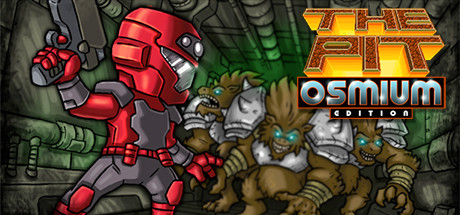
A fun, fast, light-hearted, turn-based RPG, where the tradition of old school dungeon-diving games meets the sci-fi Sword of the Stars universe!
Modeled estimate, not a reported figure. How we estimate →
Media

About
Genres
Stats
All-time low is the lowest price we've recorded for this game since we started tracking it.
Languages: English**languages with full audio support
Engagement
Hours played at review time, across 40 reviews with recorded playtime.
Reviews
Themes across 40 recent reviews and how positive each mention is. A keyword signal, not full sentiment analysis.
positive critical· bar length = how often the theme comes up
Reviews
"A fun, fast, light-hearted..." That's a lie. It's hard and frustrating. The fast thing is how fast your run ends.
Sword of the Stars: The Pit, developed and published by Kerberos Productions, is a challenging and deeply strategic sci-fi roguelike that expands upon the lore of the Sword of the Stars universe while carving out an identity all its own. It trades the grand spacefaring strategy of the main series for a tight, claustrophobic descent into a deadly alien facility—a test of endurance, planning, and resource management. At its core, the game is about survival, and it uses that principle to create an experience that is both punishing and rewarding. Every move, every choice, and every mistake carries weight as you navigate the labyrinthine depths of “The Pit,” a facility rumored to hold the key to curing a galactic plague. What unfolds is a relentless descent filled with danger, mystery, and the satisfaction that comes only from mastering systems designed to break you down. The game begins simply enough: you select one of several classes, each with unique strengths and weaknesses. The Marine favors direct combat, the Engineer excels at repairing and crafting, and the Scout thrives on stealth and scavenging. Additional classes introduced through expansions, such as the Psion or the Medic, further diversify playstyles, allowing for experimentation and replayability. Once your character is chosen, you are dropped into the top level of the Pit with minimal resources, a few rations, and a pistol or knife, depending on your class. From there, you must descend floor by floor, battling increasingly vicious alien lifeforms, malfunctioning robots, and traps, while also managing hunger, health, ammo, and equipment durability. The turn-based system forces deliberate decision-making: every step, attack, and action counts as a turn, and wasting time can mean starvation or ambush. Unlike modern roguelikes that lean toward fast-paced action, The Pit is meticulous and unhurried, emphasizing foresight over reflexes. The procedural generation that defines each floor ensures that no two runs are ever identical, but it also contributes to the game’s unpredictability and high difficulty. Some runs will bless you with abundant loot and food; others will punish you with broken weapons, empty rooms, and starvation before you even reach the tenth floor. This randomness forms the backbone of The Pit’s tension—every descent feels like a roll of the dice where planning can only take you so far. Yet, what makes the game compelling is how it rewards adaptation. You learn to improvise with the scraps you find, to make hard calls about whether to use precious ammunition or rely on melee combat, and to judge when to take risks exploring a side room that could contain either salvation or death. Each encounter becomes a test of resourcefulness rather than brute strength. The Pit is not merely about fighting enemies; it is about managing entropy itself. One of the game’s most distinctive features is its crafting system, which can be both fascinating and frustrating. Throughout your journey, you collect a variety of raw materials and blueprints that allow you to craft items—food, weapons, medical kits, or armor upgrades. In theory, this system rewards experimentation and exploration; in practice, it demands patience and memorization. The recipes are often complex, and success depends heavily on your character’s skill levels in fields like engineering or biology. Failure can result in wasted materials or even damaged equipment. The crafting interface is intentionally opaque, encouraging trial and error rather than handholding, which can be satisfying for players who enjoy discovery but maddening for those who prefer efficiency. Nevertheless, when you finally craft a working weapon or food source in a moment of desperation, the sense of triumph is immense. The system reflects the game’s broader philosophy: survival through knowledge and persistence rather than luck alone. The Pit’s atmosphere is one of constant tension and creeping dread. Despite its simple top-down visuals, it effectively conveys the sense of being isolated deep underground in a hostile, alien environment. Each floor grows darker and stranger as you descend, with new enemy types appearing to test your adaptability. The pixel art style may not be technically impressive, but it’s functional and distinct, combining retro charm with an eerie, mechanical sterility. The environments transition gradually from derelict labs to bio-organic alien corridors, creating a visual rhythm that mirrors your descent into madness and danger. The audio design complements this mood beautifully: subtle ambient hums, mechanical noises, and sudden bursts of combat sound keep you on edge. The soundtrack alternates between atmospheric silence and understated electronic tension, heightening the feeling that you are venturing into something that should never have been uncovered. Difficulty defines every aspect of Sword of the Stars: The Pit. The learning curve is steep, and the game does little to ease players into its systems. Hunger drains quickly, weapons break down, and medical supplies are scarce. Even minor mistakes can cascade into failure, forcing you to start over from scratch. Yet this harshness is what gives the game its addictive quality. Each death teaches a lesson—about enemy behavior, crafting priorities, or the value of conserving resources. Progress is measured not just by how far you descend but by how much you’ve learned. Few games capture the feeling of incremental mastery as effectively as The Pit; returning to the first few levels after multiple failed runs, you begin to see patterns and possibilities that were invisible before. For players drawn to roguelikes that value precision and perseverance, this depth of design is immensely satisfying. As extensive as the base game is, its expansions elevate it even further. The “Mind Games” and “Gold Edition” DLCs introduce psionic abilities, new species, and advanced mechanics that enrich combat and exploration. Psionics, for example, add an entirely new layer of strategy, allowing you to manipulate enemies or enhance your survival through mental power at the cost of your own stability. These expansions also extend the number of floors, add new loot and crafting recipes, and expand the roster of enemies. The result is an experience that can easily consume dozens of hours. However, these additions also magnify the complexity, making The Pit even less accessible to casual players. It’s a game that rewards commitment; those who invest time into understanding its systems will find an intricate web of interlocking mechanics and emergent strategies, while those seeking quick gratification may find only frustration. Ultimately, Sword of the Stars: The Pit is not for everyone, but for those who appreciate deliberate, high-stakes survival gameplay, it’s a gem that has aged remarkably well. Its slow pace, brutal difficulty, and reliance on player skill over luck make it a true successor to the old-school roguelike tradition, infused with a fresh sci-fi twist. Beneath its pixelated surface lies a rich, demanding experience that rewards intellect and endurance in equal measure. For the patient and the curious, The Pit remains one of the most punishingly immersive dungeon crawlers of its kind—a descent into both darkness and discovery where survival feels genuinely earned. Rating: 8/10
why don't I have this game and why can't i play it even though it is and is not in my steam library simulatniously and i bought it?
way too hard, tried at least 100 times on Marine normal, abusing blue room mechanics, my best shot only get to floor 40 once which i am lucky to have enough ammo and encounter multiple wormhole on that run, still cannot beat the boss (if you do not know the boss property in advance) ps i have played darkest dungeon 1&2, slay the spire, into the breach, the difficulty in this game is "next level"
Absolute classic roguelike, highly reccomended.
A really fun little gem. Good whether you're new or weathered in the rogue-like genre.
玩起來挺坐牢的探索遊戲...遊戲機制本身設定很難,基本上需要花費多局來收集資源,然後再一次性挑戰破關,個人覺得此類的肉割玩法沒有那種慢慢成長的爽快感,而是連續地痛苦累積做挑戰,若失敗會整個難受至極......一切心血重新來過。 PS.1:核心機制很像暗黑地牢的既視感,歡迎硬盒玩家挑戰。 PS.2:遊戲沒有中文~
This is a decent rougelike that is fun for a quick game or two. It lacks enough depth to keep my attention but isn't a bad game.
Это традиционный пошаговый рогалик. Жанр, в котором относительно чистых представителей всего штук 30 (без сильных примесей других жанров), конечно, находится под слишком пристальным прицелом. Однако, я не соглашусь с негативными отзывами. Да, игра становится весьма непростой этажа после 12-го. Да, даже если играть куда более вдумчиво и осторожно, чем я в видео ниже. Но мне кажется несколько лицемерным заявлять про игру такого жанра, что она сложная и "я потратил 100 часов и так и не прошел". Может тогда лучше в скайрим? Ну или в кофебрейк рогалики, если уж жанр так мил. Посмотреть можно тут - https://youtu.be/vtp5elYTeRY
Sword of the Stars: The Pit is a legendary rouge-like game with some strategy, crafting, and RPG elements mixed in. The number of floors to be explored exceed 50, with each floor randomly generated with each playthrough, leaving an infinite amount of variety. The ability to brave the pit with different characters adds to the additional strategies it takes to get to the bottom of the pit. This is a great game for streaming as well due to the variety. I definitely recommend this game for the value.
Related
Related
Trends
Modeled estimate over time, reconstructed from Steam's monthly review histogram.
Momentum
Pace estimated from the game's recent review growth (our daily snapshots) at its own sales-per-review ratio — a momentum signal, not booked sales.
Audience
Estimated from the language of this game's reviews — a proxy for where players are, not official Steam demographics.
Related
| SubwaySim Hamburg | $477.8K | 467 | 71% | $17.49 |
| Whisper Mountain Outbreak | $477.6K | 2.5K | 85% | $7.99 |
| Bloody Trapland | $478K | 4K | 82% | $4.99 |
| Hunt and Snare | $477.5K | 754 | 81% | $29.99 |
| Jenny LeClue - Detectivu | $477.5K | 1.2K | 87% | $19.99 |
| GODBREAKERS | $478.1K | 1K | 72% | $19.99 |
Related
| Dead Age | $267.5K | 5.6K | 82% | $1.49 |
| Cogmind | $1.2M | 2K | 96% | $24.99 |
| Dungeons of Dredmor | $1.1M | 5.4K | 94% | $7.99 |
| Shattered Pixel Dungeon | $412K | 2.1K | 95% | $9.99 |
| Darkest Dungeon® II | $6.5M | 26.5K | 75% | $39.99 |
| Dungeon of the ENDLESS™ | $4.7M | 14K | 85% | $11.99 |