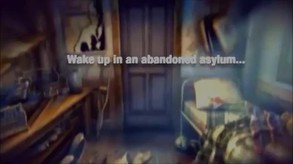
Use your cunning to defeat the demons of the Seven Deadly Sins and rescue humanity from destruction!
Modeled estimate, not a reported figure. How we estimate →
Media

About
Stats
All-time low is the lowest price we've recorded for this game since we started tracking it.
Languages: English*, French, Italian, German, Spanish - Spain, Korean, Polish, Russian, Japanese, Czech, Dutch, Portuguese - Portugal +3 more
Engagement
Reviews
Themes across 40 recent reviews and how positive each mention is. A keyword signal, not full sentiment analysis.
Reviews
Nunca havia jogado um game da série Sacra Terra antes, mas sempre tive vontade e Sacra Terra: Noite Angelical é o primeiro e gostei muito! =D A única crítica que eu tenho é não ter como teleportar no mapa para acessar áreas pendentes. Eu tive que ir ir voltar "a pé" no jogo. Um teleporte nesses momentos de ida e volta entre as áreas facilitaria e muito e o game não é antigo demais, daria para fazer isso. Mas de resto é um game muito bom, com uma história incrível onde você tem que expulsar do mundo os 7 demônios dos pecados capitais e eu amei a aventura. A atmosfera do game lembra muito Stray Souls e Devil May Cry (acho que por ter demônios mesmo kkkk) Nota 9,5 para o jogo! <3 recomedado!
Great game! I played the other Sacra Terra, and this one is by far my favorite. The only downside I felt was that you cannot jump to a location on the map, so a lot of back and forth travelling.
Related
Related
Trends
Modeled estimate over time, reconstructed from Steam's monthly review histogram.
Hours played at review time, across 40 reviews with recorded playtime.
positive critical· bar length = how often the theme comes up
Oui j'aime beaucoup ce jeux si vous aimer les commentaires ou les testes de jeux retro venais sur ma chaine Youtube: polux gounar merci
понравилась история
A beautiful romp through some stunning scenes with background music that never got old, to me at least. This game has the helpful feature of a map that tells you where to go next if you're lost or forgot what you were doing after a while away from the game it doesn't let you fast travel, but no one is perfect. The cutscenes are well animated, the Hidden Object Scenes are fun and the puzzles are certainly decent. You won't spend an entire hour bashing your head on the table but you also won't be able to solve these at a glance. Overall, a pretty balanced experience that is helped with a specific style of it's own, specially when designing the antagonistic figures you'll come across.
Sacra Terra: Angelic Night, developed and published by Alawar Casual, is a haunting and beautifully crafted hidden-object adventure that explores the boundaries between sin, redemption, and the supernatural. The story begins with the player awakening in a decrepit hospital, trapped within an eerie complex that once served as a monastery. The sense of disorientation and confinement immediately sets the tone for what follows—a slow descent into a world tainted by darkness, where the seven demons representing the deadly sins have broken free from their infernal prison. Guided by a mysterious angelic presence, the player embarks on a journey through the ruins of Sacra Terra to confront these embodiments of evil and ultimately restore balance to the world. Though its premise may sound like traditional gothic fantasy, the game distinguishes itself through atmosphere, artistry, and the quiet emotional resonance that underlies its story. Visually, Sacra Terra: Angelic Night is a testament to the power of hand-painted art and subtle environmental design. Each area feels meticulously constructed, from the crumbling stone corridors of the hospital to the hellish catacombs and the ethereal sanctuaries where remnants of holiness linger. The developers achieved a fine balance between beauty and decay, using light and shadow not merely to decorate but to tell a story. The environments are drenched in color palettes that mirror the emotional tone of each chapter—sickly greens and rusted browns for corruption, deep crimson for wrath, and pale blues for serenity. The music, too, is integral to the immersion: it is gentle yet unsettling, interwoven with soft choral echoes and the faint hum of something divine struggling to pierce through the suffocating gloom. Together, these elements create an atmosphere that is more melancholic than horrific, evoking curiosity and empathy rather than fear. The gameplay adheres to the classic formula of hidden-object adventures but refines it with a sense of pacing and purpose. Players alternate between searching through cluttered scenes for crucial items and solving logic puzzles that range from mechanical locks to alchemical patterns and mystical seals. Every object found feels like a piece of a larger riddle rather than filler, and progression through each location brings both narrative and visual satisfaction. While the puzzles are not overwhelmingly complex, they are intelligently designed, offering a gentle challenge that keeps the player engaged without breaking immersion. The sense of exploration is further enhanced by the interconnectedness of the map; new tools and clues often send you back to previously visited areas, rewarding memory and observation. This backtracking does occasionally lead to minor repetition, especially since fast travel is absent, but it also reinforces the spatial familiarity of the setting, giving the world a tangible, lived-in quality. What makes Sacra Terra stand apart is its tone. While many hidden-object games rely on simple mystery or supernatural intrigue, this one frames its story around the moral and spiritual struggles of humanity. Each demon represents not just an obstacle, but an allegory—a reflection of the vices that corrupt the human soul. As you progress, the angelic guide who accompanies you reveals fragments of the world’s history, weaving a tale of temptation, penance, and eventual transcendence. The storytelling is understated yet emotionally effective, delivered more through environmental cues and symbolic imagery than lengthy dialogue. It leaves much to interpretation, which gives the experience an almost meditative quality. The presence of the angel is both comforting and sorrowful, embodying the central tension between light and darkness that defines the game. Despite its strengths, Sacra Terra: Angelic Night is not without flaws. The absence of fast-travel makes retracing your steps feel tedious in later stages, particularly when multiple puzzles require back-and-forth movement across large maps. Some hidden-object scenes reappear with only minor variations, which can dilute the sense of discovery. The game also leans heavily on genre conventions—collecting items, using them in predictable ways, and unlocking doors through a series of symbolic puzzles. Yet even with these shortcomings, the game’s design never feels lazy or uninspired. Its elegance lies in how it maintains coherence; every element, from object placement to puzzle logic, serves the central theme of restoration and purity. It’s a slow, contemplative experience that rewards patience and observation more than reflex or innovation. Ultimately, Sacra Terra: Angelic Night succeeds because it understands the essence of its genre while striving for emotional resonance beyond it. It offers the familiarity of hidden-object mechanics wrapped in an atmospheric narrative that lingers long after completion. It’s not about terror or adrenaline, but about the quiet triumph of reclaiming light from shadow, of confronting both external and internal demons. The roughly six to eight hours it takes to complete the main game and bonus chapter feel perfectly measured, giving enough time to become immersed without overstaying its welcome. For players who appreciate detailed artwork, haunting music, and gentle but meaningful puzzles, this game offers a journey that feels spiritual as much as it does mysterious. Sacra Terra: Angelic Night may appear modest in scale, but its blend of beauty, melancholy, and moral depth ensures it leaves an impression far greater than its size suggests. Rating: 8/10
Неплохая игра, сюжет предсказуемый, но интересный, загадки все логичные и довольно простые.
Sacra Terra: Angelic Night – ou quand les plumes tombent et la logique les suit Commençons sans plus tarder. Dans ce magnifique jeu, vous vous réveillez attaché à un lit dans un hôpital abandonné. Bon, jusque-là, tout va bien. Puis, en voyant apparaître un ange, vous n’avez pas le temps de vous demander si votre dernière séance d’électrochocs n’était pas un peu trop corsée, que celle-ci vous libère… en laissant tomber une plume sur vos liens. Oui, parfaitement logique. C’est bien connu : les plumes sont plus efficaces que les couteaux suisses ou un chalumeau contre les entraves. En explorant cet hôpital – aussi chaleureux qu’un donjon humide, une garderie d’enfants ou une séance au centre des impôts – vous découvrez peu à peu que le directeur de l’établissement et sa charmante épouse ont décidé de faire un petit sacrifice après la mort tragique de leur fille (tuée par sa propre belle-mère ; on est chez la firme à la souris ?). Résultat : un portail vers l’enfer s’ouvre, libérant les démons des sept péchés capitaux, qui prennent possession des lieux… et de leurs anciens occupants. Cerise sur le gâteau (moisi) : l’ange qui vous a libéré n’est autre que la fille du directeur. Ce qui, bien sûr, est tout à fait normal. En Suisse, dans nos cliniques privées en montagne, ça arrive tous les jours. Avec tentacules inclus. Visuellement, l’hôpital est sympa. Pendant la première demi-heure, j’ai même eu une ou deux petites frousses (mais pas de quoi réveiller un chat mort). Malheureusement, l’ambiance s’érode vite au contact du gameplay : on est dans du pur point and click, et votre syndrome de Diogène numérique vous poussera à retourner chaque pile de déchets dans l’espoir d’y dénicher l’objet nécessaire pour passer à la section suivante. Pas de dialogues, pas de combats, une tonne d’allers-retours inutiles et des énigmes à la logique venue d’une autre dimension. Exemple : pourquoi dois-je recoller une étoile en quatre morceaux avec de la colle planquée dans un coffre-fort, dont le code est gravé dans un cadavre, lui-même planqué dans un salon secret, auquel on ne peut accéder qu’un jeudi 32 avril à 14h37… juste pour ouvrir la porte des toilettes ? Bref, c’est peut-être le genre de jeu qui pourrait plaire à un de mes jeunes cousins, s’ils daignaient un jour lâcher Call of Duty : Future Warfare 14. Quant à moi, je vois surtout la scène suivante : — Docteur, le patient 141599 dit encore voir un ange et prétend devoir se battre contre des démons… on fait quoi ? — 28g de lithium et deux séances d’électrochocs. Faut bien qu’on le soigne, ce fou. (Aucune créature mythologique n’a été maltraitée durant la rédaction de ce test. En revanche, la logique narrative a été sévèrement molestée. Mais ça, c’est une autre histoire.)
한글로 게임을 하면 여기저기서 튕기는 문제가 있다는 걸 제외하면 그럭저럭...
J'ai beaucoup aimé ce jeu. J'ai trouvé la première pièce franchement glauque, mais ce n'était plus le cas par la suite. L'histoire est intéressante et l'ambiance est plutôt bien rendue. Ce que j'ai principalement apprécié sont les jeux d'objets cachés : moins d'objets à trouver, mais mieux cachés. Le jeu bonus est également particulièrement bon : c'est un vrai jeu de la même qualité que le jeu principal. En termes de durée, j'ai terminé le jeu en un peu moins de 6,5h.
Momentum
Pace estimated from the game's recent review growth (our daily snapshots) at its own sales-per-review ratio — a momentum signal, not booked sales.
Audience
Estimated from the language of this game's reviews — a proxy for where players are, not official Steam demographics.
Related
| Auto Battle Girl | $20.9K | 87 | 87% | $9.99 |
| PUSH | $20.9K | 691 | 87% | $0.99 |
| Kitty May Cry | $20.8K | 119 | 82% | $8.99 |
| Race Arcade | $20.9K | 86 | 69% | $11.99 |
| Hockey Manager 20|20 | $20.9K | 93 | 67% | $19.99 |
| The Painter's Playground | $20.9K | 62 | 97% | $9.99 |