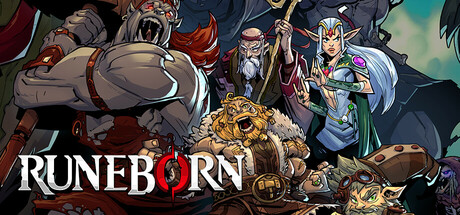
Runeborn is a dark fantasy roguelike developed by iDream Interactive and published by Goblinz Publishing and Astrolabe Games that successfully combines deckbuilding concepts with an innovative rune-spinning combat system. In a genre filled with card battlers and traditional roguelikes, the game distinguishes itself through a combat mechanic that feels fresh while still retaining the strategic depth that fans of the genre expect. Instead of simply building a deck and playing cards, players construct a magical Runebook and manipulate spinning rune combinations to unleash powerful abilities against increasingly dangerous enemies.
Set in a grim world threatened by the forces of Malakar, the game places players in the role of a powerful Runeborn warrior tasked with pushing back the darkness. While the narrative remains secondary to the gameplay, the setting provides a compelling backdrop for the adventure. Ancient magic, cursed creatures, mystical artifacts, and hostile landscapes create an atmosphere that supports the game's dark fantasy identity. The story serves primarily as a framework for progression, allowing players to focus on experimentation, combat, and character growth.
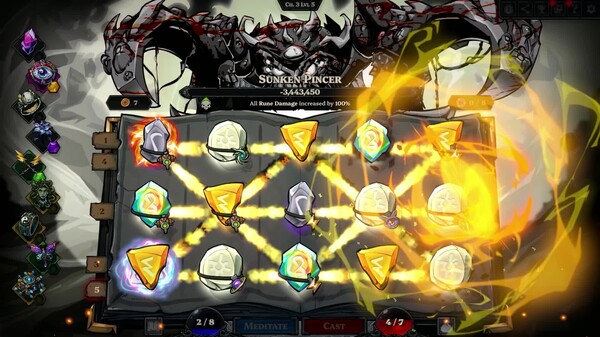
The most distinctive feature is unquestionably the combat system. Rather than drawing cards directly into a hand, players spin rune columns that generate various magical combinations. Matching symbols across multiple lines activates spells, attacks, defensive abilities, and special effects. Initially, the mechanic resembles a slot machine, but beneath that surface lies a surprisingly strategic system. Success depends less on luck and more on preparation, rune selection, and understanding how different combinations interact with one another.
A particularly clever aspect of the design is the ability to lock runes into place. This mechanic gives players meaningful control over future outcomes and transforms combat into a careful balancing act between risk and reward. Deciding which symbols to preserve and which reels to reroll creates constant tension during battles. Every turn presents new possibilities, forcing players to adapt while still pursuing long-term strategies. This balance between unpredictability and player agency is one of the game's greatest achievements.
Customization is at the heart of the experience. Throughout each run, players continuously modify their Runebook by adding new runes, removing weaker options, and refining their strategy. Every decision directly impacts future encounters, encouraging experimentation with different approaches. Some builds focus on overwhelming damage output, while others prioritize status effects, defensive tactics, or complex chain reactions. The flexibility of the system ensures that players can develop unique strategies rather than following a single optimal path.
The trinket system adds another impressive layer of depth. Powerful magical items collected during a run can dramatically alter how a build functions. Some trinkets enhance specific rune types, while others multiply damage, trigger bonus effects, or completely change combat priorities. Discovering powerful synergies between trinkets and runes often becomes the key to success. Few moments are more satisfying than finding an unexpected combination that transforms an average run into an unstoppable force.
Replayability is one of Runeborn's strongest qualities. Randomized encounters, changing rewards, evolving builds, and a large variety of rune combinations ensure that no two journeys feel identical. Even failed attempts contribute to the learning process, encouraging players to rethink strategies and explore new possibilities. This constant cycle of experimentation and discovery creates the addictive gameplay loop that defines the best roguelikes.
Enemy encounters remain engaging because opponents possess unique abilities that require different tactical responses. Some enemies focus on direct aggression, while others rely on debuffs, defensive mechanics, or disruptive abilities. Elite encounters and boss battles provide even greater challenges, forcing players to fully utilize the strengths of their builds. These tougher fights often become the highlights of a run because they test both preparation and adaptability.
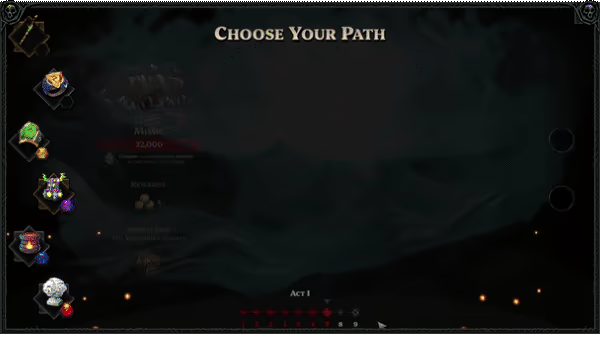
The progression system rewards calculated decision-making. As players advance through the game, they earn currency that can be spent in specialized shops. These merchants offer opportunities to strengthen builds through new runes, upgrades, and rare trinkets. Resource management becomes an important strategic consideration, as spending too aggressively can leave players vulnerable later while excessive saving may result in missed opportunities.
Visually, Runeborn embraces a stylish dark fantasy aesthetic filled with magical effects, ominous environments, and distinctive enemy designs. The user interface is well organized despite the complexity of the systems beneath it. Information is presented clearly, making it easier to understand active effects, rune combinations, and combat outcomes. The visual feedback accompanying successful spell activations is especially satisfying, helping reinforce the impact of powerful plays.
The sound design complements the atmosphere effectively. Magical attacks feel impactful, enemies produce memorable audio cues, and the soundtrack reinforces the game's dark fantasy tone. While the audio may not be revolutionary, it succeeds in enhancing immersion and maintaining the mood throughout extended play sessions.
One area where some players may struggle is the initial learning curve. The interactions between runes, trinkets, and various effects can feel overwhelming during the first few runs. Understanding how to maximize synergy requires experimentation and patience. However, this complexity ultimately becomes one of the game's strengths because it creates a rewarding sense of mastery as players become more familiar with the systems.
Balance is generally strong, though certain combinations can occasionally feel significantly more powerful than others. Some builds naturally develop more easily than alternatives, which may lead players toward familiar strategies after many hours. Nevertheless, the sheer number of possible combinations ensures that there is always room for creative experimentation.
What ultimately makes Runeborn stand out is its willingness to innovate within a genre that often relies on familiar formulas. By combining deckbuilding principles with a rune-based spinning system, it creates a combat experience that feels distinct from both traditional card games and standard roguelikes. Every run offers opportunities for discovery, adaptation, and unexpected success, making progression consistently engaging.
Runeborn is an imaginative and highly replayable roguelike that succeeds through its original mechanics, deep customization options, and rewarding strategic gameplay. Its blend of rune manipulation, build crafting, trinket synergy, and dark fantasy atmosphere creates an experience that feels both familiar and refreshingly new. While the complexity may require some patience from newcomers, players willing to learn its systems will find a deeply satisfying adventure filled with endless experimentation and meaningful decision-making.
Rating: 8/10