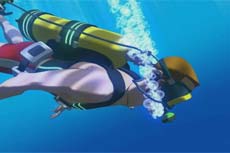
Travel to the four corners of the world with Brian and Gina in a crazy story packed full of surprises. Pirates, spies, surfers, soldiers, and even aliens get in on the act - all combining to create a wonderfully rewarding experience to savour and remember forever!
Modeled estimate, not a reported figure. How we estimate →
Discounts
Every price cut of more than 20% we have observed, in each market that quoted one, with this game's chart position on either side of it. These are episodes, not a model: a sale is one event, and one event cannot tell you what the next one will do.
Reviews, worldwide (the counter carries no country): 0/day in the week to Sep 4 → 0/day in the week after.
For scale, across Steam · Top Sellers · Brazil over the last 30 days: the 26 chart moves that followed a price cut of more than 20% went a median of 7 places towards #1, and the 2,400 moves with no price cut behind them went 2 away. One store, one chart, one country — it is the only place we have enough observations to say even that.
Prices outside the United States have been collected since 6 August 2026 and chart positions since 19 July 2026, so a cut older than that has no market to compare and a market that joined later has no history yet. Nothing here is converted between currencies.
About
Genres
Engagement
Reviews
Themes across 42 recent reviews and how positive each mention is. A keyword signal, not full sentiment analysis.
Reviews
geiles point&click adventure
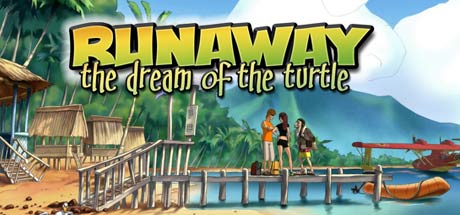
Runaway: The Dream of the Turtle continues the globe-trotting misadventures of Brian Basco and Gina Timmins with a sequel that doubles down on spectacle, absurdity, and cartoonish flair. Developed by Pendulo Studios and published by Focus Entertainment, the game opens with Brian and Gina enjoying what should have been a carefree Hawaiian escape—until a sightseeing plane flight goes disastrously wrong. The crash leaves Gina missing and Brian stranded in an unfamiliar jungle, setting off a chain of events that spirals into a bizarre odyssey filled with eccentric characters, conspiracies, and environments that grow stranger and more elaborate as the story continues. Where the first Runaway blended mystery with light humor, The Dream of the Turtle embraces a far more chaotic, comedic energy, treating the adventure almost like a colorful animated series brought to life. Visually, the game remains one of the series’ strongest assets. Pendulo Studios maintains its signature hand-painted aesthetic, blending richly detailed backgrounds with stylized, expressive character art. Every location feels distinct—from tropical islands to military bases, frozen arctic outposts, underwater vessels, and more. These diverse settings don’t just add visual variety; they amplify the sense of a journey that expands in scope with every chapter. The animated cutscenes, though limited by the technology of their time, carry an energetic tone that reflects the game’s exaggerated personality. Even when the narrative veers into implausible territory, the visual presentation helps keep the experience grounded in a vibrant, lively world. Gameplay adheres closely to the traditions of classic point-and-click adventures. Players explore scenes, collect objects, interrogate quirky characters, and piece together puzzle solutions using a mix of observation, experimentation, and sometimes wild leaps of logic. This design will feel familiar to fans of older adventure games: part of the charm comes from solving puzzles through creative item combinations, but it also brings with it the genre’s pitfalls. Some puzzles are clever and intuitive, while others rely heavily on noticing tiny interactable elements or interpreting logic that feels more whimsical than sensible. These fluctuations in design quality can lead to moments of satisfaction followed by stretches of frustration, particularly when progress hinges on discovering one small environmental detail or combining items in ways that aren’t clearly motivated. The writing and tone of The Dream of the Turtle mark a noticeable departure from the more grounded humor of the original game. Here, Pendulo embraces a heightened level of absurdity, weaving in elements of military intrigue, alien conspiracies, pirates, and pulpy sci-fi tropes—often without worrying too much about coherence. Characters are painted in broad strokes, leaning into comedic exaggeration and cultural stereotypes that may come across as dated or heavy-handed by modern standards. For some players, this over-the-top style is part of the game’s charm, giving it the carefree, chaotic feel of a Saturday-morning cartoon. For others, the humor and narrative whiplash may dampen emotional investment or make the story feel unsteady and unfocused. Reception to Runaway: The Dream of the Turtle has long been divided for these reasons. Many players admire the artistic presentation, globe-spanning environments, polished character animations, and the overall ambition to create a cinematic adventure. Fans of point-and-click games often appreciate the sheer number of puzzles and environments to explore. However, criticisms frequently target the pacing, the uneven quality of the writing, the reliance on obtuse puzzle logic, and the narrative’s tendency to wander without delivering substantial payoff. The tonal shifts—from light comedy to melodrama to outlandish sci-fi—can make the plot feel stitched together rather than organically unfolding, especially when combined with cliffhanger moments that set up the next installment without offering full closure. Despite its inconsistencies, The Dream of the Turtle remains a memorable entry in the Runaway series. It is unabashedly colorful, enthusiastic in its eccentricity, and unafraid to swing for the fences with its narrative twists and visual spectacle. Players who approach it with a taste for classic adventure puzzles, an appreciation for bold, exaggerated humor, and patience for unconventional storytelling will find an enjoyable and sometimes surprising journey. Those looking for cohesive writing, grounded characters, or puzzle design that avoids guesswork may find it less appealing. Ultimately, the game serves as a lively continuation of Brian and Gina’s saga—one that celebrates the joy of adventure even as it stumbles over its own ambition. Rating: 5/10
Media

Related
Related
Price dynamics, follower growth, revenue and sales trajectories with interactive tooltips
This and every other Pro feature is free until October 20, 2026. A free account is all it takes.
Stats
All-time low is the lowest price we've recorded for this game since we started tracking it.
Languages: English, French
Hours played at review time, across 42 reviews with recorded playtime.
positive critical· bar length = how often the theme comes up
[h1][i]“It was said that you would destroy the Sith, not join them!”[/i] ~Obi-Wan Kenobi[/h1] Runaway: A Road Adventure was anything but perfect. It was cringey at times, it suffered from some terrible pixel hunting, etc. Yet, it was the right game at the right time. Together with some others (like Benoît Sokal's Syberia, for example), it was one of those games that gave the point-and-click genre support in a time of decline. It was nothing like what Nintendo did after the infamous video game crash of 1983, of course, but still, it was one of those games that helped the genre survive. It was pretty stylish, it had an interesting narrative (for a European point-and-click adventure, that is), it looked good, and it had exclusive songs with vocals (a rare thing to see back in the day). Like I said, it was a thing. And when there's a thing? A sequel is inevitable. So, ladies, gentlemen, and all the others, please welcome Runaway 2. I mean, Runaway: The Dream of the Turtle. And you know what? The intro looks promising. It's stylish, it comes with a new song (no famous singers, though; I wasn't even able to find out who Ryk-C is), and it feels exactly like what we all expected from a Runaway sequel. I mean, come on. The original Runaway, despite all of its flaws, was very movie-like. Heck, it was actually inspired by certain names. It was, like, the game's most powerful trait. Together with a certain amount of quality, it was something that put the original Runaway above the other European adventures that mostly aimed for quick money and didn't care about such stuff. That's what we all wanted from Runaway 2. Guess what it did? It joined “The Dark Side of the Force.” I mean, that's it. Runaway 2 is one of those European adventures that some of us fans call “the genre rot.” You know, when the genre's in such a bad shape that no major companies really care to produce quality stuff and only small ones produce games for a quick money grab. What about indies, you may ask? Well, that's another problem. It was still the early 2000s, and the indie scene wasn't nearly as strong as it is today. With no easily accessible engines that were really worth working with (like Unity, for example) and no real demand or support, it was only starting to take form. Dave Gilbert, for example, had just dropped the very first game (as long as we don't count Bestowers of Eternity) in his Blackwell series. So, with nothing else on the market, the old fans had no other choice but to play second-grade stuff like Journey to the Center of the Earth and Agatha Christie: And Then There Were None. But OK, I keep calling those games bad, but what was wrong with them exactly? Well, Runaway 2 is a nice example of that. What's funny is that lots of the crimes it committed were already present in the first game. All Pendulo really needed to do was learn from their previous mistakes. They didn't. Instead, they made new ones. Let's start with the dialogues. Let's just admit it: everybody hates those in these kinds of games (even when there are famous actors like Duke Nukem himself, Jon St. John here). The point-and-click genre is built around exactly that—pointing and clicking. And the dopamine comes at the moment when you pick up the right item and put it on the right spot. Combining items included. Dialogues? Those kinda make everything vague for no real reason, aside from adding unfair difficulty. Which was kind of a thing in the pre-Internet time, when people wasted days and weeks trying to figure things out in order to brag to their friends, but quickly became a buzzkill when walkthroughs became easily accessible (wasting days on painfully confusing things was no fun anymore because there were no real-life rewards for it). And Runaway 2? It's, like, dialogue hell. You'll need dialogues to progress (there's even a part where you'll walk from one NPC to another multiple times); very often, our dude Brian will need to [i]know[/i] what to do before such options become available... That's right: the infamous “you can't use this on that because your character doesn't know that such stuff is possible or needed.” And there are, like, [i]tons[/i] of dialogues. And all of them are stupid. Screw that. Talking about stupid stuff—that's another problem with European (post-soviet too) adventures from that period. The thing is, such games rarely (if ever) took themselves seriously. That's why the first Runaway stood out. It’s not like it wasn't cheesy at times, and yes, it was heavily comedic, but it did take itself seriously, if that makes sense to you. Runaway 2? It's just a bunch of “LOL, we don't care!” stuff tossed together. And it's so-o-o cliché! It's the same exact European thing copy-pasted from, like, every second adventure out there. Witch doctors, stoners, aliens, racist jokes... Eugh. Which is rather sad, since the main concept (and yes, there [i]is[/i] a concept here) suggests a certain amount of depth. You know how in, say, the Vaishnava tradition, the entire universe is seen as a "dream" manifested by Lord Vishnu during his cosmic slumber? The writer of Runaway 2 tried to play with the idea. Unfortunately... OK, you ever had a stoner friend? The one who, after a couple of YouTube videos, started to explain the universe to you? And you're like, “Dude, stop smoking so much!” I'm not trying to say anything about Josué Monchan (the lead writer), but that's how his work feels. And yes, this game has a different writer (the first Runaway had not one, but three: Ramón Hernáez, Rafael Latiegui Antón, and Felipe Gómez Pinilla). Also, yes: pixel hunting is a b*tch. It was also a problem with the first game, but here it's even worse. Thanks to how dialogues and other factors keep inventing the rules on the fly without letting you know, it feels especially bad. Again, a healthy amount of pixel hunting is good for your dopamine (in my opinion at least), but honestly, this here is a nice example of how sometimes hotspot highlighting can be a good thing. And there's no excuse for not having it here. I mean, Simon the Sorcerer II happened more than ten years before Runaway 2. And the first Runaway clearly showed that pixel hunting there is a problem. Every single review complained about it. But no, Runaway 2 didn't care. At least in both of its major forms: the PC version and the Wii port (which added some sort of a hint system, in which a Jar Jar-like character named Joshua will tell you things like “cards usually belong in slots”). Cyanide (yes, [i]that[/i] Cyanide who made Styx and Call of Cthulhu) did add hotspot highlighting in their port for the Nintendo DS, but mostly because they didn't have a choice—the game is completely unplayable on the DS without it (and even with it, it's not really a nice experience thanks to how hard it is to see a thing). [i]Anyway[/i], the tragedy of Runaway 2 is that it pretty much destroyed everything that used to make the first one good and became “yet another one of those.” Take any European (or post-soviet) adventure from that time period and that'll be it. Heck, if anything, some of those actually did better. So Blonde, for example, while having a similar approach, felt much smoother and even threw in extra content (mini-games) in the Wii and DS ports (something that Runaway 2 didn't). So, what's the verdict? Is it worth getting back to this game nowadays? My answer is no. Not a single reason. The genre's doing great with indies today, with most of such games being heavily conceptual. Low budget? Sure. But still heavily conceptual. And it's not like there's a lack of those. You want a good game? Aim for those. As for Runaway 2? Well, it's playable (may require dgVoodoo2 on modern systems, though), but like I said, it's “one of those.” And when it's about “those,” it doesn't really matter which game you pick up—Runaway 2 or, say, Mozart: The Conspirators of Prague. It was said that Runaway 2 would destroy crappy European adventures. Instead, it joined them.
Une bonne suite au premier épisode de la série. Par contre, il y a beaucoup de bug.
This one is ok. I prefered the first game. This one also suffers the same problem as the original. In order to get it to run properly you have to disable the high def graphics option. After you do that the game runs fine. On a windows 11 system.
Empfehlenswert: Ja (persönliche Wertung: 5/10) Errungenschaften: Nein Positiv: - Schöner Zeichenstil - Gute Musik - Nettes Setting, mit einzigartigen Charakteren - Knackige und absurde Rätsel Negativ: - Zu lange Zwischensequenzen - Story im letzten Kapitel schlecht - Cliffhanger - Übersehbare Gegenstände Fazit: Runaway: The Dream of the Turtle ist ein klassisches Point & Click - Adventure, welches die Story um Brian Basco und seine Freundin GIna fortsetzt. Die Story ist leider nicht so gut gelungen wie im ersten Teil. [spoiler]Böse Militärbuben, Aliens, Verrückte Wissenschaftler, betrunkene Affen... Ein bunter Mix aus vielen Charakteren und Storylines. Es gefiel mir soweit! Aber dann kam das letzte Kapitel und... Es war wirklich schlecht. Das ganze Piratensetting in der Vergangenheit hat von der Story her für mich keinen Sinn ergeben. Und das schlimmste: Danach kam ein Cliffhanger! Wenigstens bleibt man in diesem Spiel (außer am Anfang) von Gina verschont. [/spoiler] Viele Zwischensequenzen und Animationen waren mir zu lang gewesen. Besonders wenn es darum ging zuerst zu scheitern, damit die richtige Lösung durchgeführt werden kann. Die Rätsel sind schön absurd und knackig. Vieles konnte man sich schnell zusammenreimen, aber man musste der Story zu liebe zuerst scheitern. Das Spiel hat aber viele gute Dinge aus dem ersten Teil übernommen, aber leider auch einige negative Dinge... Der schöne und vor allem detaillierte Zeichenstil aus dem ersten Teil wurde übernommen und in ein schönes Inselsetting mit passender Musik gepackt. Leider passiert es, wie im ersten Teil, das wichtige Gegenstände in den Details schnell untergehen können und dies für viel Backtracking und Wiederholung von Gesprächen führt. Trotz das dieses Spiel nur auf Englisch war, hatte ich viel Spaß damit. Empfehlenswert!!!!
too many bugs and crashes and the last chapter is a waste with one final crash just before the ending. I didn't bother to try and finish. This should never have been sold.
No le llega ni a la suela de los zapatos al primero, pero no está mal. El problema es que todas las copias (digitales y físicas) que he probado a lo largo de los años tienen uno de los capítulos rotos, y esta no ha sido menos.
Runaway est une saga de point & click en 3 volets. La qualité des 3 épisodes est plutôt homogène, et de très bon niveau, et il est fortement recommandé de les faire dans l'ordre, à savoir : - Runaway: A Road Adventure (sorti en 2001 en Espagne, puis en 2003 dans le reste du monde) - Runaway 2: The Dream of the Turtle (2006) - Runaway 3: A Twist of Fate (2009) Dans ce second épisode, alors qu'ils sont en vacances à Hawaï, Brian et Gina se retrouvent de nouveau en danger. Lors d'un accident en hydravion, Gina tombe d'une falaise , et disparaît. Convaincu qu'elle est vivante, Brian part à sa recherche à travers des îles tropicales. Alors que le premier épisode tournait autour d'histoires de mafia, le jeu s'oriente ici vers des sujets plus mystérieux , ce qui permet de renouveler un peu les thèmes. Le tout fonctionne toujours très bien , et The Dream of the Turtle est un excellent point & click , et probablement l'épisode le plus marquant de la saga. Notons, sans trop en dévoiler, que ce volet laisse de gros points en suspens , et qu'il faudra attendre le 3ᵉ volet pour en voir la conclusion , ce qui amena pas mal de frustrations au moment de sa sortie.
Dobra Adventura stejně jako jednička jenom není cz dabing. ale baví i ve dvou.
Selling now
See how fast this game is selling right now — estimated copies and revenue per day from recent review growth.
Players by region
Where this game's players are, estimated from review languages.
Related
| Game | Estimated lifetime revenue | Reviews | Review score | Price |
|---|---|---|---|---|
| $2.2M | 8.2K | 84% | $14.99 | |
| $1.2M | 6.2K | 95% | $9.99 | |
| $112K | 280 | 86% | $24.99 | |
| $0 | 235 | 94% | Free | |
| $5.6M | 45.1K | 98% | $9.89 | |
| $2.5M | 14.7K | 86% | $9.99 |
Related
| Game | Estimated lifetime revenue | Reviews | Review score | Price |
|---|---|---|---|---|
| $29.8K | 140 | 96% | $10.99 | |
| $29.8K | 277 | 98% | $5.99 | |
| $29.8K | 121 | 92% | $9.99 | |
| $29.8K | 100 | 97% | $14.99 | |
| $29.8K | 186 | 95% | $11.99 | |
| $29.8K | 53 | 87% | $10.04 |