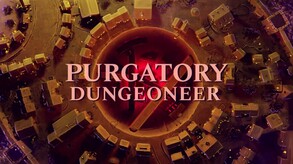
Purgatory Dungeoneer is a townbuilding roguelite RPG about plundering a psychic hellmaw for personal closure, and the resources to build a village beyond the grave.
Modeled estimate, not a reported figure. How we estimate →
Media
About
Genres
Stats
All-time low is the lowest price we've recorded for this game since we started tracking it.
Languages: English
Engagement
Hours played at review time, across 40 reviews with recorded playtime.
Reviews
Themes across 40 recent reviews and how positive each mention is. A keyword signal, not full sentiment analysis.
positive critical· bar length = how often the theme comes up
Reviews
This game has reignited my love for turn based RPGs. There's tons of characters and classes to pick from and find cool synergies between abilities, and a stripped down dungeon crawling mechanic that focuses on the key decision making instead of grinding or endless random encounters. This is one of the best games I've played in a very long time and more people should know about it.
Purgatory Dungeoneer is a strange, ambitious, and emotionally resonant hybrid of roguelite dungeon crawler, party-based RPG, and settlement builder—an unusual blend that immediately sets it apart from more traditional genre offerings. Developed by Cannibal Interactive and published by Strange Scaffold, the game is built around a fascinating premise: you manage a fledgling community in the afterlife, populated by the souls of retired or fallen adventurers. Your role is to recruit these lost souls, send them into a psychic dungeon to confront manifestations of past trauma, and use the resources they bring back to slowly rebuild a town that exists somewhere between purgatory and a second chance. The tone is melancholic but hopeful, capturing a sense of rebuilding life after ruin—even if that “life” now exists beyond death. At the heart of Purgatory Dungeoneer is the remarkable breadth of its party-building system. With over a hundred different classes and hundreds of individual souls to recruit, the game allows for an almost overwhelming number of combinations. Each soul comes with its own class, traits, quirks, species modifiers, and sometimes deeply unusual abilities. Some are naturally tanky, others excel at support, while others are unpredictable wildcards with double-edged skills. This diversity creates a level of depth rare even among much larger RPGs. Even early on, your party compositions can range from sensible arrangements of complementary roles to experimental teams stitched together from odd, incompatible personality fragments. There is a charm to this unpredictability—your adventurers feel less like stat blocks and more like troubled individuals with unknown histories slipping through the afterlife and hoping for redemption. Dungeon expeditions serve as the game’s main mechanical loop, and they’re designed to be quick, intense bursts of strategy rather than drawn-out marathons. Each run covers just a handful of rooms, but the stakes are real: the dungeon reshapes itself into symbolic memories of your adventurers’ past lives, and enemies often behave like twisted reflections of classes you could have recruited. The combat is turn-based and tactical, emphasizing careful ability usage, turn order, and synergy between party members. Builds that rely on healing, crowd control, or status effects can be as effective as direct damage, and the game rewards players who experiment. However, with the sheer number of possible classes and traits, there is a learning curve—sometimes steep. Not all combinations are equally intuitive, and discovering synergies can feel like solving puzzles whose pieces shift with every new recruit. The town-building aspect provides important breathing room between dungeon dives. Restoring buildings, unlocking new facilities, and upgrading the town gradually opens new options for healing, recruitment, and equipment preparation. While simple in presentation, this part of the game lends a sense of progression to the larger experience. It also reinforces the themes of reconstruction and emotional recovery. Unlike many roguelites where your base merely serves as a menu for upgrades, Purgatory Dungeoneer frames the town as a sanctuary for lost souls—something you nurture as much for their sake as for your own success. Over time, it becomes a symbol of slow, patient healing that contrasts sharply with the chaotic battles of the dungeon. Despite its intriguing structure, Purgatory Dungeoneer is not without difficulties and moments of imbalance. The sheer volume of recruitable characters, traits, and class abilities can easily overwhelm players, especially those unaccustomed to heavily customizable tactical RPGs. Choice paralysis is common; even deciding which of twenty available souls to recruit can feel daunting. The game offers freedom, but too much freedom can make early progress uncertain. Additionally, combat difficulty can spike unexpectedly—certain enemy or room combinations punish slower or more experimental teams, and a few unlucky encounters can derail an otherwise solid run. This randomness is part of the roguelite DNA, but it can feel harsh when combined with the game’s sprawling class system. Visually and stylistically, the game embraces a minimalist approach. Character portraits, UI elements, and animations are simple and symbolic, resembling a mixture of classic computer RPGs and abstract indie art. While this aesthetic supports the surreal, liminal setting, it may leave some players wanting more expressiveness or animation depth. The audio design is similarly understated, relying more on tone than spectacle. Yet these creative choices give the experience a stark, contemplative quality that fits the themes of loss and recovery. The game’s pacing can also feel uneven. The cycle of recruiting, dungeon-delving, and upgrading the town is engaging early on, but later it risks repetition, especially once you identify a few powerful strategies or class pairings. While every run is technically different, the overall rhythm of the experience remains largely static. For some players, that steady consistency will be part of its charm; for others, it may feel like the game peaks early and then coasts. Even with these limitations, Purgatory Dungeoneer has a distinctive emotional core that many roguelites lack. Its combination of mechanical depth, thematic weight, and unusual structure makes it memorable. It tries to treat its characters—these fallen souls—not simply as tools for combat, but as echoes of lives once lived. The result is a game that’s as much about closure and healing as it is about tactical combat. For players who enjoy experimenting with party builds, navigating challenging tactical encounters, and inhabiting worlds that lean into darkness without surrendering to despair, this game offers a surprisingly moving and richly layered experience. It may not be perfect, and it may not appeal to everyone, but for those who appreciate its blend of emotional storytelling, deep customization, and roguelite structure, Purgatory Dungeoneer stands out as one of the more thoughtful and atmospheric entries in its niche. Rating: 6/10
Purgatory Dungeoneer is an overwhelming JRPG, and I mean that as a compliment. There’s so much here that it can be hard to tell where to even begin, but when you do it’s totally worth your time!
it's really good, you should play it imo
Just started this but is great.
perfectly weird :)
Good fun
A deceptively deep party customization where mechanics and possibilities just keep piling up until you can do some truly crazy stuff.
played this on Itch, but bought it here to support the creator and leave a review. you wanna have a big weird time with an rpg? WELCOME
A deep, singular, rewarding experience with a soundtrack that slaps to a frankly irresponsible degree.
Related
Related
Trends
Modeled estimate over time, reconstructed from Steam's monthly review histogram.
Momentum
Pace estimated from the game's recent review growth (our daily snapshots) at its own sales-per-review ratio — a momentum signal, not booked sales.
Audience
Estimated from the language of this game's reviews — a proxy for where players are, not official Steam demographics.
Related
| Varney Lake | $11.2K | 72 | 99% | $9.99 |
| PIXELMAN | $11.2K | 278 | 81% | $1.99 |
| Outbreak: The Nightmare Chronicles | $11.2K | 95 | 73% | $4.99 |
| Chefs Together | $11.2K | 54 | 83% | $5.99 |
| Fururu Project : Ruby | $11.2K | 121 | 96% | $4.99 |
| Hajis هاجس | $11.2K | 103 | 83% | $4.99 |