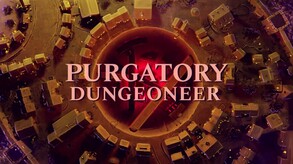
Purgatory Dungeoneer is a townbuilding roguelite RPG about plundering a psychic hellmaw for personal closure, and the resources to build a village beyond the grave.
Modeled estimate, not a reported figure. How we estimate →
Media
About
Genres
Stats
All-time low is the lowest price we've recorded for this game since we started tracking it.
Languages: English
Engagement
Hours played at review time, across 40 reviews with recorded playtime.
Reviews
Themes across 40 recent reviews and how positive each mention is. A keyword signal, not full sentiment analysis.
positive critical· bar length = how often the theme comes up
Reviews
This game has everything i'd want from a dungeon crawling RPG of this type, but the lack of a readable UI makes it impossible for me to tell what's going on. Some people are into that lack of clarity, but I'm not. My biggest gripe with the game so far is that I can't check the abilities, passives, and equipment of party members BEFORE I recruit them. In order to see their equipment, you have to recruit them, open up the status menu and then see if you want to use them. This wouldn't be too bad if I could dismiss party members individually, but instead you have to dissolve your entire party and fill up your roster again. The second issue I have is with how the recruiting system is set up. You have to find the party member you want to bring with you at a table and recruit them. The problem with that is that the character sprites are very minimal and each race has the same base sprite with the only difference being the color. This makes it hard to remember who is who when I'm deciding my party. I've noticed that the tables have different carpets underneath which i think tell you what class type is going to sit there. Speaking of which, When you talk to a recruit, you'll get a brief rundown of their class, but not on the passives of each race. Top tier music though
I like the idea but not the execution. It feels like I'm playing a tabletop game with a DM more concerned with obfuscating the ruleset than making the game fun. The UI ostensibly is not conducive to showing the amount of information necessary to decide effectively in this game. Character choice matters, but the sprites are barely distinguishable and fragmentee across many overly dense or comically empty screens. Equipment matters, but each character has 11 slots and the equip screen shows 5 or 6. Skill choice in battle matters, but a lot of skills sound the same and the menu can be hard to read in battle. Also, the dungeons feel tiresome when all you do is pick the lesser of two evils for each door, then move to the center of the room. I would've liked some actual dungeon exploration. Give me dead ends, traps, treasures, and routes with some risk-reward. The battles sometimes feel too lengthy. Single remaining enemies love to spam heals just to delay your victor. Attack animations take too long in general. The enemy spawns with more than you and can't be consistently herd-thinned up front. The memory quests aren't fun when I can't pick the party, and some of the presets feel like liabilities for the one character you picked. The last straw for me was when my game froze in the middle of a dungeon. I got a black screen while the audio continued. I could only close the game. I would've maybe excused some spotty performance for a game with better quality of life. But bad QOL and unstable performance? Forget it.
Ну, так себе. Я не против рпгмейкера или абстрактной графики, но подготовка к погружению сделана прямо чудо как неудобно - приключенцы сидят за столиками в комнатах, кто есть кто не очень понятно, надо смотреть, кто какого класса и расы, чем один из заявленной сотни классов отличается от другого. В партии пять рыл, и каждого надо выбрать так чтобы они имели синергию по навыкам, экипировать и тд. Честное слово, я бы предпочел таблицу по типу экселя, где строки это приключенцы, а столбцы их атрибуты - класс, раса, параметры, и тд, и еще сверху сортировку по столбцам и фильтрацию по значениям. Вроде, в какой-то ДРПГ такое видел недавно. Сверху все это портит бажок рпгмейкере, когда он слишком быстро обрабатывает нажатия - стрелки проскакивают нужные опции, А срабатывает больше одного раза и тд. На фоне серии Quester https://store.steampowered.com/app/1754460/QUESTER/ которая разыгрывает ту же карту "очень ретро подземельное ползание с упрощенными (по первости) механиками и кучей опций" как-то совсем блекло. Зато музычка прикольная.
i really like this game! the core loop is extremely minimal, consisting entirely of party building and combat. quests serve as a tour through the various systems of the game: buying and crafting items, going on runs for resources, and building parties. the system feels deep! with a lot of *very* interesting race and class combinations and a slow enough difficulty ramp that you experiment with a bunch of different classes and get some time to tune your A team for the end game run. it felt natural to build towards the party i ended up with, and by the end i was interested building a couple more. there are a lot of item builds especially that focus around the tempo of the battle (buffs that exist based on how many enemies or left or what turn of combat you're on). it feels pretty well balanced too! there are a lot of missions that involve you taking somewhat random parties, and that feels balanced enough to teach you about how the [b]many, many[/b] classes work without making random parties painful. i don't consider myself to be a top-tier min-maxing sicko, and the game gave me space to work on party optimization without immediately crushing me. music slaps, no notes. happy to hear more drum breaks and shoegaze in an RPG. my only real issues have to do with colours. there are a couple of text colours (the mp indicator on the skills menu) that are a bit too dark, so i can never settle on a window colour that's perfectly readable. some characters and enemies are dark against a dark background in combat, which is also a bit difficult to see. by the time you read this there'll likely be an update with more endgame available. i'm very eager to see that.
Number crunching and "learn by trying" are strong design choices here, either embrace the whole thing or never look back. The short play loop allows for small gaming sessions. Adjusting the challenge to your liking is also part of the experience. Focus is on a five battle sequence during which your party gets weaker and weaker, picking one debuff from two choices between each combat. Parties are composed of five characters and the cast is so large that you might never see everyone ^^ Party combinations seem endless but synergies and combos are easy to spot if you actually check character sheets. Combat is static and centered mostly around synergies, buffs and MP management through a command menu. Looking forward to discover more of that unique setting and cast (characters are retired adventurers trying to recover from trauma).
とりあえず日本語はありません ストーリー部分は読めなくてもたぶん全く問題ないし、戦闘周りの英語は固有名詞が多い気がする以外は単純 ストーリーで結構詩的な話してたりする部分もあるから読めたらまあまあ楽しい ツクール2000時代によくあったデッケえ酒場の席が埋まっていき そっから仲間を何人か選んで連れて行ってダンジョン攻略するタイプのゲーム 1戦闘ごとに様々な条件のデバフ2つから1つを選んでそれが累積していくシステムは面白い けどそのデバフが思ったより種類が少なく単調で、単調ゆえの格差が酷い 「ラスイチの敵が毎ターンHP6%ずつ自動回復」と「3ターン目まで敵の回避率が30%上がる」 で回避アップの方選びたいって思う人いるんか? 縛りプレイとしてイヤなデバフをあえて選ぶという遊び方をするなら面白いけど 1ダンジョン必ず5戦闘(なはず)で終わる+敵はみんな仲間に出てくる可能性のあるキャラ達、おそらく装備なし 単調っちゃ単調だけど種族×クラス数が400超なので同じ敵が出てきてる感覚はあんまりない 「難易度Xのダンジョンをクリアした時、レベルX以下のキャラのみレベルが1上がる」 基本的にはこういうシステムでレベルが上がるんだけど、1つ特にかったるい点がある Rememberance missionというクエストを完了しなければレベルが3から上がらないのだが、 キャラごとにクエストをクリアしなければならない上に1キャラにつき1ダンジョン潜りクリアする必要がある (そもそもこのクエストをXX人クリアしろとか出てくるから育成したいキャラをどうせそこで触るけど) 自分はこの超ゆっくりレベルが上がる感は嫌いじゃないけどローテンポゲーが苦手な人にはお勧めしない もっと進めたらこの面倒さは緩和される時が来るのかな...? 万人にオススメは正直できないんだけど ラストハルマゲドンとか好きだったおっさんにはワンチャン刺さる(自己紹介)と思うのでサムズアップしておきます
I can tell pretty quickly that the UI is going to be too much of a slog for me. You're given a hint of this immediately, first thing, when you're asked for your name and you can only enter it with your mouse, not your keyboard. You pick characters by walking around and talking to them and getting an idea of what their skills are. There's no way of just displaying a list of who is out there and what they can do - you've got to manually walk around. There appears to be no way to undo an action once you've selected it. On top of that this game uses an old version of something in its build, and gives me a pop up window when I start telling me that I am using a newer version of blah blah blah. I don't think that affects anything, but it's not a good look. This looks like it could potentially have been a good game - the premise is good and the problems are EA type things. But this game is not in EA.
Old adventurer rpg people home simulator is my favorite simulator.
There's a lot to figure out. If that is a positive statement for you, then you are likely the target audience for this game.
Purgatory Dungeoneer is a strange, ambitious, and emotionally resonant hybrid of roguelite dungeon crawler, party-based RPG, and settlement builder—an unusual blend that immediately sets it apart from more traditional genre offerings. Developed by Cannibal Interactive and published by Strange Scaffold, the game is built around a fascinating premise: you manage a fledgling community in the afterlife, populated by the souls of retired or fallen adventurers. Your role is to recruit these lost souls, send them into a psychic dungeon to confront manifestations of past trauma, and use the resources they bring back to slowly rebuild a town that exists somewhere between purgatory and a second chance. The tone is melancholic but hopeful, capturing a sense of rebuilding life after ruin—even if that “life” now exists beyond death. At the heart of Purgatory Dungeoneer is the remarkable breadth of its party-building system. With over a hundred different classes and hundreds of individual souls to recruit, the game allows for an almost overwhelming number of combinations. Each soul comes with its own class, traits, quirks, species modifiers, and sometimes deeply unusual abilities. Some are naturally tanky, others excel at support, while others are unpredictable wildcards with double-edged skills. This diversity creates a level of depth rare even among much larger RPGs. Even early on, your party compositions can range from sensible arrangements of complementary roles to experimental teams stitched together from odd, incompatible personality fragments. There is a charm to this unpredictability—your adventurers feel less like stat blocks and more like troubled individuals with unknown histories slipping through the afterlife and hoping for redemption. Dungeon expeditions serve as the game’s main mechanical loop, and they’re designed to be quick, intense bursts of strategy rather than drawn-out marathons. Each run covers just a handful of rooms, but the stakes are real: the dungeon reshapes itself into symbolic memories of your adventurers’ past lives, and enemies often behave like twisted reflections of classes you could have recruited. The combat is turn-based and tactical, emphasizing careful ability usage, turn order, and synergy between party members. Builds that rely on healing, crowd control, or status effects can be as effective as direct damage, and the game rewards players who experiment. However, with the sheer number of possible classes and traits, there is a learning curve—sometimes steep. Not all combinations are equally intuitive, and discovering synergies can feel like solving puzzles whose pieces shift with every new recruit. The town-building aspect provides important breathing room between dungeon dives. Restoring buildings, unlocking new facilities, and upgrading the town gradually opens new options for healing, recruitment, and equipment preparation. While simple in presentation, this part of the game lends a sense of progression to the larger experience. It also reinforces the themes of reconstruction and emotional recovery. Unlike many roguelites where your base merely serves as a menu for upgrades, Purgatory Dungeoneer frames the town as a sanctuary for lost souls—something you nurture as much for their sake as for your own success. Over time, it becomes a symbol of slow, patient healing that contrasts sharply with the chaotic battles of the dungeon. Despite its intriguing structure, Purgatory Dungeoneer is not without difficulties and moments of imbalance. The sheer volume of recruitable characters, traits, and class abilities can easily overwhelm players, especially those unaccustomed to heavily customizable tactical RPGs. Choice paralysis is common; even deciding which of twenty available souls to recruit can feel daunting. The game offers freedom, but too much freedom can make early progress uncertain. Additionally, combat difficulty can spike unexpectedly—certain enemy or room combinations punish slower or more experimental teams, and a few unlucky encounters can derail an otherwise solid run. This randomness is part of the roguelite DNA, but it can feel harsh when combined with the game’s sprawling class system. Visually and stylistically, the game embraces a minimalist approach. Character portraits, UI elements, and animations are simple and symbolic, resembling a mixture of classic computer RPGs and abstract indie art. While this aesthetic supports the surreal, liminal setting, it may leave some players wanting more expressiveness or animation depth. The audio design is similarly understated, relying more on tone than spectacle. Yet these creative choices give the experience a stark, contemplative quality that fits the themes of loss and recovery. The game’s pacing can also feel uneven. The cycle of recruiting, dungeon-delving, and upgrading the town is engaging early on, but later it risks repetition, especially once you identify a few powerful strategies or class pairings. While every run is technically different, the overall rhythm of the experience remains largely static. For some players, that steady consistency will be part of its charm; for others, it may feel like the game peaks early and then coasts. Even with these limitations, Purgatory Dungeoneer has a distinctive emotional core that many roguelites lack. Its combination of mechanical depth, thematic weight, and unusual structure makes it memorable. It tries to treat its characters—these fallen souls—not simply as tools for combat, but as echoes of lives once lived. The result is a game that’s as much about closure and healing as it is about tactical combat. For players who enjoy experimenting with party builds, navigating challenging tactical encounters, and inhabiting worlds that lean into darkness without surrendering to despair, this game offers a surprisingly moving and richly layered experience. It may not be perfect, and it may not appeal to everyone, but for those who appreciate its blend of emotional storytelling, deep customization, and roguelite structure, Purgatory Dungeoneer stands out as one of the more thoughtful and atmospheric entries in its niche. Rating: 6/10
Related
Related
Trends
Modeled estimate over time, reconstructed from Steam's monthly review histogram.
Momentum
Pace estimated from the game's recent review growth (our daily snapshots) at its own sales-per-review ratio — a momentum signal, not booked sales.
Audience
Estimated from the language of this game's reviews — a proxy for where players are, not official Steam demographics.
Related
| Black Myth: Wukong | $794.9M | 1.2M | 97% | $59.99 |
| ELDEN RING | $680.4M | 1.1M | 93% | $59.99 |
| DARK SOULS™ III | $467M | 437.9K | 94% | $59.99 |
| 7 Days to Die | $425.3M | 403.5K | 87% | $44.99 |
| Hogwarts Legacy | $323.6M | 369.9K | 90% | $59.99 |
| Mount & Blade II: Bannerlord | $309.8M | 293.9K | 88% | $49.99 |
Related
| Black Jewel | $5K | 125 | 78% | $1.99 |
| Mustache in Hell | $5K | 74 | 88% | $2.99 |
| After All | $5K | 74 | 53% | $2.99 |
| Fulfill Wishes and Save You | $5K | 59 | 92% | $3.74 |
| The Sun Never Sets | $5K | 53 | 51% | $4.99 |
| 武道残编 | $5K | 78 | 77% | $2.39 |