Minimalistic puzzler about silhouettes from creator of Evo Explores
Modeled estimate, not a reported figure. How we estimate →

About


Stats
All-time low is the lowest price we've recorded for this game since we started tracking it.
Languages: English, German, Norwegian, Russian, Simplified Chinese, Turkish, Ukrainian, Japanese
Engagement
Hours played at review time, across 40 reviews with recorded playtime.
Reviews
Themes across 40 recent reviews and how positive each mention is. A keyword signal, not full sentiment analysis.
positive critical· bar length = how often the theme comes up
Reviews
[h1] Театр теней [/h1] В то же время очень оригинальная, но и одновременно очень знакомая каждому игра. Театр теней, думаю, делал в детстве каждый: ставил лампу, делал животных из рук. Головоломка projekt предлагает то же самое, только лампы у нас две, а вместо животных мы строим фигуры из кубиков. Довольно залипательно, скажу честно. При этом интерсено играть и в режимах, где нужно пройти уровень с максимальным и минимальным количеством фигур. [h1]Могу порекомендовать всем уважаемым казуалам
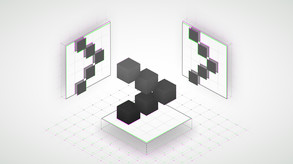
.projekt est un [i]puzzle game[/i] ingénieux, invitant le joueur à recomposer des formes à base de cubes, en fonction de leurs ombres projetées de part et d'autre d'un plan isométrique. Sa patte graphique est épurée, et son concept est aussi simple que sa maniabilité est évidente - tout se fait à la souris. Initialement proposé avec 60 niveaux, le jeu en comprend aujourd'hui le double, ce qui justifie encore mieux son tarif, et devrait vous occuper quatre heures environ. Afin de pimenter la progression, vous devrez résoudre des niveaux en visant un nombre minimal ou maximal de cubes utilisés, ou bien en optant pour un picross. Ces défis brisent la monotonie et sont nécessaires pour l'obtention de tous les succès (notez que chacune des trois approches requiert 60 niveaux ainsi effectués et non les 120 que comporte désormais le jeu). On regrettera : - Le plein écran est imposé, - La musique est indissociable des sons du jeu, - L'Azerty n'est pas pris en charge pour la rotation du plateau, - Il faut impérativement positionner d'abord des cubes au sol avant de les retirer pour faire léviter un autre cube, - À moins de quitter le niveau, impossible de revenir en mode normal après avoir activé le mode picross.
[b]6/10[/b] A logic puzzle inspired by a popular architecture exercise and nonograms, build 3D shapes that cast the two target shadows on the walls. [b]What is it:[/b] Given shadow projections on two walls, you must fill in the 5x5x5 3D grid with cubes to make a shape that would cast those two shadows. Click on the ground or on one of the faces of the already placed shapes to add a new cube, or right click to remove one of the existing cubes. If you need to, you can turn the grid around. https://steamcommunity.com/sharedfiles/filedetails/?id=3565815146 Given that there are many possible 3D shapes that would cast the required shadows, this is an easier game than regular nonograms or other logic puzzles with a single solution and rigid deductions. It is still fun and a little challenging to find the right shapes though, and for a harder challenge, each level also requires you to find the shapes that satisfy one of three secondary requirements: uses the fewest cubes, the most cubes, or each line uses a specific number of cubes, like a simplified 3D nonogram. https://steamcommunity.com/sharedfiles/filedetails/?id=3565811750 It’s a simple logic game, ported from mobiles, so there isn't much else to say about it. There are simple strategies to quickly solve the challenges, so after you learn them, solving the levels is just following the simple steps without much thinking. [b]How hard is it:[/b] Easy, ★☆☆☆☆. [b]How long is it:[/b] 120 levels, each with 3 challenges that usually are mutually exclusive, 4-8 hours, must be played in order. https://steamcommunity.com/sharedfiles/filedetails/?id=3565810918 [b]Level design:[/b] Not much design, while a few make interesting shapes, most of them feel random. A bit repetitive, but it’s OK for a little relaxing, mindless puzzle solving. [b]Quality:[/b] OK for a mobile port of a simple game. A good [url=https://steamcommunity.com/sharedfiles/filedetails/?id=3565810536]level select[/url] showing which challenges you still need to solve. Mouse only controls. Minimal [url=https://steamcommunity.com/sharedfiles/filedetails/?id=3565810202]settings[/url], just mute and dark mode toggle. Progress achievements, no cloud saving. Small, fast and responsive. [b]Worth the price:[/b] Yes, though it’s half as cheap on mobiles. [b]Most positive aspect for me:[/b] A simple, relaxing game. [b]Most negative aspect for me:[/b] Too repetitive. [b]What would make it better:[/b] Custom level editor and workshop support. Bigger levels. More interesting levels. Cloud saving. Keyboard and controller support. More settings. Progress reset, multiple save slots. [quote]For more puzzle game reviews, news and everything puzzle-related, follow [url=https://store.steampowered.com/curator/25928931-Puzzle-Lovers/]Puzzle Lovers[/url] and check out our [url=http://steamcommunity.com/groups/puzzlelovers]Steam group[/url].[/quote]
I'm playing Steam games in Alphabetical order, and you can watch my review here: https://youtu.be/gcZV1pUMAQk Prefer to read? .Projekt is a neat 3D logic based puzzle game that tasks you with placing cubes on a 5x5x5 grid to create two 2D shadow images when viewed from different perspectives. There are 120 puzzles to complete, with 4 different completion criteria (normal solution, minimum number of blocks, maximum number of blocks and a picross style mode), effectively making 480 puzzles in total. The controls and presentation are slick, there's an optional night mode, and the music is relaxing and calming without being too repetitive. If you enjoy a more zen, puzzle solving experience, you'll likely enjoy this, but I'd recommend picking it up on mobile devices where it is much cheaper, or waiting for it to go on sale.
.projekt is a thoughtfully designed puzzle game developed and published by Kyrylo Kuzyk that proves engaging gameplay does not require complicated systems or elaborate storytelling. Built around a single core concept involving perspective and geometric manipulation, the game challenges players to examine abstract structures from different angles in order to reveal hidden shapes. While the premise may sound simple, the execution demonstrates an impressive understanding of puzzle design, creating an experience that is both mentally stimulating and remarkably relaxing. At its heart, .projekt is a game about perception. Each puzzle presents a three-dimensional object suspended in space, and the player's task is to rotate it until its silhouette perfectly matches a specific outline. What initially appears to be a straightforward exercise quickly develops into a series of increasingly clever challenges. The game constantly asks players to rethink how they interpret shapes and spatial relationships, encouraging observation and imagination rather than quick reactions or memorization. Solving each puzzle feels less like following instructions and more like uncovering a hidden truth concealed within the object itself. One of the game's greatest strengths is the way it builds complexity without introducing unnecessary mechanics. Many puzzle titles rely on a steady stream of new rules and systems to maintain difficulty, but .projekt takes a different approach. The basic concept remains unchanged throughout the entire experience, yet the puzzles become progressively more intricate because the shapes themselves become harder to interpret. This design philosophy keeps the learning process smooth while allowing the challenge to evolve naturally. Players are constantly improving their understanding of the game's logic without ever feeling overwhelmed by new mechanics. The pacing is particularly impressive. Early puzzles are accessible and easy to understand, allowing newcomers to grasp the fundamental concept within minutes. As players progress, the game gradually introduces more elaborate structures that require greater concentration and spatial awareness. The increase in difficulty feels organic, ensuring that each completed puzzle provides a satisfying sense of achievement. Rarely does the game become frustrating because solutions always feel attainable once the correct perspective is discovered. The satisfaction derived from solving puzzles is one of the title's most rewarding qualities. Every challenge culminates in a moment of clarity when a seemingly random structure suddenly aligns to reveal the required shape. These moments are consistently enjoyable because they stem from genuine understanding rather than luck. The game rewards patience and observation, making success feel meaningful without resorting to artificial difficulty or obscure solutions. Visually, .projekt embraces minimalism in a way that perfectly complements its gameplay. The environments are clean, uncluttered, and free from distractions, allowing players to focus entirely on the puzzles before them. Geometric forms, subtle lighting, and elegant design choices create an atmosphere that feels modern and timeless at the same time. The minimalist presentation is not merely an artistic preference but a practical decision that enhances readability and ensures that every puzzle remains easy to interpret. Animation quality further contributes to the polished feel of the experience. Rotations are smooth and responsive, making it easy to examine structures from every possible angle. Small visual effects accompany successful solutions, providing satisfying feedback without becoming excessive. These subtle touches demonstrate the attention to detail that characterizes the game's overall design philosophy. The audio presentation deserves recognition as well. A calm ambient soundtrack accompanies the puzzles, creating a peaceful environment that encourages thoughtful exploration. Rather than increasing pressure through dramatic music or countdown timers, the game allows players to approach challenges at their own pace. This relaxed atmosphere transforms the experience into something almost meditative, making it particularly appealing to players who enjoy solving puzzles in a stress-free environment. Accessibility is another area where .projekt excels. The controls are intuitive, the objectives are immediately understandable, and there are no unnecessary barriers preventing players from engaging with the puzzles. At the same time, the game provides enough depth to keep experienced puzzle enthusiasts invested. This balance between accessibility and challenge broadens its appeal without compromising the quality of its design. One of the most refreshing aspects of the game is its complete confidence in simplicity. There are no intrusive progression systems, competitive leaderboards, or artificial incentives designed to prolong playtime. The game relies entirely on the strength of its puzzles to maintain engagement. This approach feels increasingly rare and allows the experience to remain focused on what truly matters: the joy of solving well-crafted challenges. Its primary limitation is that the gameplay revolves entirely around a single idea. Players who are not interested in spatial reasoning or abstract puzzle solving may find the experience repetitive over extended sessions. There is also no narrative component to provide additional motivation. However, these elements are clearly intentional. The game is designed as a pure puzzle experience, and it succeeds precisely because it remains committed to that vision. Ultimately, .projekt is an excellent example of how elegant design can produce lasting enjoyment. Its clever perspective-based puzzles, refined presentation, soothing atmosphere, and consistently rewarding progression combine to create an experience that feels both challenging and relaxing. By focusing entirely on a strong central mechanic and executing it with confidence, the game delivers one of the most satisfying minimalist puzzle experiences available. It is a title that respects the player's intelligence and rewards curiosity, making it easy to recommend to anyone who appreciates thoughtful puzzle design. Rating: 8/10
5×5×5マスの立方体の中に横2面の図に合うように立方体を配置していくパズルゲーム。 同じステージの中でも最小の個数、最大の個数、ピクロスの3種類があり、ステージは120個あるのでそれなりにボリュームを感じます。 音も良いし、デザインもおしゃれでとても良いので、ゲーム自体だけでなく聴覚的にも視覚的にも癒されます。 落ち着いてのんびりプレイするのにおすすめ。
创意尚可,设计了用最少方块构成三视图对应图形、用最多方块构成三视图对应图形、用标注了方块数量的三视图还原对应图形这三种模式,这一点是值得肯定的。同时关卡选择页面也用方块堆积出对应关卡的数字,也是用了一些心思的,这点也算是个优点。 但是问题也很多,总体上仍然值得差评。一是视角固定 45 度,45 度视角视觉上虽然很对称,但是并不直观,会造成方块重叠的观感,增加了不必要的难度;二是配色单一,游戏内大面积使用黑白配色,给人枯燥之感,如果能添加一些其它颜色会有很好的提升;三是不支持云存档,我之前玩的进度在新设备上全都消失还得从头再来;四是定价略高,原价 22 元性价比低,如果提高游戏体验或是降低定价也许还值得,不然不要原价购买。
Nice
A decent block-stacking game with nice presentation, if slightly hampered by limited camera movement. Mixture of play styles, from simple minimum versus maximum number of cubes, to more complicated picross modes, across a fairly large amount of puzzles.
其实这个游戏一开始感觉还是挺有意思的,创意不错,可惜一旦掌握了技巧,一层一层来,解谜过程就变得机械化公式化了。如果关数少一些我就会给好评了,但关数太多,反反复复玩非常相似的内容很没意思,只是为了全成就断断续续玩了两个多月。
Related
Related
Trends
Modeled estimate over time, reconstructed from Steam's monthly review histogram.
Momentum
Pace estimated from the game's recent review growth (our daily snapshots) at its own sales-per-review ratio — a momentum signal, not booked sales.
Audience
Estimated from the language of this game's reviews — a proxy for where players are, not official Steam demographics.
Related
| WarForwards | $11.7K | 57 | 77% | $9.99 |
| DemonsTier | $11.7K | 57 | 81% | $9.99 |
| I will obey you, Mistress | $11.7K | 67 | 31% | $5.99 |
| Skibidi Toilet Skibidi Boom | $11.7K | 85 | 71% | $5.99 |
| Christmas Mutilator | $11.7K | 85 | 64% | $5.99 |
| Toby: The Secret Mine | $11.7K | 740 | 70% | $0.99 |