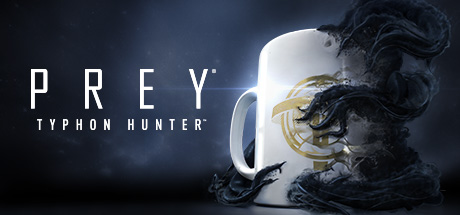
Prey: Typhon Hunter is an unusual and polarizing multiplayer spin-off that reimagines the unsettling ideas of Prey’s single-player campaign into a tense game of deception and deduction. Developed by Arkane Studios and published by Bethesda Softworks, it takes one of the most memorable mechanics from the original game—the Mimics’ ability to disguise themselves as everyday objects—and builds an entire competitive experience around it. The result is something far removed from the immersive-sim roots that defined Prey, instead offering short, high-pressure matches that live or die on player psychology, observation, and misdirection.
The central structure of Typhon Hunter is asymmetrical, pitting a single Morgan Yu against a small group of Mimics. The Mimic players begin each round with a brief window to scatter throughout a familiar Talos I environment, choosing objects to disguise themselves as and positioning strategically before Morgan enters the map. Once the hunt begins, the entire match becomes a cat-and-mouse scenario where every chair, cup, or piece of furniture could be a threat. Mimics win by surviving until time runs out, while Morgan must track down and eliminate every hidden alien before the clock expires. This simple setup creates an immediate tension that thrives on paranoia and second-guessing rather than raw mechanical skill.
Playing as a Mimic emphasizes patience, restraint, and timing. Remaining perfectly still is often safer than movement, but staying in one place for too long can also invite suspicion. Mimics must constantly decide whether to blend in completely or take calculated risks by repositioning, ambushing Morgan, or distracting them with noise and movement. The thrill comes from watching Morgan circle a room repeatedly, inspecting objects just inches away, never quite sure if they’ve found you. When Mimics do choose to attack, it’s usually desperate and chaotic, turning the hunted into the hunter for a brief, violent moment.
Morgan’s role, by contrast, is defined by pressure and limited resources. Armed with basic weapons and a handful of tools, Morgan must methodically sweep rooms, listen carefully, and rely on intuition as much as logic. The game rewards attention to environmental detail—misaligned objects, items out of place, or subtle movements can all betray a Mimic’s presence. Power-ups such as scanners that briefly reveal enemies provide moments of relief, but they are scarce, forcing Morgan to commit to decisions rather than relying on constant information. Success often comes from pattern recognition and mind games rather than brute force.
The maps themselves reuse familiar spaces from Prey’s single-player campaign, which lends the mode a sense of authenticity and atmosphere. Talos I’s offices, corridors, and laboratories feel claustrophobic and tense in a multiplayer context, reinforcing the sense that danger could be lurking anywhere. However, the limited number of maps means repetition sets in quickly, especially for players who spend extended time in the mode. Over time, experienced players begin to learn optimal hiding spots and search patterns, which can reduce unpredictability and tilt matches heavily in favor of those with more familiarity.
Typhon Hunter’s pacing is uneven by design. Some matches end abruptly when Morgan quickly finds a cluster of Mimics, while others drag on as a single well-hidden Mimic forces Morgan into an increasingly desperate search. This unpredictability can be exhilarating when playing with friends or a coordinated group, but it can also feel frustrating in public matches where communication and experience levels vary widely. The balance between Morgan and the Mimics is delicate, and small differences in player skill can dramatically skew outcomes.
Outside of the core competitive mode, Typhon Hunter also includes additional single-player and VR-focused content that leans into escape-room-style puzzles set within the Prey universe. While these modes provide some extra value and thematic continuity, they feel largely disconnected from the main multiplayer experience. Their inclusion reinforces the sense that Typhon Hunter is more of an experimental bundle than a focused expansion, combining several ideas under one umbrella without fully refining any single one.
Community reception reflects this experimental nature. Players who enjoy asymmetrical multiplayer and social deception often find Typhon Hunter entertaining in short bursts, especially with friends who embrace its mind-game-heavy design. Others criticize it for lacking depth, long-term progression, or the systemic complexity that defines Arkane’s best work. The contrast between expectations shaped by Prey’s rich single-player campaign and the lean, arcade-like structure of Typhon Hunter has contributed to its divisive reputation.
Ultimately, Prey: Typhon Hunter is best understood as a bold side experiment rather than a natural extension of Prey’s core experience. It captures the spirit of paranoia and environmental distrust that made Mimics so memorable, translating that feeling into competitive multiplayer with mixed success. For players drawn to short, tense matches built on deception and psychological play, it can deliver genuinely memorable moments. For those hoping for the depth, narrative weight, and systemic freedom of Prey’s main campaign, it may feel like an intriguing idea that never quite reaches its full potential.
Rating: 5/10