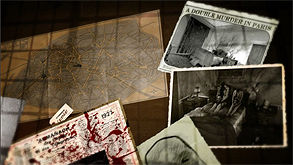
Post Mortem, developed by MC2 and published by Microids, is a 2002 noir-inspired point-and-click adventure that stands as both a fascinating artifact of its era and a spiritual predecessor to the better-known Still Life series. Set in 1920s Paris, the game introduces players to Gus MacPherson, a former New York detective turned painter who has fled the chaos of his old life for the solitude of art. His peaceful existence is abruptly interrupted when a wealthy woman named Sophia Blake hires him to investigate the brutal murder of her sister and brother-in-law in their hotel room. What begins as a seemingly straightforward detective case quickly spirals into a dark labyrinth of occult mysteries, psychological intrigue, and hidden conspiracies that blur the line between reason and madness.
The game’s opening moments establish a strong sense of atmosphere that carries through much of the experience. Paris is rendered with a painterly touch, filled with the kind of gloomy lighting and old-world charm that evoke the feeling of classic noir cinema. The player navigates through 360-degree panoramic environments, each scene frozen in time yet filled with meticulous detail. The Hôtel Orphée, the morgue, the artist’s studio, and the shadowy backstreets all serve as extensions of the game’s brooding tone. This visual presentation was impressive for its time, rivaling contemporary adventure titles like Syberia in terms of detail and environmental immersion. Even today, the hand-crafted backgrounds maintain their allure, capturing a unique blend of romantic decay and existential dread that defines the story’s mood. The sound design reinforces this atmosphere with haunting ambient tracks, echoing footsteps, and a subdued orchestral score that underlines the tension without overwhelming it.
Gameplay in Post Mortem follows the traditions of the early 2000s adventure genre, where exploration, dialogue, and puzzle-solving form the backbone of progression. Players click through environments, gather evidence, question suspects, and assemble clues to reconstruct the crime. In theory, the investigation is open-ended, allowing multiple approaches to certain problems—whether through logic, charm, or brute persistence. This ambition, however, is undercut by uneven execution. Some puzzles offer clever deductive reasoning, while others rely on pixel-hunting or obscure item combinations that strain logic. The interface, while intuitive at first glance, can feel sluggish due to slow camera transitions and a lack of feedback when interacting with objects. Yet when the game’s design works as intended, it captures the slow, methodical satisfaction of unraveling a mystery piece by piece.
What makes Post Mortem particularly memorable is its willingness to venture beyond mere detective work into surreal and metaphysical territory. As the investigation deepens, Gus begins to experience strange visions—images of death, art, and ritual that blur the boundary between the natural and the supernatural. The narrative gradually morphs from a grounded whodunit into an exploration of obsession, guilt, and the human fascination with immortality. The murder case becomes a lens through which the game examines broader questions about morality and the corruption of faith. The story’s second half introduces elements of the occult and secret societies, drawing on mythic and esoteric symbolism reminiscent of the Knights Templar and Renaissance mysticism. While these themes add depth and intrigue, they also make the narrative feel disjointed at times, with tonal shifts that can catch the player off guard. Still, the ambition of its storytelling remains commendable, especially for an adventure game of its time.
The weakest aspects of Post Mortem are its dialogue and localization. The game was originally written in French and translated into English with inconsistent results. Many lines sound awkward or grammatically incorrect, which detracts from the immersion and sometimes confuses key plot points. The voice acting suffers from similar issues, ranging from wooden to unintentionally comical. Conversations often lack emotional cadence, and some lines are delivered in a flat monotone that undermines otherwise powerful moments. Compounding this is a dialogue tree system that occasionally presents out-of-sequence questions or repeats previously answered topics, creating a sense of disconnection between the player’s actions and the narrative flow. These flaws make the story harder to follow than it should be, though patient players can still appreciate the underlying mystery.
Despite its shortcomings, Post Mortem possesses a distinctive identity that separates it from many other adventure games of its time. Its noir aesthetic, psychological undertones, and atmospheric world-building create an experience that feels both eerie and personal. The game’s pacing rewards methodical players who enjoy sifting through dialogue and exploring every corner of a mystery. Those who can tolerate the dated mechanics and imperfect translation will find a story that, while messy, is undeniably compelling. Its blend of detective work and supernatural overtones laid the groundwork for Microids’ later success with Still Life and Still Life 2, which expanded and refined many of its ideas.
Revisiting Post Mortem today reveals a game that is imperfect but fascinating—a flawed gem from an era when adventure developers still experimented with narrative structure and philosophical themes. It is not the most polished or accessible mystery game, but it is one filled with ambition, mood, and atmosphere. Its rich visual design, haunting premise, and willingness to challenge expectations make it worth exploring for fans of classic adventure storytelling. For players who can look past its technical limitations and occasionally clumsy dialogue, Post Mortem offers an absorbing descent into the darkness of human imagination and the secrets that lie beneath the surface of art and murder alike.
Rating: 6/10