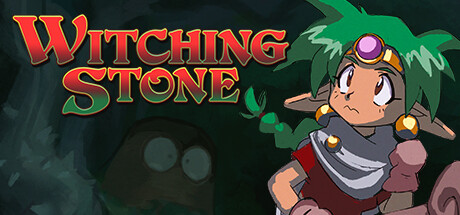
Witching Stone is a puzzle game matched with a deckbuilder! Customise your spellbook and weave spells with coloured stones.
Modeled estimate, not a reported figure. How we estimate →
Prices
The United States storefront in every case, so this compares stores and not countries.
Discounts
Every price cut of more than 20% we have observed, in each market that quoted one, with this game's chart position on either side of it. These are episodes, not a model: a sale is one event, and one event cannot tell you what the next one will do.
Reviews, worldwide (the counter carries no country): 0/day in the week to Sep 8 → 0/day in the week after.
For scale, across Steam · Top Sellers · Brazil over the last 30 days: the 25 chart moves that followed a price cut of more than 20% went a median of 10 places towards #1, and the 2,413 moves with no price cut behind them went 2 away. One store, one chart, one country — it is the only place we have enough observations to say even that.
Prices outside the United States have been collected since 6 August 2026 and chart positions since 19 July 2026, so a cut older than that has no market to compare and a market that joined later has no history yet. Nothing here is converted between currencies.
About
Genres
Sums Steam only; Nintendo publishes no volume signal, so the true total is higher by an unknown amount.
| Store | Price | Audience | Score | Chart | Est. revenue |
|---|---|---|---|---|---|
SteamYou are here | $13.99 | 175reviews | 93% | — | $71K |
| $13.99 | — | — | — | not modelled |
Matched by title — a reused name can pair the wrong games. * is a critic aggregate. Prices and positions are each store's United States storefront; Epic charts worldwide. Audience and Score too, except Steam's, which is worldwide.
Engagement
Reviews
Themes across 41 recent reviews and how positive each mention is. A keyword signal, not full sentiment analysis.
Reviews
This game is so charming and good, it feels like a classic. It's so easy on the eyes and ears, and is so satisfying when your build is working for you. I absolutely recommend this game and would love a sequel
A great puzzle game with light RPG and Rogue-like elements. Truly unique method of unlocking hidden characters and story elements.
This has turned into one of my favorite roguelike games. It has so much personality, and there isn't another game that plays quite the same way. It's cool how much freedom you have - you don't have to pay any resources to change or remove things from your build, you can backtrack on the map, anything you want. And the 90's artstyle is great.
Media

Related
Related
Price dynamics, follower growth, revenue and sales trajectories with interactive tooltips
This and every other Pro feature is free until October 20, 2026. A free account is all it takes.
Stats
All-time low is the lowest price we've recorded for this game since we started tracking it.
Languages: English, Japanese, Simplified Chinese
Hours played at review time, across 41 reviews with recorded playtime.
positive critical· bar length = how often the theme comes up
I accidentally missed the sale (and the itch.io sale) and paid full price, but I have no regret. Almost skipped this gem thinking it was a match 3 game, but that is not the case. Very fun. Very addictive. Puzzle and wizard magic =w=
This is a fresh take on the roguelite genre. Instead of a deck, you have a spellbook. You start with 2 spells and can go up to 6. They all start as available - no shuffling and drawing cards required. There is a gem grid that corresponds to the costs required to cast the spells. Connect the gems in the right sequences, and you cast the spell. The tutorial is pretty good, although there are a lot of mechanics at play, and it's sometimes difficult to figure out what is going to happen. The tooltips are quite good, but still sometimes it's hard to understand who (you or your opponent) will be affected by a spell. As you learn the mechanics on both sides, the gameplay becomes smoother. The spells light up when you're going to cast them, and the gem sequences also appear below your character. The placement is weird because you're staring at your spellbook, not looking below your character, so it's not easily noticed. Might be better placed somewhere inside the spellbook. As you click on the gems, it "highlights" the path, but the colors are sometimes difficult to differentiate from the regular board (the unselected gems). You can undo your selection one gem at a time with the right mouse button, which is very helpful. There are 6 characters. The first one is probably the easiest to play. The next two are easy to unlock. The next one is a bit more difficult to unlock. The last two are crazy difficult to unlock! I could see why some players would stop after 3 or 4 characters. I like that they all have different play styles and dialogue. I'm unsure if they have "class spells" (spells specific to the character), but I suspect they do, and that adds a nice bit of variety as well. There's a lot of content here! You'll be hooked for a while. There are also badges, which "upgrade" your spells. They're pretty good, but you can only equip a certain number (default 2) to each spell. You can unlock modifiers, which let you make the game easier or harder. You need to play the harder modifiers (think ascension mode) if you want the full experience (no spoilers here). I like that there are in-game "quests", which are mostly different from the Steam achievements, although there is some overlap. It lets you unlock new badges and starting decks for the characters. I think this is a great meta-game mechanic. As for balance, I found some of the characters very difficult to play. You need to have a good mix of attack and defense spells. Sometimes, there are no defensive spells that give you block or heal you, and then you just lose. I'm not sure if that's related to the character, or just RNG. Ok, I will try again! But it's not a great feeling. There are also some spells that I think, "Why would I ever use this?". Maybe I'm just missing something. There are some modifiers that are like, "How would this ever be fun?". Overall, the starting / act 1 spells are rather weak, and they get better the farther into the run you go, so in that regard, it is well balanced. I like the maps being open such that you can go back to nodes after exploring further (but not once you proceed to the next act/map). For example, you might be given a choice of spell, but there's also a shop coming up and want to explore that first - you can! You can also save rest sites for when you need them, which is awesome. I like the blessings - all good choices which make a big impact on your gameplay. The core gameplay loop is solid. Aside from sometimes being very confused about what happened (no history tiles), the game is great and pretty addictive. I think the design is spot on, even if some of the characters are more frustrating than others. Overall excellent, and would definitely recommend!
Hate not to like it, but it just misses the mark for the genre. Builds and developing them feels extremely sluggish, characters are vastly different from the start, up to the point where the second character is borderline unplayable if you don't get lucky on the first map since she starts with 0 defensive moves. Altogether, it seems extremely underbaked and I hate to say that, because the game certainly does have its charms and you can do interesting things with some of the badges, which essentially modify your spells. But again, some are like absolutely no brainers to take if you get them and others feel like they provide you with a minor advantage for massive drawbacks. I see the honest attempt to make something a bit different, which is commendable in the times of "formula X for the win", I don't see, however, the actual attempt to make the game good. Not sure if that comes from a lack of experience or unwillingness, but the base mechanics are solid and it should not be hard to go from there, but the top layer, which is where player agency is involved, feels like a bad attempt of a minimalistic card battler. Add to that, that this game is much RNG heavier than an actual card battler, it never feels good if you die because you get a rotten board right at the final boss when you most need it, while you went 95% of the game with that setup. Combined with extremely lazy boss/enemy mechanics (only boss with random second phase, while also the only boss that has a "max dmg/turn" shield in both phases), it feels consistently like the devs have no idea how to balance things or how to make the game interesting. Some enemies just literally get invul buffs that you need 2-3 turns to realistically clear off and that's just stupid and furthers the impression nobody actually tested the game. And to round it off, some things are just incredibly broken or unclear and either do not work as described or there seems to be a language barrier. In either case, not great for a 10$ game at this point. For that price, I at least expect that certain things are being correctly tracked in the game. "Beat the game with 2 characters to unlock (progress 0/2)", although I beat the game with a character.... stuff like that. It's like playing DnD with a stubborn 13 year old as a DM, that realised your character smokes everything in 95% of all cases, so they specifically craft a final boss that hard counters everything you do with zero chance of preparation or adaption on your side. That's the biggest gripe, once you are in battle, all things are set in stone, just luck involved. No way to adapt to new challenges or abilities. Doesn't feel good, because you essentially play a long fight for no other reason to lose, since you know you're done because the boss and the character's abilities are hard counters. There is a way to "view" the boss beforehand, but it doesn't tell you what they can actually do. So what's the point here? Altogether, it is a cute game, it certainly has a bit of novelty to it, but altogether, I fail to see any real attempt to fix the multiple issues this game has with balance, adaptability, overrealiance on RNG and very particular mechanics, boss design and character design. Hate not to love it, here's to hoping the devs work on it in the future, which is when I gladly will give it another spin. That being said: There is a demo, just don't think that there is more to it than there is in the demo. That's it, really. Sure, there are more levels, but they literally play the same. But if you like the demo, chances are good you enjoy this too. Would love to give it a ~, but steam forces me to give a thumbs down, at least for now. Positively, I cannot stress enough the eye for detail. Your spellbook is in the lower left corner and you immediately see defensive and offensive spells as they are denoted in different colours, even in the icon, without needing to open the book. It's details like that that make me hope these devs really do more and just get some experience in the market and genres they like to do, because, damn, there is potential here. A lot of cryptic stuff, badly worded items which is not clear how they work, e.g. "era" So please, do not think of me being harsh for no reason. You're doing good. Keep at it! Edit for the dev: Thanks for proving my point while focusing on some throwaway phrases that clearly go over your head while missing the essential part entirely. If you don't want to hear that the balancing of your battles is ♥♥♥♥, maybe work on that instead of pretending that the review "misses what dnd is", because fighting, like in your game *is* a huge part of the game and no attempt to focus on the collaborative RPG aspect will take away from the fact that the battles of the analogy are sh*t, like in your game. Not sure if there is a language barrier, but apparently you are unable to even understand the grievance. The adverserial element is part of YOUR game, genius, because that is how the game works, and it plays like YOU, the DM, does not understand how DnD works and thinks it's about "beating the party" that you let get too powerful, so you have to make your bosses frustrating by countering everything and every one. Not that hard to understand... Your answer shows that you are either not very good at reading or just don't want to get the point. So don't tell me about contingencies when the game barely gives you anything to work with in some instances, because you keep avoiding the entire issue that the game is vastly unbalanced, but then come here and go "lol, player dumb". Hard to build contingencies if the game fairly often gives you just enough ressources to make one attack strong enough, because nobody wants to fight a 60HP++ boss with two phases and hit them for 3 dmg each round just to have a contingency in case they are so horribly designed that you can barely do anything else with the other attack that you built up. So GTFO with that BS argument. For somebody unable to string together a working balance or understand the core issues, you start early taking a page from certain triple A CEOs when it comes to defending it. About the bosses: Yeah, like with items, the game does a piss poor job of giving any player feedback. It ends after the 3rd boss, not telling you anything about a 4th boss. Some items are completely unclear as well. You are not being cute or interesting, your game is obtuse and sometimes appears unable to string together a coherent sentence or give info. But sure, that is the player's fault too, I guess, because with you everything is. And contingencies are hard to build if the boss is random and can literally hard counter everything, so again, you balance is ♥♥♥♥♥♥♥ BS. The Problem is still RNG>>player agency. But please, by all means, think what you want, at least I don't feel quite as bad giving this game a bad review, seeing how far you are up your own ass. Also: healing is healing. It's not a defensive move, lol. Maybe start there, or play actually good card battlers. You seem to struggle with the fact that you put too much ♥♥♥♥ into your game with everything being half baked. Maybe start with just block and then go from there. Which I wrote above. Nice answer, really shows the immense lack of self awareness to actually pick up any criticism and go "no u". Your answer is more revealing than any negative review ever could be. Good job! The fact that you literally have negative reviews with much more upvotes, criticising the same issues, only shows that this is your ego speaking. Maybe actually read and think about it. Instead of getting worked up about one of the LEAST helpful reviews, take the issues that are talked about in all of them. Like this, you just appear as a cranky petulant child that pretends to be smarter than everyone at the table when it just shat itself while trying to convince everyone it didn't.
I had a chance to play this game in an indie game expo, and IT WAS A BLAST! If you like Into the Breach kind of tactical game, you would like this game as well.
It's super satisfying when you get a hang of it! Pretty much every spell or badge that i initially decided to avoid, found its use in some build. Only sometimes you gotta remember what your spells did if their text doesn't fit in the box.
This is a great and underrated game. I found character unlocks and secrets such as this to be extremely fun, overall this is a great puzzle rpg and i wish there were more games like this. This game is insanely fun and i would recommend it to any rpg puzzle enjoyer. I also hope one day we will get something alike to Witching Stone 2. Props to the developers!
Witching Stone, developed and published by Alexander Taylor, is an inventive blend of roguelite deckbuilding and spatial puzzle mechanics that delivers a fresh take on both genres. At its core, the game challenges players to cast spells by drawing paths through colored stones on a grid, with each combination activating a different effect based on your current build. What makes the game stand out is how it transforms what might seem like a basic match-based mechanic into a thoughtful, strategic system that rewards planning, experimentation, and adaptability. It’s a game that constantly pushes you to think several steps ahead while staying reactive to random elements that define roguelite gameplay. Players begin with a modest spellbook and a simple character, but as the run progresses, they accumulate new spells, enchantments, and passive bonuses that redefine their approach. The game isn’t just about stringing together the longest or most complex path — it's about finding synergy between your growing spell set and the dynamic board state. As new enemies appear with varied patterns, resistances, and disruptive abilities, you’re forced to adjust not only your pathing strategies but also your entire build philosophy. This system gives Witching Stone a satisfying learning curve, where each run brings new insights into optimal routes, spell synergy, and strategic risk-taking. The structure of the game is familiar to fans of roguelites. You traverse procedurally generated maps, choosing between battles, shops, rest points, events, and bosses. The tension lies in those decisions: do you push for a difficult elite fight for better rewards, or take a safer route and miss out on potential power spikes? These choices echo through each act, with long-term planning becoming essential for success. Boss battles punctuate each zone and serve as real skill checks — you can’t win by brute force alone; you must understand your tools and how to extract maximum value from your limited resources. Each failure feels like a lesson rather than a punishment, encouraging you to go back in with a revised strategy and greater knowledge. Visually, the game strikes a great balance between clarity and charm. The grid-based combat board is colorful but never cluttered, making it easy to track stone types and potential moves. Spell animations and effects are smooth, and each character has a unique design that adds personality without overwhelming the screen. Outside of battle, the UI is intuitive and responsive, with enough flavor in the menus and map designs to give the game a distinct identity. Music and sound design complement the pacing well — ambient tunes during exploration and more intense tracks during boss fights create an immersive and appropriately magical atmosphere. One of the game’s standout features is its character and modifier system. As you progress and complete objectives, you unlock new characters that dramatically shift your approach to combat. Each one comes with unique traits, opening up different strategies and spell interactions. Additionally, modifiers — which can be toggled before a run — add another layer of variety and challenge. Some increase enemy health, others limit your spell pool, or add environmental hazards that alter the grid. These elements greatly enhance replayability, allowing players to customize their experience and test their mastery in increasingly demanding scenarios. However, the game does have a few areas where it might not satisfy every kind of player. Because of its puzzle-centric core, turns can take a while — especially in the late game where builds become more complex and the cost of a misstep is higher. For those who prefer fast-paced or reactive gameplay, this methodical pace may feel like a slowdown. There’s also a learning curve tied to understanding how spells interact, and while the game tries to be intuitive, some effects and modifiers aren’t always clearly explained, which could be frustrating in high-stakes situations. The occasional opacity in mechanics might put off players who value complete transparency in combat systems. Despite these minor drawbacks, Witching Stone is a remarkable achievement, especially considering its indie origins. It successfully merges the addictive experimentation of deckbuilders with the cerebral satisfaction of puzzle-solving, creating a hybrid that feels fresh and thoughtfully crafted. The progression feels rewarding without being grindy, and every run carries the potential for both surprising victories and humbling defeats. Most importantly, it’s a game that respects the player’s intelligence — it challenges without hand-holding, but never feels unfair or deliberately obtuse. In the end, Witching Stone stands as a polished, creative, and deeply satisfying entry in the roguelite genre. It’s ideal for players who enjoy careful planning, theorycrafting, and adapting to ever-changing circumstances. While its deliberate pace and depth may not suit everyone, those who give it the time and attention it asks for will find it rich with strategic potential and long-term enjoyment. It’s not just a game about drawing lines on a board — it’s about forging a path through chaos, one stone at a time. Rating: 8/10
Selling now
See how fast this game is selling right now — estimated copies and revenue per day from recent review growth.
Players by region
Where this game's players are, estimated from review languages.
Related
| Game | Estimated lifetime revenue | Reviews | Review score | Price |
|---|---|---|---|---|
| $71K | 449 | 57% | $7.99 | |
| $71K | 266 | 88% | $14.99 | |
| $71K | 118 | 64% | $29.99 | |
| $71K | 385 | 96% | $9.99 | |
| $71K | 188 | 99% | $14.99 | |
| $71K | 137 | 78% | $19.99 |
Related
| Game | Estimated lifetime revenue | Reviews | Review score | Price |
|---|---|---|---|---|
| — | 0 | — | — | |
| $4.5K | 28 | 68% | $4.99 | |
| $3K | 33 | 100% | $3.99 | |
| — | 0 | — | — | |
| — | 0 | — | — | |
| $2.8M | 4.4K | 97% | $24.99 |