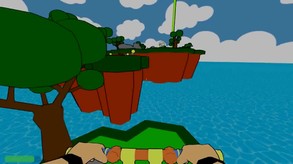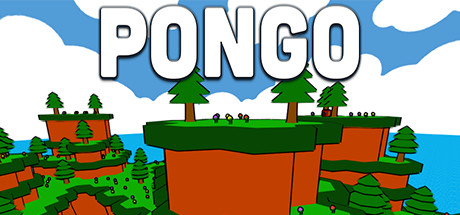
Pongo is a 3D action platformer that combines pogo stick jumps with strategic FPS combat. Grab your Pongo, a tool usable as either a pogo stick or a gun, and traverse the vast islands of Flubber.
Modeled estimate, not a reported figure. How we estimate →
Media

About
Stats
All-time low is the lowest price we've recorded for this game since we started tracking it.
Languages: English
Engagement
Hours played at review time, across 40 reviews with recorded playtime.
Reviews
Themes across 40 recent reviews and how positive each mention is. A keyword signal, not full sentiment analysis.
positive critical· bar length = how often the theme comes up
Reviews
Игра не понравилась от слова "совсем". Управление лёгкое, отзывчивое, но вот прыжок иногда не срабатывает, особенно на краю платформы. Ещё не понравилось то, что прыжок заряжаемый, причём при дальнейшем зажатии клавиши заряд стремительно понижается.
В игре вирусы Как это вообще попало в стим и не удалили?
It just doesn't feel fun. It really feels like the developer focused on making a more simplistic, yet tight-knit game. It would have been great if the platforms were a bit closer together. Sadly, the jumping mechanic feels kinda... rough, rather than enjoyable.
oof
ебучие вирусы
game mechanics are just not the best
Pongno.
Pongo, developed by Drixy Games and published by Plug In Digital, is a colorful indie platformer that builds its identity around a single unusual mechanic: a pogo stick that serves as both your means of movement and your primary weapon. Framed in a lighthearted, cartoon-inspired 3D world, the game blends first-person traversal, arcade-style combat, and precision platforming into a compact experience that feels experimental and nostalgic at the same time. While its concept is inventive and immediately eye-catching, the execution delivers a mix of charm and inconsistency that defines the overall experience. The central mechanic is the “Pongo” itself, a pogo-stick-like device that allows players to bounce across floating islands suspended over open water. Every movement is driven by rhythmic jumps, and mastering the timing and momentum of these bounces is essential for survival. Unlike traditional platformers where movement is smooth and continuous, Pongo’s traversal is built around controlled bursts of vertical motion. This creates a distinct pacing: every leap must be calculated, and mistimed landings can easily send the player plunging into the ocean below. The sense of risk attached to each jump adds tension, particularly in later stages where platforms are spaced farther apart and hazards are more aggressive. Combat is intertwined with traversal, as the pogo stick doubles as a ranged weapon. Players can fire projectiles while bouncing, engaging enemies scattered throughout the levels. This combination of movement and shooting gives the game a hybrid feel, blending first-person action with platforming challenges. However, because aiming and bouncing happen simultaneously, encounters can feel chaotic. When everything aligns, the mechanic feels fluid and satisfying. When timing or physics falter, the same system can feel unpredictable, especially during sequences that demand precision. Level design across Pongo’s numerous stages is straightforward but varied enough to maintain interest. Early levels introduce the core mechanics gently, giving players space to adjust to the bouncing rhythm. As progression continues, layouts grow more complex, with moving platforms, environmental hazards, and tighter landing zones. Certain sections introduce light puzzle elements, requiring players to use the pogo stick creatively to trigger switches or reach hidden areas. The design philosophy remains consistent: challenge the player’s control over momentum rather than overwhelm them with layered mechanics. Visually, Pongo adopts a bright and playful aesthetic reminiscent of early 3D platformers. Floating islands, simple geometry, and bold color palettes give the world a retro charm. Character and enemy designs are stylized rather than detailed, reinforcing the game’s whimsical tone. However, environmental repetition can become noticeable over extended sessions. While each level introduces new configurations, the overall thematic variety is limited, which can reduce the sense of discovery over time. The game offers multiple difficulty modes that significantly alter the experience. Easier settings provide more forgiving physics and additional lives, making progression accessible for casual players. Harder modes remove many of these safety nets, demanding precise control and near-perfect execution. In these modes, the lack of checkpoints and tight control margins can amplify frustration, especially when physics interactions feel slightly inconsistent. For players who enjoy punishing platformers, this difficulty adds replay value. For others, it may feel overly unforgiving. One of Pongo’s strengths lies in its commitment to its unique mechanic. It does not attempt to dilute the pogo-stick concept with unnecessary systems or complex narratives. Instead, it builds an entire experience around mastering one unconventional movement style. This focus gives the game a clear identity and distinguishes it from more conventional indie platformers. However, the narrow mechanical scope also limits its long-term evolution, as the core gameplay loop remains largely unchanged throughout. Overall, Pongo is an imaginative indie experiment that succeeds most when its physics and timing align perfectly with player input. Its pogo-based traversal is genuinely distinctive, offering a fresh take on 3D platforming. At the same time, mechanical roughness and environmental repetition prevent it from reaching the polish of more refined genre entries. For players seeking a quirky, movement-driven platformer with a retro-inspired aesthetic and a willingness to embrace some unpredictability, Pongo delivers a memorable and unconventional experience. Rating: 6/10
вырвиглазная графика
这游戏让我强迫症犯了,过了几关太不容易了,蓄力和冲刺的把握时机找种感觉,过了几关,有成就有卡,但是卡不容易掉落,交易市场也什么人卖
Related
Related
Trends
Modeled estimate over time, reconstructed from Steam's monthly review histogram.
Momentum
Pace estimated from the game's recent review growth (our daily snapshots) at its own sales-per-review ratio — a momentum signal, not booked sales.
Audience
Estimated from the language of this game's reviews — a proxy for where players are, not official Steam demographics.
Related
| House Flipper | $65.8M | 110.8K | 94% | $24.99 |
| Diplomacy is Not an Option | $10.5M | 12.3K | 86% | $29.99 |
| s&box | $7.4M | 9K | 59% | $19.99 |
| Project Winter | $4.3M | 19.1K | 82% | $9.99 |
Related
| Rule Your School | $8.4K | 88 | 44% | $2.99 |
| The Musketeers: Victoria's Quest | $8.4K | 62 | 65% | $3.99 |
| Bake 'n Switch | $8.4K | 86 | 81% | $4.99 |
| The Scream | $8.4K | 137 | 81% | $3.99 |
| Dark PGT | $8.4K | 468 | 84% | $4.99 |
| BOBR KURWA | $8.4K | 136 | 79% | $2.99 |