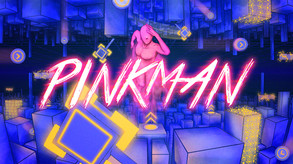
Pinkman is a fast-paced, action platformer about a lost man with pink skin and an incredible skill to fart.
Modeled estimate, not a reported figure. How we estimate →
Media
About


Stats
All-time low is the lowest price we've recorded for this game since we started tracking it.
Languages: English**languages with full audio support
Engagement
Reviews
Themes across 40 recent reviews and how positive each mention is. A keyword signal, not full sentiment analysis.
Reviews
Не плохая игра за свою цену, но если вы хотите расслабиться - то она не для вас. Я напрягал все свои извилины, а то и жопу, чтобы хоть как-то привыкнуть к управлению. Его даже поменять нельзя. А смена цветовой гаммы всего уровня после смерти - очень сильно ослепляет ночью в темноте, хоть и довольно забавная задумка. > 4-5/10 <
Pretty good game chould be more of a praticing place for platformer speedruns if you want to but honestly pretty fun game!
Gostei demais. Simples, jogabilidade boa e nível de dificuldade moderado. Muito bom!
Related
Related
Trends
Concurrent players on Steam, sampled daily since tracking started.
Hours played at review time, across 40 reviews with recorded playtime.
positive critical· bar length = how often the theme comes up
Eu nem sei o que dizer sobre esse jogo, simplesmente incrível, com o valor do mesmo, você não compra nem um salgado hoje em dia, vale a pena demais, as 1 hora e 4 minutos mais divertidas da minha vida, platinei tranquilamente, além de ter sido desenvolvido por um brasileiro.
Игра довольно легкая. Проходится на 100% 2 часа. Но игра своих маленьких денег точно стоит)
A very good game i dont have nothing more to say
Pinkman is a tightly focused, high-energy platforming experience developed and published by Viridino Studios that embraces simplicity, challenge, and offbeat humor to carve out a distinctive identity within the crowded indie platformer space. Rather than relying on narrative depth or complex systems, the game builds its appeal around precise controls, inventive level design, and a single unconventional movement mechanic that reshapes how players approach traversal. From the outset, it is clear that Pinkman is designed to test reflexes and perseverance, offering a deliberately stripped-down experience that prioritizes skill mastery above all else. The premise places players in a surreal world known as “The Mind,” guiding the pink-skinned protagonist through a sequence of handcrafted stages filled with lethal environmental hazards. There are no enemies to defeat and no story beats to follow; the challenge comes entirely from navigating obstacle-laden spaces where timing and positioning are everything. This design choice keeps the focus squarely on movement, encouraging players to learn through repetition and experimentation. Death is frequent, but respawns are quick, reinforcing a rhythm of trial, failure, and incremental improvement that becomes central to the game’s flow. The defining feature of Pinkman’s gameplay is its unusual traversal mechanic: a mid-air propulsion ability humorously framed as a fart-powered boost. While the presentation is intentionally silly, the mechanic itself is thoughtfully integrated and mechanically sound. It allows players to hover briefly, extend jumps, and correct positioning in midair, opening up a surprising amount of control once mastered. Levels are designed with this ability in mind, often requiring careful management of momentum and timing rather than simple jumping from platform to platform. What initially feels like a joke quickly reveals itself as a core skill that separates casual progress from true mastery. Level design is where Pinkman truly shines. Across its one hundred handcrafted stages, the game introduces a wide variety of hazards—missiles, spikes, saws, collapsing platforms, and more—each layered in ways that demand precision and quick decision-making. Early levels gently introduce mechanics and hazards, but difficulty ramps steadily, eventually requiring players to chain movements together flawlessly under pressure. The absence of combat or distractions ensures that every challenge feels deliberate, with success depending entirely on execution rather than chance. Visually, the game adopts a minimalist pixel-art style that emphasizes clarity and contrast. Stages are cleanly designed, ensuring that hazards and platforms remain readable even during frantic movement. A particularly distinctive touch is the rotating color palette system, which changes the game’s visual theme each time the player dies. This not only adds aesthetic variety but subtly alters the mood of repeated attempts, helping mitigate the frustration that can come with frequent failure. The visuals, while simple, are cohesive and purposeful, reinforcing the game’s arcade-inspired sensibility. Audio plays a strong supporting role in shaping the experience. The synthwave-inspired soundtrack injects energy into each run, complementing the fast-paced action and reinforcing the sense of momentum. Sound effects provide clear feedback for jumps, boosts, and hazards, helping players internalize timing and movement cues. While the audio design is not complex, it is effective, contributing to the game’s addictive rhythm without overwhelming the player. Progression in Pinkman is linear but rewarding. Each level is carefully structured, and checkpoints are placed thoughtfully to balance challenge and accessibility. For players seeking an extra test, the inclusion of a hidden hard mode that removes checkpoints entirely adds significant replay value, transforming familiar stages into endurance challenges that demand near-perfect execution. This optional difficulty layer highlights the developers’ understanding of their audience, catering both to casual players who enjoy the flow of platforming and hardcore enthusiasts who crave punishing precision. Community reception reflects the game’s focused design philosophy. Players frequently praise Pinkman for its tight controls, inventive movement mechanic, and satisfying difficulty curve, especially considering its modest scope and price point. Criticisms tend to focus on its lack of narrative or mechanical variety, which may limit appeal for those seeking a more expansive experience. However, these limitations feel intentional rather than accidental, aligning with the game’s commitment to delivering a pure platforming challenge. Ultimately, Pinkman succeeds because it knows exactly what it wants to be. It is not a story-driven adventure or a systems-heavy platformer, but a distilled test of reflexes and movement skill wrapped in a playful, irreverent presentation. For fans of precision platformers who enjoy mastering mechanics through repetition and persistence, it offers a compact yet memorable experience that rewards dedication and embraces its own eccentric charm. Rating: 9/10
Jesse, temos que cozinhar.
Pretty fun pretty cheap
He is a good guy.
Momentum
Pace estimated from the game's recent review growth (our daily snapshots) at its own sales-per-review ratio — a momentum signal, not booked sales.
Audience
Estimated from the language of this game's reviews — a proxy for where players are, not official Steam demographics.
Related
| MagiCat | $13.1K | 698 | 90% | $0.99 |
| Fragile Feelings | $13.1K | 65 | 98% | $12.99 |
| Ball laB | $13.1K | 875 | 64% | $0.99 |
| Laser Disco Defenders | $13.1K | 52 | 83% | $9.99 |
| Giana Sisters: Dream Runners | $13.1K | 52 | 54% | $9.99 |
| Battle RC | $13.1K | 90 | 87% | $4.99 |