Outrage is a short cyberpunk dungeon crawler. You manage a team of vigilantes and must undertake various missions in the city to strengthen your team and your cause in order to bring a powerful enemy to justice.
Modeled estimate, not a reported figure. How we estimate →
Media

About
Stats
All-time low is the lowest price we've recorded for this game since we started tracking it.
Languages: English
Engagement
Hours played at review time, across 40 reviews with recorded playtime.
Reviews
Themes across 40 recent reviews and how positive each mention is. A keyword signal, not full sentiment analysis.
positive critical· bar length = how often the theme comes up
Reviews
👉tuje👈
[b] >hack_me [/b]
<3
No walkthrough available for this one. I wish there was, considering the daily format of being able to go on missions. There is not free movement in dungeons, and is limited to directional control as your character enters to discover what's there. The enemies don't seem as random and are mostly scripted, maybe because of the mission types. I don't love it but I don't hate it, so I'll recommend on sale.
☀️
RPG maker game with repetitive shooting and short campaign
Кривая поделка на рпг-мейкере, шлак
Outrage is a cyberpunk-themed dungeon crawler that places players in control of a small group of vigilantes operating within a corrupt futuristic city where justice has become twisted by corporate power, crime, and political manipulation. Rather than following the journey of a traditional hero, the game focuses on morally complicated individuals willing to work outside the law in order to challenge powerful enemies that ordinary authorities either cannot or will not stop. In this world, survival depends not only on strength and strategy, but also on reputation, alliances, and the difficult choices players make throughout the story. The city itself functions as more than just a backdrop for combat. It is a dangerous urban landscape filled with criminals, underground factions, corrupt officials, and desperate civilians struggling to survive beneath the control of powerful organizations. Every district carries its own atmosphere of decay and tension, reinforcing the feeling that the city is slowly collapsing under the weight of corruption and violence. Players are constantly reminded that their actions can influence not only their team’s future, but also the fragile balance between order and chaos within the streets they operate in. At the center of the story is a group of vigilantes seeking revenge and justice against a powerful enemy connected to the corruption poisoning the city. However, accomplishing this goal is not as simple as completing every mission available. Time is limited, and players are forced to decide carefully which operations deserve attention before major story events occur. This creates a constant sense of pressure because every decision comes with consequences. Choosing one mission often means sacrificing another opportunity entirely, forcing players to prioritize what matters most for their team and long-term objectives. Some missions reward players with valuable weapons, armor, or technological upgrades capable of strengthening the group significantly. Others may introduce new allies willing to join the fight, each bringing unique abilities and combat styles to the team. Certain assignments focus more heavily on gathering intelligence, uncovering hidden information that may provide advantages during future story missions or reveal deeper truths about the city’s power structure. This variety helps make the mission system feel meaningful because every operation contributes something different to the player’s progression. One of the game’s most interesting mechanics revolves around its reputation system, which constantly tracks the moral direction of the player’s actions. Players are free to pursue justice in different ways, either by assisting the police and targeting dangerous criminals directly or by engaging in morally questionable activities that strengthen their own influence and power. Both approaches can ultimately lead to success, but the consequences reshape how different factions respond to the vigilante group throughout the story. A positive reputation may cause law enforcement and civilians to tolerate or even support the team’s activities, viewing them as necessary protectors in a broken city. However, this same reputation can alienate underground movements and criminal organizations that view the group as enemies interfering with their operations. On the other hand, embracing darker methods and criminal alliances may earn respect within the underworld while turning authorities and public opinion against the player entirely. This moral balancing act becomes one of the game’s defining themes because there is no completely pure path toward victory. The story’s branching structure reinforces the importance of player choice by leading to three distinct endings determined largely by the player’s final reputation and overall decisions throughout the campaign. These endings encourage replayability because different approaches to justice, morality, and faction relationships can drastically alter how the narrative concludes. Rather than presenting a single definitive resolution, the game allows players to shape the fate of both the vigilante team and the city itself through their actions. Combat and team-building mechanics add further strategic depth to the experience. Players can recruit up to six different vigilantes over the course of the story, though only two are selected as the initial starting members. Each character possesses distinct strengths, combat specialties, and tactical advantages that influence how missions unfold. Building an effective team requires balancing offensive capability, survivability, and equipment choices while adapting to increasingly dangerous enemies and mission conditions. Customization systems allow players to equip characters with a large variety of weapons, armor pieces, and technological add-ons that significantly alter combat performance. Different equipment combinations can transform how individual characters function within battle, encouraging experimentation with various tactical approaches. The game also includes semi-random reward systems, meaning loot discovered during missions and rewards obtained after completing objectives can differ between playthroughs. This randomness helps maintain replay value and keeps progression from feeling entirely predictable. Difficulty options further expand accessibility by offering Casual, Normal, and Tough modes designed for different playstyles. Players interested primarily in narrative progression can choose a more forgiving experience, while those seeking greater challenge can engage with harsher combat and resource management systems. This flexibility allows the game to appeal both to newcomers and to players who enjoy demanding tactical gameplay. Despite its relatively short structure, Outrage succeeds at creating a compelling cyberpunk atmosphere filled with moral ambiguity, strategic decision-making, and constant tension between justice and corruption. The combination of limited time management, branching choices, team customization, and reputation-driven storytelling gives the experience a surprisingly layered sense of progression. Beneath its futuristic combat and dungeon-crawling mechanics lies a deeper narrative about power, survival, and the cost of pursuing justice within a city where every choice leaves permanent consequences behind. Rating: 5/10
Bad
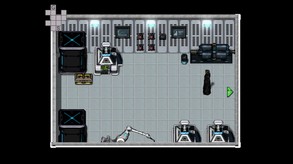
I went into this game not expecting much, but I was pleasantly surprised by how fun it turned out to be. It’s a simple RPGMaker game with easy-to-navigate elements—just basic movement choices (north, east, west, south) on small maps and simple battles. There’s not a ton of text to read, so it’s easy on the eyes, which is a refreshing change! The battles have enough depth to be engaging, thanks to unique special actions for each character and a smart ammunition cost system. It adds some strategy without being overly complex. I also liked the mission choice and rewards system, and the optional feature to add extra team members. You can have up to 4 active characters in battles, but there’s room to keep more on the bench, which adds some flexibility to team composition. The game isn’t too hard or frustrating, and it has a nice save/load system. I was able to play easily with an Xbox 360 gamepad, which was a nice touch. The resolution settings are found in the “system” menu (press B), though it wasn’t quite stretched to full screen on my 47" TV. However, I was totally fine playing in the default windowed mode, as it didn’t strain my eyes—definitely a pleasant change compared to other games like Space Pilgrim that gave me a headache. Honestly, this is the first RPGMaker game I’ve genuinely enjoyed, and I’m glad I gave it a try!
Related
Related
Trends
Modeled estimate over time, reconstructed from Steam's monthly review histogram.
Momentum
Pace estimated from the game's recent review growth (our daily snapshots) at its own sales-per-review ratio — a momentum signal, not booked sales.
Audience
Estimated from the language of this game's reviews — a proxy for where players are, not official Steam demographics.
Related
| 7 Days to Die | $425.3M | 403.6K | 87% | $44.99 |
| Mount & Blade II: Bannerlord | $309.8M | 294K | 88% | $49.99 |
| Palworld | $279.6M | 448.8K | 94% | $20.99 |
| Project Zomboid | $239.1M | 461K | 94% | $19.99 |
| Clair Obscur: Expedition 33 | $233.9M | 273.3K | 95% | $47.99 |
| Terraria | $187.5M | 1.5M | 97% | $9.99 |
Related
| POP: Methodology Experiment One | $8.3K | 91 | 62% | $3.99 |
| Post Apocalypse Microbe Lab | $8.3K | 56 | 95% | $7.19 |
| Operation Valor | $8.3K | 76 | 93% | $4.99 |
| Blade Jumper | $8.3K | 57 | 86% | $6.99 |
| Lempo | $8.3K | 149 | 83% | $3.99 |
| If only I could go home early | $8.3K | 148 | 94% | $3.99 |