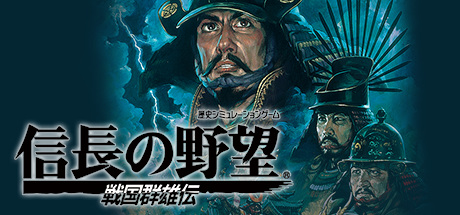
NOBUNAGA’S AMBITION: Sengoku Gunyuuden stands as one of the earliest examples of large-scale historical strategy design from Koei, offering players a deep but demanding simulation of feudal Japan during the Sengoku era. Originally released decades ago as an early entry in the long-running Nobunaga’s Ambition franchise, the game feels like both a strategy experience and a preserved piece of gaming history. Modern players approaching it for the first time may immediately notice its dated presentation and slower pacing, but beneath the retro interface lies a surprisingly rich simulation focused on political management, military conquest, and territorial expansion.
The game places players in the role of a daimyo attempting to unify Japan during one of the country’s most chaotic historical periods. Unlike modern strategy titles that often emphasize cinematic storytelling or fast-paced action, Sengoku Gunyuuden is entirely centered around long-term planning and careful resource management. Every turn requires balancing military strength, agricultural production, economic stability, diplomacy, and the loyalty of both retainers and peasants. The game constantly reminds players that warfare alone is not enough to build a stable domain. Neglecting finances or overtaxing the population can damage internal stability just as severely as losing a battle.
One of the game’s most impressive qualities is its freedom and replay value. Multiple scenarios allow players to begin during different stages of the Sengoku period, and the large roster of historical clans creates a wide range of campaign possibilities. Starting as a dominant military power feels completely different from controlling a smaller and weaker faction surrounded by hostile neighbors. Some playthroughs encourage aggressive conquest from the start, while others demand cautious diplomacy and defensive survival. This variety keeps the strategic experience fresh and encourages experimentation with different approaches to leadership and expansion.
The strategic systems remain surprisingly engaging even by modern standards. Players must constantly monitor food supplies, troop readiness, castle development, and diplomatic relationships while preparing for future conflicts. Expansion requires more than simply building armies because poorly managed territories can collapse under internal instability. There is a satisfying sense of tension created by trying to strengthen a domain while rival clans continue expanding across the map. Every decision feels meaningful because the game rarely hands out easy victories.
Combat is relatively basic compared to modern tactical strategy games, but it still serves its purpose effectively within the larger simulation. Battles focus on unit positioning, troop numbers, and terrain advantages rather than flashy animations or cinematic action. While the presentation is simplistic, successful victories still feel rewarding because they result from preparation and strategic planning rather than luck. The game understands that military success begins long before armies meet on the battlefield, and that philosophy is reflected throughout the campaign structure.
The historical atmosphere is one of the strongest reasons to experience Sengoku Gunyuuden today. Koei clearly invested significant effort into recreating the political struggles and territorial rivalries of feudal Japan. Famous daimyo from the Sengoku era appear throughout the game, and players interested in Japanese history will likely appreciate the authenticity of the setting. Even without elaborate story scenes, the game creates immersion through its focus on historical conflict, clan management, and the constant struggle for unification during a violent and unstable era.
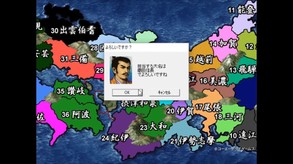
Visually, however, the game undeniably shows its age. Menus, battlefield displays, and overall presentation remain extremely old-fashioned, especially compared to modern grand strategy titles. The Steam release preserves much of the original design instead of fully modernizing the experience, which helps maintain historical authenticity but also creates a significant barrier for newcomers. The interface can feel awkward and unintuitive at first, and learning the systems requires patience that many modern players may not initially have.
The audio presentation follows a similar pattern. Music tracks are minimalistic and repetitive, though they still contribute to the atmosphere of feudal Japan during strategic planning phases. Sound effects are simple and functional rather than memorable. The overall sound design reflects the era in which the game was originally created, prioritizing utility over immersion. While the presentation lacks modern polish, it still carries a nostalgic charm for players familiar with classic PC strategy games.
One of the game’s biggest weaknesses is accessibility. Sengoku Gunyuuden demands time, concentration, and a willingness to learn mechanics through experimentation. Tutorials and guidance are minimal compared to modern standards, and the pacing can feel extremely slow for players accustomed to streamlined strategy games. The game rewards careful planning rather than immediate action, which means progress often unfolds gradually over long sessions. This deliberate pace will either feel rewarding or exhausting depending on the player’s patience and interest in historical simulations.
Replayability remains one of the game’s greatest strengths despite its age. Different clans, starting conditions, and strategic situations create enough variation to encourage multiple campaigns. The challenge of building a successful domain from a weak position can feel deeply satisfying, especially when careful diplomacy and resource management eventually lead to military dominance. Even after decades, the core gameplay loop remains compelling because it captures the appeal of long-term strategic planning remarkably well.
What makes Sengoku Gunyuuden especially interesting today is how clearly it demonstrates the foundation of Koei’s future strategy design philosophy. Many mechanics that would later evolve into more sophisticated systems in future Nobunaga’s Ambition titles are already visible here in their early form. The game may feel primitive compared to modern entries in the genre, but its ambition and depth remain impressive considering when it was originally developed.
NOBUNAGA’S AMBITION: Sengoku Gunyuuden is not a game built for instant gratification or casual strategy fans looking for streamlined gameplay. It is a methodical and demanding historical simulation that rewards patience, planning, and an appreciation for retro strategy design. Players willing to accept its dated visuals and slower pace will discover a surprisingly deep and rewarding experience that still reflects the brilliance of Koei’s early approach to grand strategy gaming.
Rating: 7/10