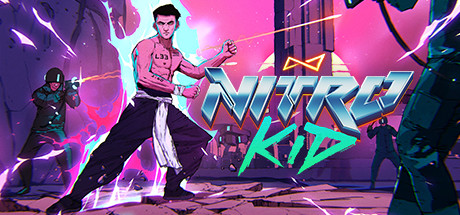
Synthwave roguelike deckbuilder set in the neon 80's. Pick your agent. Build your deck. Hit card combos and fight through the floors of INFINITY tower. Featuring 30+ fresh Synthwave tracks by LudoWic, Tonebox and Jules Reves.
Modeled estimate, not a reported figure. How we estimate →
Media

About

Stats
All-time low is the lowest price we've recorded for this game since we started tracking it.
Languages: English, French, Italian, German, Spanish - Spain, Portuguese - Brazil, Simplified Chinese, Korean, Russian, Japanese
Engagement
Hours played at review time, across 40 reviews with recorded playtime.
Reviews
Themes across 40 recent reviews and how positive each mention is. A keyword signal, not full sentiment analysis.
positive critical· bar length = how often the theme comes up
Reviews
Comprei por causa do "Bussilí". Recomendo.
good
Sur le papier la boucle de gameplay rogue lite semble avoir des bonnes idées. Dans la pratique le jeu propose un premier personnage dont le gameplay est de spammer les attaques pas chères, et en réponse il nous oppose des adversaires qui ripostent à chaque action. Le fun est tué instantanément.
Combattimento strategico a turni alla fight in tight space. Consigliato per tutte le combo che si possono creare. Un gioiello del genere non dovete farlo scappare
Approved. Deckbuilding, tactics, tight positioning, cool 80s visuals and soundtrack.
What if an 80s soundtrack had its own deckbuilder?
SUPER FUN
游玩的时候有以下问题: 1、商店不能刷新,也没有遗物购买,只能通过打boss和精英掉,没有图鉴功能,幸好也不需要收集全卡。 2、开始必选两张卡,不能只选一张或者不选,等于污染卡组,开局就要14张卡,要删的太多了,只能慢慢刷开局要的卡,浪费时间。 3、升级解锁的初始遗物和卡牌过于废物,还不如最开始就能用的,而且解锁比较慢,要打了才知道后面解锁的内容,等到解锁了感觉还不如不要。 4、看似三条线路,实则上下两条路必须也打通一条,然后还要救两个幼体,才能打boss,结果就是要最起码打通两条路才能往下打,不知道设计的意义在哪。 5、怪的机制又恶心,又追随又自动攻击,完全没有啥回避空间,必须要造成战损,只能速战速决,然后场地空间也少,不就不支持慢慢打,被怪围起来就g了。 6、死了不能重新当场战斗只能重新打,高难度极其容易暴毙,一点容错都没有。 如果以上问题都能接受,可以去隔壁搞个散key玩玩,每个人物都很有特色,比一般换皮卡牌肉鸽来的有趣。 以下是我通关高难度的思路: l33删成9张卡就能打无限了,开局选流转自如和回势,引燃烈火+烽火奏起两张卡进行抽卡循环,带上递归算法+寸拳就能无限叠加伤害,第一回合boss还没开动就被连死了。没有寸拳用绕袭也行,看好时机把绕袭的费用降到1再用递归算法,就可以刷出3张,然后打出0费卡降低绕袭的费用,然后后续又能带出新的绕袭,这样循环也能打出一个不俗的伤害。可选史诗卡牌回旋踢,暴风骤雨,能轻松杀精英和秒小怪。 j4x的阴损招法前期清怪一流,删成10张牌,搭配红药丸+闪电出击+护牙套可以一直无限,搭配炫目守御和默默无闻,一直打伤害越叠越高,断连了也能有很高的反击伤害。 k31步枪虽然伤害高,但是只能站桩也太蠢了。开局必拿过载和小口径,伤害质变还能清聚在一起的小怪,第一回合能减少能多压力。辅助牌拿补给,子弹上膛,可选史诗哒哒哒哒,输出牌只要爆鸣炎枪和过载足够把敌人轰成渣。核心思路就是通过提高子弹的容量,使用过载和爆鸣炎枪的高爆发将敌人击杀。 这游戏不论哪个角色,删牌大于一切,护盾卡就是来搞笑的,最好的防御就是进攻,然后删完防御就可以删初始攻击卡,基本保证卡在9-11张左右,配合能抽卡的卡就能打出高爆发,在敌人还没行动的时候就完成击杀。
Nitro Kid, developed by Wildboy Studios and published by tinyBuild, is a roguelike deck-building strategy game that blends tactical combat with a flashy retro-futuristic aesthetic heavily inspired by 1980s action films and synthwave culture. At first glance, the game appears to follow the familiar blueprint established by popular deck-builders, but it quickly distinguishes itself by integrating a grid-based tactical system that places a strong emphasis on positioning and movement. Instead of simply playing cards to attack enemies in a static interface, players must carefully navigate a battlefield where distance, direction, and spatial awareness are just as important as the cards in their hand. This combination of card mechanics and tactical movement gives Nitro Kid a unique rhythm, transforming each fight into a small strategic puzzle where careful planning and quick adaptation determine survival. The game’s story centers around a covert operation to infiltrate the towering headquarters of a powerful megacorporation. Within this immense skyscraper, a shadowy organization is conducting experiments involving kidnapped children and a mysterious energy source known as Nitro. Players take on the role of elite agents sent to sabotage the operation and rescue the victims trapped within the building. While the narrative itself is not particularly complex, it provides a strong thematic backdrop for the action. The neon-lit corporate tower filled with experimental technology, ruthless guards, and dangerous security systems creates a fitting cyberpunk environment that drives the player forward through each floor. The sense of climbing deeper into enemy territory with every battle adds momentum to the otherwise repetitive structure typical of roguelike games. Combat is where Nitro Kid truly shines. Each encounter takes place on a compact grid where enemies and the player move around during turn-based battles. Every turn, players draw cards from their deck that represent various actions such as punches, kicks, ranged attacks, evasive maneuvers, or special abilities. Energy points limit how many cards can be played per turn, forcing players to prioritize which actions will produce the best outcome. What makes the system interesting is how these cards interact with positioning. Many abilities push or pull enemies across the grid, create area-of-effect attacks, or deal additional damage depending on where the target stands. This adds a layer of tactical complexity rarely seen in traditional deck-builders. Players must constantly think about how to manipulate enemy placement while maintaining a safe distance from incoming attacks. The roguelike structure ensures that every run through the tower evolves differently. As players progress through rooms on each floor, they encounter battles, random events, shops, and upgrade opportunities. Victories often reward new cards that can be added to the player’s deck, gradually shaping the combat style for the remainder of the run. Some builds focus on heavy melee damage and crowd control, while others emphasize mobility, ranged attacks, or defensive counterplay. Additional modifiers can upgrade existing cards, making them more powerful or adding new effects that open up creative strategies. Because these upgrades appear randomly, players must learn to adapt their tactics depending on the resources available during each run. Another key element of Nitro Kid’s replayability lies in its playable characters. The game introduces multiple agents, each with their own deck archetype and combat philosophy. One character focuses on balanced martial arts techniques that combine offense and mobility, making them accessible for beginners. Another specializes in counterattacks and combo chains that reward aggressive playstyles, while a third character relies on ranged weapons and ammunition management, introducing a resource-based approach to combat. These variations significantly change how battles unfold and encourage players to experiment with different builds and strategies across multiple runs. The presentation of Nitro Kid is one of its strongest aspects. The game embraces vibrant pixel art filled with neon colors, cyberpunk environments, and exaggerated character designs that evoke classic arcade games and retro action movies. Each floor of the tower features distinct visual themes, ranging from corporate laboratories to dimly lit security zones, all rendered in a style that blends nostalgia with modern polish. Animations during combat are fluid and impactful, with punches, kicks, and explosions carrying a satisfying visual weight. The soundtrack further enhances the atmosphere with energetic synthwave and electronic tracks that perfectly match the game’s retro-futuristic tone. The music adds a pulse of intensity to each battle, making even routine encounters feel cinematic. Despite its many strengths, Nitro Kid is not without its shortcomings. Some players may find the roguelike progression less rewarding compared to other games in the genre, as long-term upgrades between runs are relatively limited. While the combat system remains engaging, the repetition of climbing the same tower floors can eventually make the experience feel somewhat predictable. Additionally, the game’s difficulty can occasionally spike depending on the cards and upgrades offered during a run. A poor combination of rewards early on may leave players struggling against later enemies or bosses. These issues do not ruin the experience, but they highlight the game’s reliance on randomness and build synergy. Even with these minor flaws, Nitro Kid stands out as a creative twist on the deck-building roguelike formula. Its combination of tactical grid combat, stylish retro presentation, and dynamic card interactions creates a gameplay loop that is both strategic and visually exciting. The emphasis on positioning adds a refreshing dimension to battles, rewarding players who can think several moves ahead while carefully managing their resources. For fans of roguelike strategy games and deck-building systems, Nitro Kid offers a fast-paced and distinctive experience that feels both familiar and refreshingly different. Rating: 8/10
feels like a worse version of sts
Related
Related
Trends
Modeled estimate over time, reconstructed from Steam's monthly review histogram.
Momentum
Pace estimated from the game's recent review growth (our daily snapshots) at its own sales-per-review ratio — a momentum signal, not booked sales.
Audience
Estimated from the language of this game's reviews — a proxy for where players are, not official Steam demographics.
Related
| Dreamscaper | $250K | 3.2K | 88% | $4.99 |
| Amanda the Adventurer 2 | $250.2K | 1.5K | 83% | $9.99 |
| Hyperbolica | $250.3K | 1.3K | 83% | $12.99 |
| Ex-Zodiac | $250.3K | 1.1K | 94% | $11.99 |
| Fish Hunters: Most Lethal Fishing Simulator 🐟 | $249.7K | 648 | 62% | $9.99 |
| Fate Seeker: Journey | $249.7K | 1.2K | 78% | $10.00 |
Related
| 7 Days to Die | $425.3M | 403.6K | 87% | $44.99 |
| Mount & Blade II: Bannerlord | $309.8M | 294K | 88% | $49.99 |
| Factorio | $206.6M | 189.7K | 98% | $35.00 |
| RimWorld | $176.7M | 243.3K | 98% | $34.99 |
| Squad | $167.2M | 178.2K | 83% | $39.99 |
| Don't Starve Together | $164.7M | 539.5K | 95% | $14.99 |