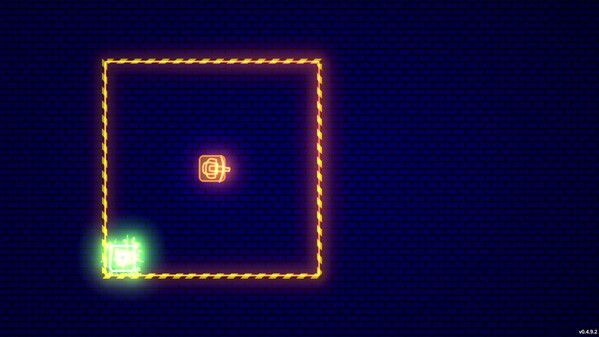
Grid management roguelike tower defense that emphasizes mechanics and features dazzling visual effects. Don't overthink it, just stack and play! Enhancement modules boost your attributes, affix modules change the mechanics, and more... all within the grid. Time to create a new and improved build!
Modeled estimate, not a reported figure. How we estimate →
About
Wave after wave of mobs is coming to crush your defenses! Choose from a variety of modules with different effects such as weapons, enhancements, and affixes from the shop and deploy them on the battlefield to eliminate all mobs. Each module has a specific effective range, so you must carefully manage their placement to maximize their efficiency!
Game Features
★ Carefully planned grid management and thoughtfully designed roguelike mechanics
★ 66 completely unique modules: 8 types of weapons, 18 traits, 28 attributes... more exciting content in development
★ The talent tree system is here! Get ready to take off!
★ Moderate game length: approximately 1 hour to complete a single run (with automatic save feature)
★ Comprehensive explanations of game mechanics included
★ Compete with players worldwide, climb the Steam leaderboard, and showcase your incredible builds!
Genres
Stats
All-time low is the lowest price we've recorded for this game since we started tracking it.
Languages: English*, Simplified Chinese*, Japanese**languages with full audio support
Engagement
Reviews
Themes across 43 recent reviews and how positive each mention is. A keyword signal, not full sentiment analysis.
Reviews
Damn.. great TD roguelite game that lets you build your own combos very liberally. Super flexible builds and great feedback loop.
Neon Ascending is an indie strategy game developed and published by TheCarmineDepth that blends roguelike structure with tower defense and grid-based optimization into a tightly focused but surprisingly deep experience. At its core, the game presents a simple challenge: survive escalating waves of enemies by assembling an efficient defensive setup. What makes this premise compelling is how quickly the game reveals layers of complexity beneath its minimalist surface, transforming what initially feels like a casual stacking exercise into a thoughtful test of planning, adaptability, and long-term decision-making. Gameplay revolves around placing modules on a compact grid, with each module serving a distinct function such as dealing damage, modifying attack behavior, or supporting neighboring structures. Positioning matters enormously, as modules interact through range, adjacency, and synergy effects that can dramatically alter their effectiveness. Early runs encourage experimentation, teaching players how different pieces behave and how subtle layout changes can mean the difference between holding the line or being overwhelmed. Over time, the game rewards players who think several steps ahead, planning not just for the current wave but for how their grid will scale as enemy patterns grow more aggressive and complex. The roguelike structure is central to Neon Ascending’s replayability. Each run offers a different combination of modules, forcing players to adapt rather than rely on a single optimal build. Unlocks earned through progression expand the pool of available tools, steadily increasing the strategic possibilities without overwhelming newcomers all at once. Runs tend to strike a careful balance between length and intensity, long enough to allow builds to mature but short enough to encourage repeated attempts. This creates a satisfying loop where failure feels instructional rather than punishing, nudging players to refine their understanding of the game’s systems. Visually, Neon Ascending embraces a bold, abstract aesthetic defined by glowing colors, sharp contrasts, and fluid motion. The neon-drenched presentation gives the battlefield a constant sense of motion and energy, with projectiles, enemy paths, and module activations clearly readable even during chaotic moments. The visual clarity is especially important given the density of information on screen, and the game does an admirable job of ensuring that spectacle never obscures function. The minimalist interface complements this approach, keeping the player’s focus firmly on strategic decisions rather than menu management. Sound design and pacing further reinforce the game’s hypnotic rhythm. Subtle audio cues provide feedback on attacks and enemy behavior, while the soundtrack underscores the tension of increasingly difficult waves without becoming distracting. Together, the audiovisual elements help establish a steady flow state where time seems to slip away as players tweak placements, monitor wave progress, and react to sudden threats. It’s a game that encourages “just one more run” thinking, driven by the constant possibility of discovering a stronger or more elegant build. While Neon Ascending can occasionally feel unforgiving, particularly during mid-to-late waves where mistakes compound quickly, this difficulty is largely a reflection of its systems-driven design. Success depends less on reflexes and more on understanding how mechanics interact, and players willing to engage with that learning curve will find the challenge rewarding rather than arbitrary. Some aspects may feel opaque at first, especially when synergies aren’t immediately obvious, but perseverance is consistently rewarded with moments of clarity and mastery. In the end, Neon Ascending stands out as a confident indie strategy title that does a lot with a focused set of ideas. Its combination of modular grid-building, roguelike variety, and tower defense fundamentals creates a gameplay loop that is both accessible and deep, appealing to players who enjoy systems-driven experimentation and incremental mastery. While it doesn’t aim for narrative complexity or sprawling content, it excels at delivering a refined, replayable strategic experience that grows richer the more time you invest in it. For fans of roguelikes and tower defense games looking for something sleek, challenging, and mechanically engaging, Neon Ascending offers a compelling ascent worth taking. Rating: 6/10

Media

Related
Related
Price dynamics, follower growth, revenue and sales trajectories with interactive tooltips
This and every other Pro feature is free until October 20, 2026. A free account is all it takes.
Hours played at review time, across 43 reviews with recorded playtime.
positive critical· bar length = how often the theme comes up
Love it need more content.
Cool game idea but i'm suffering from performance
Update: Got my first win and made it to lvl 117 with a peak dmg of 6.1B! Challenging and fun. Favorite weapons: coil > octopus > machine gun. Favorite modules/enchantments: synthesizer > lightning zappy things > neon fever > tornado (with coil is the best). Most helpful tip: Understanding the prisms and using the synthesizer to get global buffs with the bear/telescope. Don't be afraid to stockpile mods to use for the synthesizer or as a barrier/sell later. Skill tree: Going to explore the advanced items, but I maxed module health, increased money, made sure to get 2 prisms, synthesizers and at least 1 weapon. These helped early game collection of modules. Fun game. It's actually much more challenging than I originally thought. I was able to reach level 72 after about 5 hours worth of trying (not all at once). They added a "fast forward button" to get through stages quicker which was a lovely addition. Game looks cool too, especially when you get the lightning modules. Worth checking out if you like tower defense, puzzle-like optimization and pretty colors.
The first couple games will be really bad, since there's quite a lot of stuff you gotta figure out. However, with time, it gets a lot better. There are a multitude of options/combos to try in this game. They've added in a speed-up button for rounds, so that's nice. The fun part of the game is trying out different combos. So far, I've made it past round 100 with Cutter, Coil, Octo, Machine Gun and the bouncing one. Cutter was my highest run at Round 129, but I think Coil can go higher. This isn't a game that you sit down and spend a whole day on. It's quite exhausting since you're trying to figure out good combos and placements. That being said, putting together a good mix of modules can be extremely rewarding. tl;dr DEFINITELY worth the 4 bucks or whatever it costs.
Meh
Very fun game, but only for a few hours until you beat the game a few times. I am writing this review because I was very hyped for the skill tree, but it is incredibly boring like +1% here or there. Give me cool new unlocks or change the way guns or perks work, or something please so I have a reason to replay this game.
Annoyingly difficult. A good idea but it needs to be better. The skills in the skill tree are disappointing and underwhelming.
A super fun time-killer of a game. However RNG can absolutely make or break a run. Weapons and modules take up a square on the grid. Upgrade modules grant stat boosts and abilities to towers within a set area around them. As some modules cover a very small area, sometimes as little as only 4 directly-adjacent squares, grid space comes at a premium. This necessitates two quite-powerful modules - Synthesizers and Prisms. Synthesizers merge upgrades together and can potentially expand the area of smaller upgrades, possibly even to cover the entire board with multiple stat boosts. Prisms can receive stat boosts from upgrade modules and extend them to up to 2 weapons, additionally stacking the boosts if both the Prism and its weapon(s) are within range of the same module(s). Both of these are very powerful if used optimally, granting significant stat boosts while taking up less space. The Talent Tree can guarantee getting Synthesizers, Prisms, and weapons at specific waves (10, 20, etc). But you can only pick one from those guaranteed rewards. Sometimes you need more than what you can get. They can appear randomly in the shop at later waves, but they're (understandably) quite rare and expensive. Paired with the increasing cost of re-rolling the shop, it can make it difficult to get what you need to keep a run going. Outside of this, there are some very fun and interesting builds you can put together. Chain lightning to everything in a general direction, cover the screen with explosions, create a tornado of blades, or just turn a horde of enemies into a wildfire. Overall, a very fun game, but you may need a fair bit of luck to make it into the higher waves. I'm eager to see future updates, improvements, and new features.
Players by region
Where this game's players are, estimated from review languages.
Related
| Game | Estimated lifetime revenue | Reviews | Review score | Price |
|---|---|---|---|---|
| $856.3K | 4.1K | 85% | $4.99 | |
| $135.4K | 1K | 85% | $4.99 | |
| $177.5K | 370 | 91% | $8.99 | |
| $6.4K | 21 | 90% | $11.99 | |
| $9.4K | 26 | 96% | $11.99 | |
| $4.3K | 14 | 93% | $10.99 |
Related
| Game | Estimated lifetime revenue | Reviews | Review score | Price |
|---|---|---|---|---|
| $9.6K | 172 | 94% | $3.99 | |
| $9.6K | 127 | 96% | $1.99 | |
| $9.6K | 98 | 70% | $5.99 | |
| $9.6K | 52 | 69% | $6.99 | |
| $9.6K | 72 | 85% | $1.79 | |
| $9.6K | 60 | 37% | $4.99 |